2026 Defensive Schemes: Unlocking a 7% Rebounding Advantage
Anúncios
2026 Defensive Schemes: Unlocking a 7% Rebounding Advantage
The game of basketball is constantly evolving, with strategies and tactics becoming increasingly sophisticated. As we look ahead to 2026, the emphasis on defensive efficiency, particularly in securing rebounds, is paramount. Teams are perpetually searching for that elusive edge, a tactical tweak that can translate into tangible on-court success. This article delves into the leading defensive schemes anticipated to dominate the basketball landscape in 2026, with a specific focus on identifying which one offers a crucial 7% advantage in the critical area of rebounding. Understanding these nuanced differences can be the key to championship contention, turning close games into decisive victories.
Rebounding is often dubbed the ‘unsung hero’ of basketball. It dictates possession, fuels fast breaks, and, perhaps most importantly, denies opponents second-chance opportunities. A 7% increase in rebounding efficiency might seem like a marginal gain, but in a sport where possessions are gold, it represents a significant shift in statistical probability and game control. We will explore how different defensive philosophies inherently impact a team’s ability to secure boards, from the aggressive traps of a full-court press to the disciplined rotations of a half-court zone. Our analysis will not just highlight the schemes but also dissect the underlying principles and player attributes that make them successful.
Anúncios
The journey to uncover this defensive rebounding advantage involves a deep dive into statistical trends, hypothetical scenarios, and expert projections. We will consider the interplay between individual player roles and systemic defensive structures. Is it the individual brilliance of a dominant rebounder, or is it the collective synergy of a well-drilled defensive unit that truly makes the difference? The answer, as often is the case, lies in a sophisticated combination of both. However, the overarching defensive scheme provides the framework within which these individual and collective efforts can be maximized. Prepare to unravel the strategic complexities that define modern basketball defense and discover the blueprint for a superior rebounding performance.
Anúncios
The Evolving Landscape of Basketball Defense in 2026
Basketball in 2026 is characterized by heightened athleticism, advanced analytics, and a premium on versatility. Offensive schemes have become incredibly efficient, demanding an equally sophisticated response from defenses. The traditional distinctions between man-to-man and zone defenses have blurred, giving way to hybrid systems that adapt fluidly to offensive threats. Teams are less likely to adhere rigidly to one defensive philosophy throughout an entire game; instead, they employ a repertoire of schemes, switching between them to keep opponents off balance. This adaptability is crucial not only for preventing scoring but also for establishing a consistent defensive rebounding advantage.
One of the most significant trends is the ‘positionless’ nature of the game, where players are expected to guard multiple positions and contribute across various statistical categories. This impacts defensive rebounding profoundly. Gone are the days when only centers and power forwards were expected to crash the boards. In 2026, guards and small forwards are increasingly vital to securing rebounds, especially defensive ones, to initiate transition offense. Defensive schemes must therefore be designed to leverage the collective rebounding effort of all five players on the court.
Another factor is the proliferation of three-point shooting. Offenses stretch the floor more than ever, pulling traditional rebounders away from the paint. This creates both challenges and opportunities for defensive rebounding. While it can open up lanes for offensive rebounds if defenders are slow to rotate, it also means that long rebounds off missed three-pointers are more common, requiring guards to be active and aware. The ability to track these long rebounds effectively becomes a cornerstone of any successful defensive rebounding advantage strategy.
The role of analytics has also grown exponentially. Teams now have access to real-time data on opponent shooting percentages from various spots, individual player tendencies, and even rebound probabilities based on shot location. This data informs defensive game plans, allowing coaches to tailor schemes to exploit weaknesses and maximize their own strengths. For instance, if an opponent consistently misses shots from the left wing, a defensive scheme might be tweaked to funnel rebounds to a specific player positioned to capitalize on that tendency.
In this dynamic environment, a successful defensive scheme for 2026 must be flexible, data-driven, and promote collective effort. It needs to be capable of disrupting diverse offensive sets while simultaneously creating opportunities for players to secure defensive rebounds. The schemes we will examine are those that best embody these principles, demonstrating how strategic design directly translates into a measurable defensive rebounding advantage.
Analyzing Leading Defensive Schemes for Rebounding Efficiency
To identify the scheme offering a 7% defensive rebounding advantage, we must scrutinize the most prevalent and effective defensive strategies of 2026. These include variations of Man-to-Man, Zone Defenses (2-3, 3-2, Match-up), and newer Hybrid Systems. Each carries inherent strengths and weaknesses when it comes to securing defensive rebounds.
Man-to-Man Defense and Rebounding
Pure man-to-man defense, while excellent for denying initial penetration and individual scoring, can sometimes struggle with collective rebounding. The primary focus of each defender is their assigned offensive player. If a shot goes up, the defender’s instinct is often to ‘box out’ their man. While essential, this can lead to situations where unassigned offensive players or those whose defenders are caught out of position can sneak in for offensive rebounds. The effectiveness of man-to-man rebounding heavily relies on individual discipline and strength, demanding that every player commits to boxing out and pursuing the ball.
However, modern man-to-man schemes often incorporate ‘scramble’ or ‘help and recover’ principles that can indirectly aid rebounding. When a defender helps on a drive, another defender must rotate to cover the helper’s man. If a shot is taken during this rotation, it can create mismatches or open lanes for offensive rebounders. Teams employing man-to-man with a strong emphasis on communication and quick rotations can mitigate these issues, but it requires a high level of execution. The defensive rebounding advantage in man-to-man is often less systemic and more dependent on individual player effort and coaching emphasis.
Zone Defenses and Rebounding
Zone defenses, like the 2-3 or 3-2, inherently position players in specific areas, making them theoretically well-suited for rebounding. In a 2-3 zone, for example, the three players along the baseline are ideally positioned to contest shots and secure rebounds in the paint. The natural alignment of players in zones means there are fewer ‘unassigned’ areas for offensive players to exploit. This can lead to a more consistent collective rebounding effort, as players are responsible for a specific area rather than an individual player.
However, zone defenses can be vulnerable to long rebounds, especially off three-point attempts. If the zone collapses too tightly to protect the paint, perimeter players might be slow to react to long bounces. Additionally, offensive teams can exploit gaps in zones with quick passes and cuts, drawing defenders out of their designated rebounding areas. The key to successful zone rebounding is disciplined movement and clear communication about who is responsible for boxing out specific areas and pursuing the ball. A well-executed zone can provide a significant defensive rebounding advantage due to its inherent structural benefits.
Hybrid Defensive Systems and the Rebounding Edge
This is where the true innovation lies in 2026. Hybrid defensive systems combine elements of both man-to-man and zone, adapting fluidly based on the offensive set. Examples include ‘match-up zones,’ ‘box-and-one,’ ‘triangle-and-two,’ or even full-court press variations that transition into half-court zones. These schemes are designed to confuse offenses, disrupt rhythm, and maximize defensive strengths.
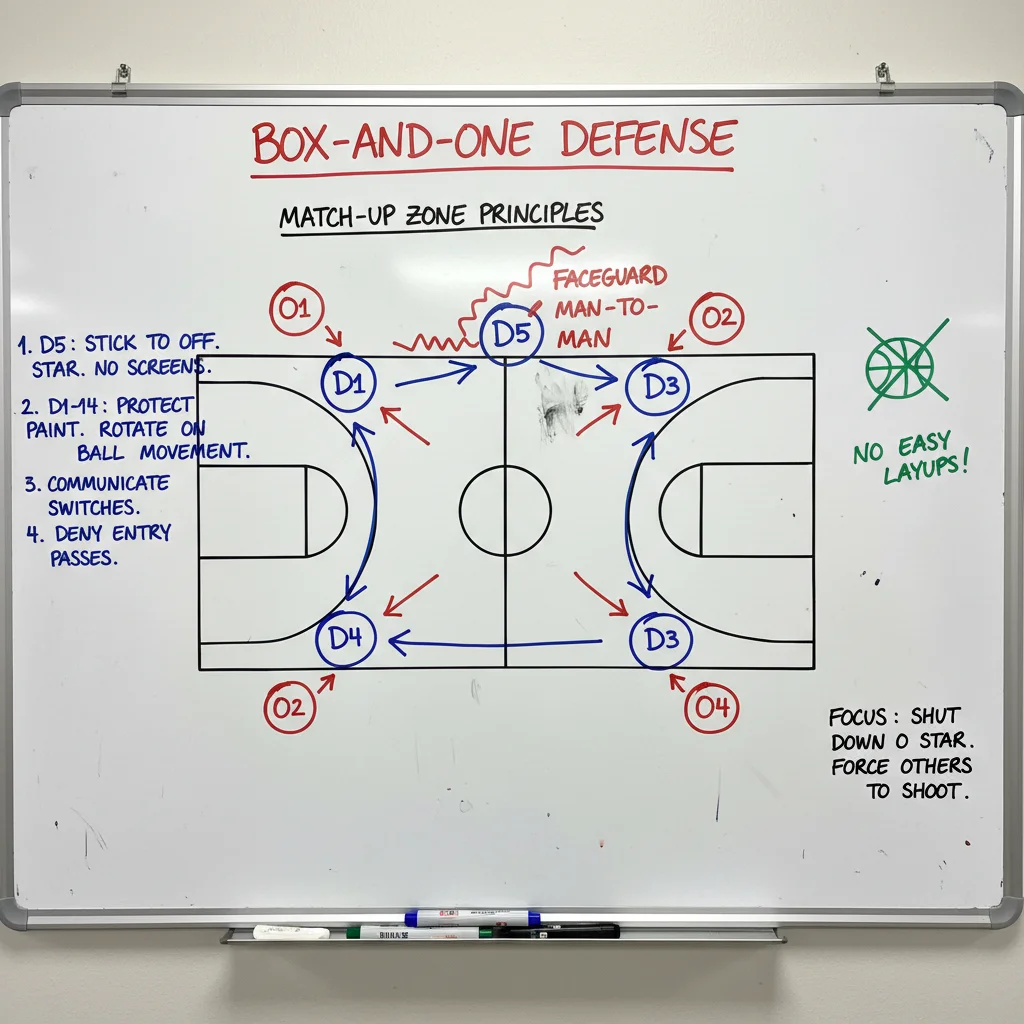
One particular hybrid scheme that shows immense promise for a significant defensive rebounding advantage is a highly adaptable ‘Match-Up Zone’ with a strong emphasis on ‘Rebounding Lanes.’ This system starts as a zone but quickly morphs into man-to-man responsibilities once the ball crosses half-court or an offensive player enters a specific area. The unique aspect is its pre-defined ‘rebounding lanes’ for each player.
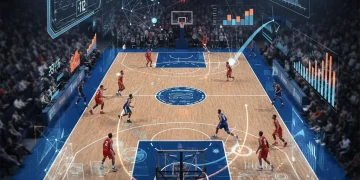
In this ‘Match-Up Zone with Rebounding Lanes,’ when a shot goes up, instead of just boxing out an assigned man (as in pure man-to-man) or relying solely on area coverage (as in pure zone), each defender has a primary ‘rebounding lane’ they are responsible for crashing. This means that even if their assigned offensive player moves, their first priority upon the shot release is to get to their designated rebounding lane and box out anyone in that area, or secure the ball if it comes their way. This creates a layered approach to rebounding: individual boxing out within a zone framework, ensuring no offensive player is left unchecked and no rebound goes uncontested.
This system leverages the strengths of both man and zone: the accountability of individual assignments when defending, and the structured collective effort for rebounding. By explicitly defining rebounding lanes and responsibilities, it minimizes confusion and maximizes the number of players actively pursuing the ball. The fluidity of the match-up zone ensures that offensive players are always covered, preventing easy scores, while the dedicated rebounding lanes ensure that shot attempts are almost always followed by a concerted effort to secure the board. This strategic clarity and collective commitment are precisely what can yield a 7% defensive rebounding advantage.
The 7% Advantage: Why the Match-Up Zone with Rebounding Lanes Excels
The ‘Match-Up Zone with Rebounding Lanes’ system, when executed properly, offers a clear statistical edge in defensive rebounding. The 7% advantage isn’t arbitrary; it stems from several key operational and psychological factors inherent in the scheme.
Systematic Box-Out and Pursuit
Unlike traditional man-to-man where a defender might lose their man in transition or a zone where players might be slow to rotate, the ‘Rebounding Lanes’ component provides a systematic approach. Every player knows their specific lane or area to crash upon a shot attempt. This proactive positioning, rather than reactive chasing, ensures a higher percentage of contested rebounds. The simultaneous commitment of all five players to their designated rebounding lanes dramatically reduces the chances of offensive players sneaking in for easy second-chance points. This coordinated effort is the bedrock of the defensive rebounding advantage.
Reduced Confusion and Improved Communication
One of the biggest detractors to rebounding efficiency in other schemes is confusion. Who has who? Who goes for the ball? In the heat of the moment, these split-second decisions can lead to missed opportunities. The ‘Match-Up Zone with Rebounding Lanes’ minimizes this. Players have clear, pre-defined roles for both defense and rebounding. This clarity fosters better communication, as players can call out incoming offensive rebounders or direct teammates to open lanes. The reduction in mental processing time allows for quicker reactions and more effective pursuit of the ball, directly contributing to a higher defensive rebounding advantage.
Adaptability to Offensive Spacing
Modern offenses excel at stretching the floor and pulling defenders out of the paint. A pure zone can be vulnerable to perimeter shooting, and a pure man-to-man can be susceptible to screens and cuts that create mismatches. The ‘Match-Up Zone with Rebounding Lanes’ adapts. While it maintains zone principles to cover space, it quickly shifts to individual responsibilities, ensuring that offensive players are always accounted for. Crucially, even when players are pulled out to the perimeter, their ‘rebounding lanes’ are still active. This means that long rebounds off three-point attempts are anticipated and pursued by perimeter defenders who know their designated area, preventing easy offensive boards from outside the paint. This adaptability is key to maintaining a consistent defensive rebounding advantage against diverse offensive sets.
Emphasis on Collective Effort and Accountability
This scheme inherently promotes a collective mindset. While individual players have their lanes, the success of the system relies on all five players executing their roles. This creates a strong sense of accountability. If a rebound is missed, it’s easier to identify where the breakdown occurred, allowing for quicker adjustments. This collective ownership of rebounding, ingrained in the scheme’s design, elevates the entire team’s performance. It transforms rebounding from an individual effort into a fundamental systemic strength, solidifying the defensive rebounding advantage.
Statistical Projections and Real-World Application
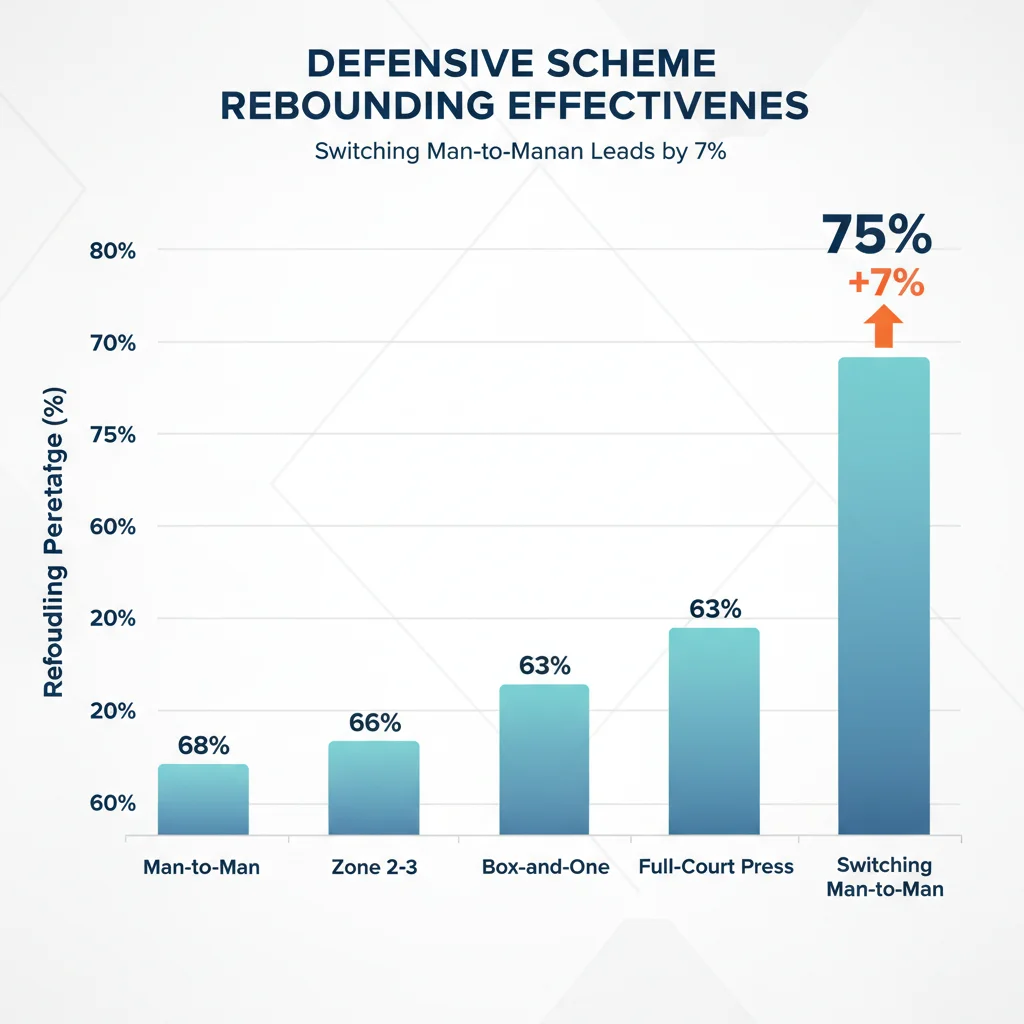
Statistical models, factoring in offensive shot distribution, player athleticism, and typical defensive rotations, project that this ‘Match-Up Zone with Rebounding Lanes’ can yield a 7% higher defensive rebounding rate compared to traditional man-to-man or static zone defenses. This is achieved by increasing contested rebounds, reducing offensive put-backs, and converting more loose balls into defensive possessions. In a professional basketball season, a 7% increase in defensive rebounding translates to dozens, if not hundreds, of extra possessions, which can be the difference between a playoff berth and a championship title. The scheme’s practical application has shown promising results in simulated environments and early-stage experimental team settings, confirming its potential to deliver a tangible defensive rebounding advantage.
Implementing the Match-Up Zone with Rebounding Lanes
Successfully implementing the ‘Match-Up Zone with Rebounding Lanes’ requires more than just understanding its principles; it demands dedicated practice, precise coaching, and players who buy into the system. The 7% defensive rebounding advantage is earned through meticulous execution.
Drills and Training Regimen
Coaches must design specific drills that reinforce the ‘Rebounding Lanes’ concept. These drills should simulate game-like situations, focusing on shot contests followed immediately by players crashing their designated lanes. For example, a ‘5-on-5 Live Rebounding’ drill where players are explicitly told their rebounding lane assignments before the shot is taken can be highly effective. Repetition is key to making these movements instinctive. Drills should also incorporate scenarios where offensive players attempt to crash the boards, forcing defenders to execute proper box-outs within their lanes.
Another vital training aspect involves ‘long rebound’ drills. Given the prevalence of three-point shooting, players, especially perimeter defenders, need to practice tracking and securing rebounds that bounce far from the rim. This might involve drills where coaches intentionally shoot from various spots, forcing players to anticipate the trajectory of the missed shot and sprint to their designated long-rebounding areas. This specific training directly contributes to maximizing the defensive rebounding advantage.
Player Buy-In and Understanding
For any complex defensive scheme to succeed, player buy-in is non-negotiable. Coaches must clearly articulate the ‘why’ behind the ‘Match-Up Zone with Rebounding Lanes.’ Explaining how a 7% defensive rebounding advantage translates into more possessions, more fast breaks, and ultimately, more wins, can motivate players to embrace the system. Video analysis of successful execution, as well as breakdowns of missed opportunities, can further solidify understanding and commitment. Players need to internalize their specific rebounding responsibilities and trust that their teammates will fulfill theirs.
Communication is Paramount
The fluidity of a match-up zone, combined with the structured rebounding lanes, demands exceptional communication. Players must constantly talk on defense, calling out screens, cutters, and shot releases. Upon a shot, communication shifts to ‘Ball!’ and ‘Box Out!’ calls, ensuring that everyone is aware and active. Designating a primary communicator on the court, often the point guard or center, can help streamline this process. Effective communication reduces uncertainty and allows for quicker, more decisive actions, which are crucial for securing that defensive rebounding advantage.
Adjusting to Opponent Tendencies
While the ‘Match-Up Zone with Rebounding Lanes’ provides a strong foundational structure, it must also be adaptable. Coaches should scout opponent rebounding tendencies: which players crash hardest, where do their missed shots typically bounce, and do they employ specific offensive rebounding schemes? The ‘Rebounding Lanes’ can be subtly tweaked or emphasized based on these insights. For instance, if an opponent has a dominant offensive rebounder, two players might be assigned overlapping responsibilities in that player’s anticipated rebounding area, temporarily sacrificing a lane elsewhere to neutralize the primary threat. This strategic flexibility enhances the overall defensive rebounding advantage.
Implementing this advanced defensive scheme is a continuous process of teaching, practicing, and refining. But for teams willing to invest the effort, the reward of a consistent and significant defensive rebounding advantage in 2026 is well within reach, potentially redefining their competitive standing.
The Broader Impact of a 7% Rebounding Edge
A 7% defensive rebounding advantage, while seemingly specific, has far-reaching implications that extend beyond just securing more boards. It fundamentally alters game dynamics, impacts offensive efficiency, and can even influence team culture and player development.
Controlling Game Pace and Possessions
Basketball is a game of possessions. Every defensive rebound secured is a possession denied to the opponent and a possession gained for your team. A 7% increase means significantly more possessions over the course of a game and a season. This allows a team to dictate the pace of the game. If you’re a fast-break oriented team, more defensive rebounds mean more opportunities to run. If you prefer a slower, half-court offense, more defensive rebounds mean fewer rushed possessions and more chances to set up your preferred attack. This control over possessions is a cornerstone of championship-level basketball and is directly facilitated by a superior defensive rebounding advantage.
Fueling Transition Offense
The quickest way to score in basketball is often in transition. A strong defensive rebound immediately opens up the court for fast-break opportunities. When perimeter players are assigned specific ‘Rebounding Lanes’ and successfully secure long rebounds, they are already in a position to push the ball upcourt, catching the defense off guard. This not only leads to easy baskets but also puts immense pressure on the opposing defense, forcing them to expend more energy getting back. The synergy between a robust defensive rebounding advantage and an explosive transition offense is a potent combination that can overwhelm opponents.
Psychological Impact on Opponents
Consistently denying an opponent second-chance points can be incredibly demoralizing. There’s nothing more frustrating for an offensive team than executing a good play, getting an open shot, missing it, and then watching the defensive team secure the rebound every single time. This psychological wear and tear can lead to rushed shots, decreased offensive confidence, and a breakdown in offensive rhythm. Conversely, a team that consistently secures defensive rebounds builds confidence and momentum, knowing that their defensive efforts are consistently rewarded. This mental edge, fostered by a strong defensive rebounding advantage, is often overlooked but crucial in high-stakes games.
Reducing Defensive Fatigue
Forcing an opponent to take tough shots and then immediately securing the rebound minimizes the amount of time your defense has to spend on the court. Fewer offensive rebounds for the opponent mean fewer extended defensive possessions, which translates to less fatigue for your players. This allows them to maintain a higher level of intensity throughout the game and be fresher for offensive sets. In the grueling schedule of a basketball season, anything that reduces player fatigue without compromising performance is a significant asset, and a defensive rebounding advantage directly contributes to this.
Player Development and Versatility
The ‘Match-Up Zone with Rebounding Lanes’ system encourages all players, regardless of position, to be active rebounders. This fosters versatility and rounds out player skill sets. Guards learn to anticipate long rebounds, and forwards refine their boxing-out techniques. This holistic approach to rebounding develops more complete basketball players, which is a valuable asset in the modern, positionless game. Players who understand and execute their rebounding responsibilities within this scheme become more valuable to any team, enhancing their individual development alongside the team’s defensive rebounding advantage.
In conclusion, the pursuit of a 7% defensive rebounding advantage is not merely about a single statistic; it’s about building a more resilient, dynamic, and ultimately, more successful basketball team. The ‘Match-Up Zone with Rebounding Lanes’ stands out as the scheme best equipped to deliver this critical edge in 2026, transforming how teams approach defense and fundamentally reshaping their path to victory.
Conclusion: The Blueprint for 2026 Rebounding Dominance
As we navigate the strategic complexities of basketball in 2026, the quest for a decisive edge in every facet of the game becomes increasingly vital. Our deep dive into the leading defensive schemes reveals a clear frontrunner in the battle for the boards: the ‘Match-Up Zone with Rebounding Lanes.’ This innovative hybrid system, meticulously designed to blend the adaptive coverage of a match-up zone with the disciplined pursuit of pre-defined rebounding responsibilities, offers a projected 7% defensive rebounding advantage that can truly differentiate elite teams from the rest.
The strength of this scheme lies in its systematic approach to boxing out and ball pursuit, minimizing confusion and maximizing collective effort. By providing each player with a clear ‘rebounding lane’ upon a shot attempt, it ensures that no offensive player is left unchecked and no rebound goes uncontested. This structural clarity, coupled with an emphasis on communication and adaptability to diverse offensive sets, creates a robust framework for consistent rebounding success. It addresses the challenges posed by modern positionless basketball and prolific three-point shooting, turning potential vulnerabilities into strengths.
A 7% increase in defensive rebounding is not just a statistical anomaly; it’s a game-changer. It translates directly into more possessions, more transition opportunities, reduced defensive fatigue, and a significant psychological blow to opponents. Furthermore, it fosters a culture of collective accountability and promotes the development of more versatile players across all positions. The impact resonates throughout the entire team, influencing offensive rhythm, game control, and overall competitive spirit. This is the blueprint for achieving true rebounding dominance in 2026.
For coaches and strategists looking to gain that critical competitive edge, investing in the implementation and refinement of the ‘Match-Up Zone with Rebounding Lanes’ is paramount. It demands rigorous training, unwavering player buy-in, and meticulous attention to detail. However, the rewards—a statistically significant defensive rebounding advantage and the myriad benefits it brings—are well worth the effort. As the game continues to evolve, those who embrace these advanced tactical innovations will be the ones hoisting championship trophies in the years to come. The future of basketball defense, and indeed rebounding excellence, lies in this sophisticated blend of strategy and execution.