NBA Trade Deadline 2026: Betting Strategies for Market Shifts
Anúncios
NBA Trade Deadline 2026: Capitalizing on Market Shifts for Betting Success
The NBA trade deadline is one of the most exhilarating and unpredictable periods in professional sports. For the astute sports bettor, it represents a goldmine of opportunity, a time when market inefficiencies are rife, and well-researched wagers can yield significant returns. As we look ahead to the 2026 NBA Trade Deadline, understanding the intricate dance of team motivations, player valuations, and market reactions will be paramount to success. This comprehensive guide will equip you with the knowledge and strategies to navigate this volatile period, turning uncertainty into profitable outcomes through smart NBA Trade Deadline Betting.
Understanding the Dynamics of the NBA Trade Deadline
Before diving into specific betting strategies, it’s crucial to grasp the underlying dynamics that shape the trade deadline. This isn’t just about swapping players; it’s about teams recalibrating their aspirations, managing salary caps, and positioning themselves for either a championship run or a future rebuild. These shifts create ripple effects across the league, impacting everything from team chemistry to individual player statistics.
Anúncios
The Motivations Behind Trades
Teams approach the trade deadline with varying objectives. Understanding these objectives is the first step in predicting potential moves and their subsequent impact on betting markets.
- Contenders Strengthening Weaknesses: Playoff-bound teams often seek to acquire a missing piece – a reliable shooter, a defensive anchor, or a veteran presence – to bolster their chances. These additions can significantly alter a team’s championship odds and their performance against specific opponents.
- Rebuilders Offloading Veterans: Teams out of playoff contention often look to trade valuable veterans for draft picks or young prospects, prioritizing future assets over current competitiveness. This can lead to a noticeable drop in performance for the selling team.
- Salary Cap Management: Financial considerations play a huge role. Teams might make trades to shed expensive contracts, create cap space for future free agency, or avoid luxury tax penalties. Such moves can sometimes be purely financial, with less immediate impact on on-court performance, but still influence future roster construction.
- Player Dissatisfaction/Requests: A disgruntled star player can force a team’s hand, leading to trades that might not be optimal but are necessary to avoid locker room turmoil. These situations can create immediate and dramatic shifts in team dynamics.
Market Inefficiencies and Opportunities
The beauty of the trade deadline for bettors lies in the inherent market inefficiencies. Sportsbooks, while sophisticated, cannot perfectly account for every variable. The human element of trades – emotions, last-minute negotiations, and unforeseen circumstances – creates opportunities:
- Overreactions to News: Early rumors or confirmed trades can lead to immediate, sometimes exaggerated, shifts in betting lines. Savvy bettors can identify when the market has overreacted, either overvaluing or undervaluing a team’s new prospects.
- Lag in Oddsmaker Adjustments: While sportsbooks are quick, there’s often a slight delay in fully adjusting lines to reflect the nuanced impact of a trade. This window, however brief, can be exploited.
- Underestimated Player Impact: The true value of a role player or a player moving to a better system might be underestimated by the general public and, consequently, by initial betting lines.
Key Factors to Analyze for NBA Trade Deadline Betting
To successfully engage in NBA Trade Deadline Betting, a systematic approach to analysis is essential. Here are the critical factors to consider:
Anúncios
1. Team Needs and Assets
Before the deadline, assess every team’s roster. What are their strengths? What are their glaring weaknesses? Which players are on expiring contracts? Which players are underperforming relative to their contract? Understanding these aspects helps anticipate potential trade partners and targets.
- Contenders: Look for teams with a clear path to the playoffs but a specific deficiency (e.g., lack of a backup point guard, need for more three-point shooting, defensive lapses).
- Rebuilding Teams: Identify teams with valuable veterans who don’t fit their long-term timeline. These are prime candidates to be moved for draft capital or young talent.
- Salary Cap Situation: Teams with significant cap space might be willing to take on larger contracts in exchange for assets, or act as a third team in a multi-team deal.
2. Player Impact Assessment
A trade isn’t just about adding a player; it’s about how that player integrates into a new system and affects existing players. This is where deeper analysis comes in.
- Fit with New Team: Does the acquired player’s skillset complement the existing roster? A great player on one team might struggle if their role is ill-defined or redundant on another.
- Role Changes for Existing Players: A new acquisition can elevate or diminish the roles of current players. A new primary ball-handler might reduce the assists of an existing guard, while a new scoring threat could open up opportunities for others.
- Statistical Projections: Consider how a player’s statistics might change. A player moving from a low-usage role to a higher-usage one could see an increase in points and rebounds, while the opposite is also true.
- Team Chemistry: While harder to quantify, team chemistry is vital. A new player, especially a star, can disrupt or enhance existing locker room dynamics.
3. Coaching and System Compatibility
The coaching philosophy and team system are crucial. A player excelling in a fast-paced, high-volume offense might struggle in a slower, more defensive-minded scheme, and vice-versa. Research how coaches have integrated new talent in the past and their preferred style of play.
4. Schedule Analysis (Post-Trade)
After a significant trade, analyze the team’s upcoming schedule. A tough stretch of games immediately after a trade, especially with limited practice time, might lead to initial struggles. Conversely, an easier schedule could allow new players to gel more quickly and produce immediate positive results.
Strategic Approaches to NBA Trade Deadline Betting
With a solid analytical framework, you can now deploy specific betting strategies to capitalize on the 2026 NBA Trade Deadline.
A. Pre-Deadline Futures Betting
This strategy involves placing bets on futures markets (e.g., championship odds, conference winner) *before* the deadline, anticipating moves that will significantly alter a team’s prospects. This requires foresight and a deep understanding of team motivations.
- Identify Potential Buyers/Sellers: Pinpoint teams that are highly likely to make impactful trades.
- Target Undervalued Contenders: If you foresee a strong contender acquiring a crucial piece that significantly boosts their chances, betting on them *before* the trade happens can lock in better odds.
- Fade Overvalued Teams: Conversely, if a team is overvalued and likely to shed talent or fail to make a meaningful upgrade, betting against them in futures markets can be profitable.
B. In-Season Game Betting (Post-Trade)
Once trades are confirmed, the focus shifts to individual game betting. This is where real-time analysis and quick adjustments are key.
Immediate Impact Bets (First Few Games)
The period immediately following a trade is often the most volatile and offers the best opportunities. Look for:
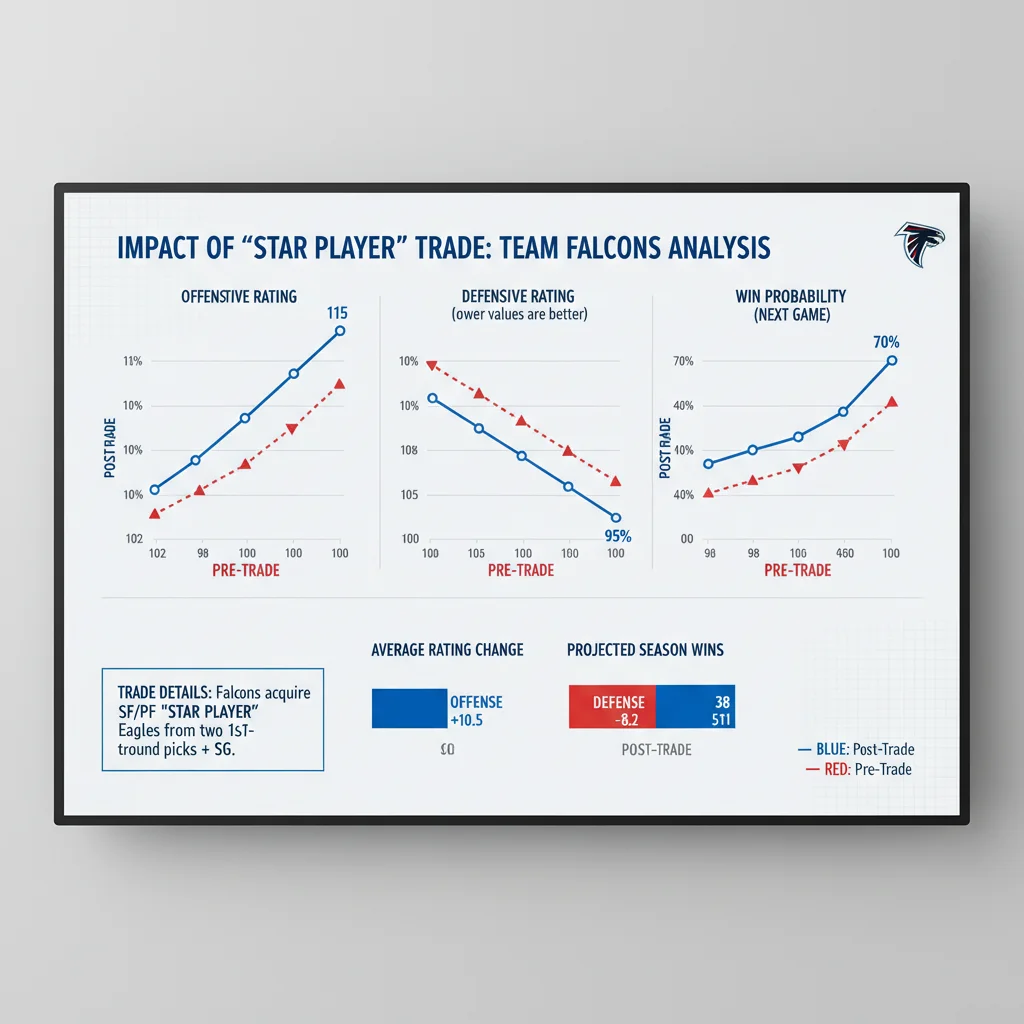
- Undervalued Teams with Improved Rosters: If a team acquires a significant piece, sportsbooks might be slow to fully adjust their lines, especially if the player’s impact is underestimated.
- Overvalued Teams with Weakened Rosters: Teams that trade away key players, particularly veterans, might experience a dip in performance that isn’t immediately reflected in the odds.
- Total Points (Over/Under): A trade can drastically alter a team’s offensive or defensive efficiency. A team acquiring a strong defensive player might see their ‘under’ hit more often, while a new scorer could push ‘overs’.
- Player Props: Individual player props are highly susceptible to trade impacts. A player moving to a team where they get more shots or assists will see their prop lines change. Similarly, players who lose touches due to a new acquisition might see their numbers dip.
Longer-Term Adjustments (Weeks After Trade)
As new players integrate, teams find their rhythm. This period requires continued monitoring.
- Identifying Emerging Trends: Look for teams that are gelling well and exceeding expectations, or those struggling more than anticipated.
- Home/Road Splits: How does the new roster perform in different environments?
- Injury Impact: New rotations might be more or less resilient to injuries.
C. Situational Betting
The trade deadline creates unique situational betting opportunities:
- Revenge Games: Players traded often have extra motivation when playing against their former teams. This can lead to exceptional individual performances.
- Team Morale Bets: A positive trade can boost team morale, leading to inspired play. A negative trade (e.g., trading away a fan favorite) can have the opposite effect.
- Back-to-Back Games: New players, especially those traveling after a trade, might be fatigued in back-to-back situations, impacting their performance.
Data and Tools for Effective Analysis
Successful NBA Trade Deadline Betting relies heavily on data-driven decisions. Here are essential tools and metrics:
Advanced Analytics Platforms
Utilize sites like Basketball-Reference, NBA.com/stats, Cleaning the Glass, and Synergy Sports. These platforms offer a wealth of advanced metrics beyond traditional box scores:
- Net Rating: A team’s point differential per 100 possessions. How does a trade impact this?
- Offensive/Defensive Efficiency: Points scored/allowed per 100 possessions. Does a new player significantly alter these?
- Usage Rate: The percentage of team possessions a player uses while on the floor. How does a new player’s usage affect existing players?
- True Shooting Percentage (TS%): A measure of shooting efficiency that accounts for field goals, three-pointers, and free throws.
- Player Impact Plus-Minus (PIP): An all-in-one metric estimating a player’s impact on a team’s net rating.
Injury Reports and News Feeds
Stay constantly updated on injury reports, as they can suddenly alter a team’s needs or the impact of a recent trade. Follow reputable NBA insiders (e.g., Adrian Wojnarowski, Shams Charania) for real-time trade news and rumors.
Betting Market Trends
Monitor how betting lines are moving across different sportsbooks. Significant line movement can indicate sharp money coming in, which might signal an overlooked factor or a mispriced line.
Common Pitfalls to Avoid in NBA Trade Deadline Betting
While opportunities abound, the trade deadline also presents unique risks. Avoid these common mistakes:
- Chasing Rumors: Don’t place bets based solely on unconfirmed rumors. Wait for official announcements.
- Overvaluing Star Power: A star player acquisition doesn’t always guarantee immediate success. Fit and team chemistry are often more important than individual talent in the short term.
- Underestimating Integration Time: New players, especially those changing conferences or systems, need time to adjust. Expect a learning curve.
- Ignoring Coaching Changes: A new coach might implement a different system, affecting how new players are utilized.
- Emotional Betting: Avoid betting on your favorite team or against a rival based on emotion. Stick to data and objective analysis.
- Betting Too Heavily on Early Games: The first few games post-trade are highly volatile. Start with smaller stakes until you have more data on how the new roster is performing.
Case Studies from Past Trade Deadlines (Hypothetical for 2026 Context)
To illustrate these concepts, let’s consider hypothetical scenarios that bettors might encounter at the 2026 NBA Trade Deadline.
Scenario 1: The Undervalued Role Player
Imagine a scenario where a struggling team, say the ‘Desert Coyotes,’ trades their starting center, a solid but unspectacular rebounder and defender, to a championship contender, the ‘Coastal Sharks,’ who desperately need interior defense. The initial line for the Sharks’ next game against a strong offensive team might not fully reflect the defensive upgrade. A bettor who recognizes the center’s specific defensive impact and the Sharks’ previous weakness could find value on the Sharks’ moneyline or a lower total points line.
Scenario 2: The Disgruntled Star Trade
Consider a star guard, known for high usage, being traded from a rebuilding team to a contender, the ‘Mountain Lions.’ While the Mountain Lions gain significant scoring, their existing point guard’s assist numbers might dip, and the team’s overall offensive flow could take a few games to adjust. A bettor might look for ‘under’ bets on the existing point guard’s assist props or even ‘under’ on the Mountain Lions’ team total for the first couple of games as they integrate the new star.
Scenario 3: The Salary Dump
A team well out of the playoff picture, the ‘River City Rapids,’ trades an aging, high-salary veteran forward for a second-round pick and a young, unproven prospect. This move is primarily for financial relief and future flexibility. The Rapids’ immediate performance is likely to suffer, as they lose a veteran presence and scoring. Betting against the Rapids in their subsequent games, particularly against strong opponents, would be a logical strategy, as their lines might not fully reflect the immediate drop-off in talent and leadership.
Managing Your Bankroll During the Trade Deadline
The increased volatility of the trade deadline period necessitates disciplined bankroll management. Even with the best analysis, unexpected outcomes can occur.
- Smaller Unit Sizes: Consider reducing your typical unit size for bets immediately following a major trade. This allows you to test the waters without risking too much.
- Diversify Bets: Don’t put all your eggs in one basket. Spread your bets across different games and markets where you identify value.
- Set Limits: Establish daily or weekly betting limits and stick to them, regardless of wins or losses.
- Track Everything: Maintain a detailed record of all your bets, including the rationale behind each wager. This helps you learn from both successes and failures.
The Human Element: Coaches, Players, and Front Offices
Beyond statistics, the human element of the NBA trade deadline cannot be overlooked. Coaches must adapt their schemes, players must adjust to new roles and teammates, and front office personnel often operate under immense pressure.
- Coaching Adaptability: Some coaches are masters at integrating new talent quickly, while others struggle. Research a coach’s history with mid-season acquisitions.
- Player Mentality: A player traded to a contender might be highly motivated, while one sent to a rebuilding team might feel deflated. This psychological aspect can influence performance.
- Front Office Signals: What signals are front offices sending? Are they aggressively buying, clearly selling, or looking to make minor tweaks? These signals can hint at future moves and overall team direction.
Conclusion: Mastering NBA Trade Deadline Betting
The 2026 NBA Trade Deadline will undoubtedly be a period of intense activity and significant shifts. For the informed bettor, these shifts are not just random events but predictable outcomes of team motivations, player dynamics, and market forces. By meticulously analyzing team needs, player impact, coaching philosophies, and leveraging advanced analytics, you can position yourself to capitalize on the inherent inefficiencies of this exciting period. Remember to stay disciplined with your bankroll, avoid emotional decisions, and continuously adapt your strategies as new information emerges. Mastering NBA Trade Deadline Betting isn’t just about predicting who gets traded, but understanding the profound ripple effects these moves have on the entire league, transforming uncertainty into a strategic advantage for profitable wagering.