Head-to-Head: A 2026 Analysis of Public vs. Sharp Money in NBA Betting
The world of NBA betting is a dynamic ecosystem, constantly shifting with every dribble, shot, and injury report. Within this intricate landscape, two dominant forces continuously vie for influence: NBA betting strategies driven by the general public, often referred to as ‘public money,’ and the meticulously calculated moves of professional bettors, known as ‘sharp money.’ For the 2026 season, understanding the interplay between these two entities is not just an academic exercise; it’s a fundamental pillar of profitable wagering. This comprehensive analysis will delve deep into how these contrasting approaches shape the betting markets, how you can identify their footprints, and crucially, how to leverage this knowledge to refine your own NBA betting strategies.
The year 2026 brings with it new rosters, evolving team dynamics, and refined statistical models, all of which contribute to the complexity of NBA betting. As the league continues to globalize and data analytics become even more sophisticated, the divergence and convergence of public and sharp money will offer unparalleled insights for astute bettors. Our goal here is to equip you with the understanding necessary to navigate these currents, identify value, and ultimately, make more informed decisions when placing your NBA wagers.
Anúncios
Understanding the Fundamentals: Public Money Explained
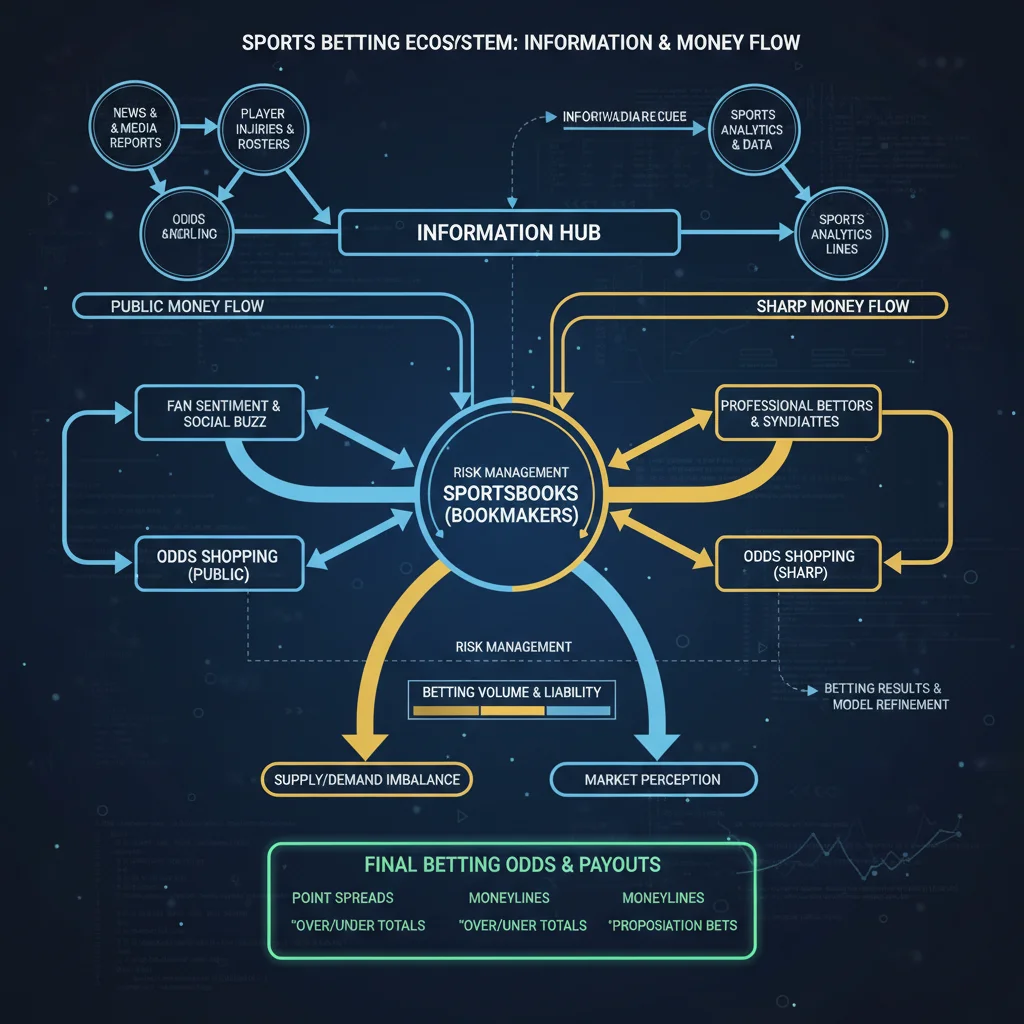
Public money, in essence, represents the collective betting volume generated by the vast majority of recreational bettors. These are the fans, the casual observers, and those who wager for entertainment or based on gut feelings rather than rigorous statistical analysis. Their NBA betting strategies are often influenced by easily accessible narratives:
- Popular Teams: Bettors tend to gravitate towards well-known, high-profile teams like the Lakers, Warriors, or Celtics, regardless of their current form or the specific matchup. This often leads to these teams being overvalued.
- Star Power: The presence of a superstar player, even if injured or underperforming, can attract significant public money. The narrative of a single player carrying a team is a powerful, albeit often misleading, draw.
- Recent Performance Bias: A team on a hot streak will often see a surge in public betting, even if their underlying metrics suggest regression is imminent. Conversely, a few bad losses can cause the public to abandon a team prematurely.
- Media Narratives: Sports media coverage, while entertaining, can inadvertently shape public perception and betting patterns. A compelling storyline can overshadow objective analysis.
- Over/Under Trends: The public often favors betting the ‘over’ in high-scoring NBA games, drawn to the excitement of offensive firepower. This can inflate totals, creating potential value on the ‘under’ for sharps.
The impact of public money is significant because of its sheer volume. While individual public bets may be small, their cumulative effect can be enormous, often moving betting lines simply due to the weight of numbers. Sportsbooks are keenly aware of these public tendencies and will adjust lines to balance their books, mitigate risk, and entice action on the less popular side. This line movement, often driven by public sentiment, creates opportunities for those who understand how to fade the public or identify where the public has mispriced a game.
Understanding the Fundamentals: Sharp Money Explained
Sharp money, on the other hand, originates from professional bettors, syndicates, and highly analytical individuals whose primary goal is to extract long-term profit from the sports betting markets. Their NBA betting strategies are characterized by a disciplined, data-driven approach:
Anúncios
- Value Betting: Sharps are constantly searching for discrepancies between the sportsbook’s odds and their own calculated probabilities. They bet when they perceive a ‘positive expected value’ (EV).
- Advanced Analytics: They employ sophisticated statistical models, proprietary algorithms, and in-depth fundamental analysis that goes far beyond basic box scores. This includes efficiency metrics, pace adjustments, lineup analysis, coaching tendencies, and more.
- Bankroll Management: Professional bettors adhere to strict bankroll management principles, ensuring their capital is protected and they can withstand variance. Their bets are typically a small percentage of their total bankroll.
- Information Edge: Sharps often have access to or are adept at interpreting nuanced information that the public might overlook, such as minor injuries, travel fatigue, schedule anomalies, or internal team dynamics.
- Disciplined Execution: Emotion plays no part in sharp betting. Decisions are made based on data and probabilities, not loyalty, hope, or recent outcomes.
The influence of sharp money is profound, not because of its volume (though individual sharp bets can be substantial), but because of its predictive accuracy. When sharps place their bets, sportsbooks pay attention. A significant wager from a known sharp or syndicate will often cause an immediate and decisive line move. This is because sportsbooks respect the analytical prowess of these bettors and view their action as an indicator of where the ‘true’ value lies. Tracking sharp money is therefore a critical component of advanced NBA betting strategies.
The 2026 Landscape: Evolving Dynamics in NBA Betting
Looking ahead to 2026, several factors will influence the interplay between public and sharp money in NBA betting:
- Data Proliferation: The amount of accessible NBA data will continue to grow exponentially. While this benefits sharps with advanced models, it also provides more fodder for public narratives, potentially making line movements more volatile.
- Player Tracking Technology: Enhanced player tracking and biometric data will offer deeper insights into player fatigue, injury risk, and performance metrics, which sharps will integrate into their models.
- Increased Betting Market Sophistication: As sports betting becomes more mainstream, the markets themselves will become more efficient. This means the windows for finding value might become smaller, requiring even more refined NBA betting strategies.
- League Parity and Superteams: The balance of power in the NBA can swing rapidly. A league with high parity might spread public money more evenly, while the emergence of dominant superteams could concentrate it, leading to different line dynamics.
- Live Betting Growth: The expansion of live betting offers continuous opportunities for both public and sharp money to react to in-game developments. Sharps can exploit pre-game mispricings that persist or emerge during live play, while the public might chase momentum.
The 2026 NBA season promises to be a fascinating battleground for bettors. The availability of more data and the increasing sophistication of betting platforms will challenge both public and sharp bettors to adapt their NBA betting strategies to stay ahead of the curve.
Identifying Public vs. Sharp Money: Practical Approaches for 2026
Distinguishing between public and sharp money is a cornerstone of effective NBA betting strategies. While sportsbooks don’t explicitly label bets, their actions (line movements) often reveal the underlying forces. Here’s how to identify them:
1. Line Movement Analysis
This is the most direct indicator. Pay close attention to how lines move after they are initially released:
- Opening Line vs. Closing Line: Compare the opening line (the first odds posted) to the closing line (the odds just before the game starts). Significant movement away from the opening line often indicates sharp action.
- Reverse Line Movement (RLM): This is a classic sharp indicator. RLM occurs when the betting line moves in the opposite direction of the public betting percentages. For example, if 80% of bets are on Team A, but the line moves in favor of Team B, it suggests sharp money is heavily backing Team B, causing the sportsbook to adjust. This is a powerful signal that the public might be on the wrong side.
- Steam Moves: A rapid, drastic change in the betting line across multiple sportsbooks, often occurring simultaneously, is known as a ‘steam move.’ This is almost always indicative of sharp money hitting the market in a coordinated fashion.

2. Betting Percentages (Public Consensus)
Many betting sites and aggregators provide data on the percentage of bets placed on each side of a game (moneyline, spread, total). This is crucial for identifying public sentiment:
- High Public Concentration: If a large percentage (e.g., 70% or more) of bets are on one side, that’s typically the public side. If the line hasn’t moved significantly, or has moved against this public consensus (RLM), it’s a red flag to fade the public.
- Money vs. Ticket Count: Some advanced tools differentiate between the percentage of ‘tickets’ (individual bets) and the percentage of ‘money’ wagered. If the ticket count is heavily on one side, but the money percentage is more balanced or even skewed the other way, it suggests a few large (sharp) bets are counteracting many small (public) bets. This is a more nuanced indicator of sharp action.
3. Understanding Key Numbers and Market Efficiency
In NBA betting, understanding key numbers (e.g., 3, 5, 7 points for spreads) is less critical than in NFL, but line efficiency is paramount. Sharps exploit inefficiencies in opening lines. By 2026, pre-game lines will be incredibly efficient, making early sharp action even more critical to identify. Your NBA betting strategies should include monitoring these early movements.
Leveraging Public vs. Sharp Money in Your NBA Betting Strategies for 2026
Now that you can identify the fingerprints of public and sharp money, how do you incorporate this into your own NBA betting strategies? Here are several actionable approaches for the 2026 season:
1. Fading the Public (When Appropriate)
This is one of the most common and often effective sharp NBA betting strategies. The public, driven by emotion and popular narratives, frequently overvalues certain teams or outcomes. When you see a heavy public consensus on one side, especially if accompanied by reverse line movement, it’s often a good time to consider betting the opposite side. This doesn’t mean blindly betting against the public every time, but rather using it as a strong signal to investigate the less popular side for value.
- Example: In 2026, if a heavily favored superstar team like the Los Angeles Lakers is getting 85% of the public bets, but the line moves against them or stays stagnant, sharp money might be on their underdog opponent. This could indicate the sharps see value in the underdog due to an overlooked factor like a key injury for the Lakers, travel fatigue, or a strong matchup for the underdog.
2. Following the Sharps (Steam Chasing)
While difficult to do consistently and profitably, ‘steam chasing’ involves betting on a line immediately after a significant sharp-driven line move. The idea is that sharps have superior information or models, and by following their action, you can capitalize on their edge before the market fully corrects. However, this requires speed and access to real-time line movement data. By 2026, automated tools might make this more accessible, but the value window will likely be very short.
- Caveat: Be cautious with steam chasing. Sometimes, a sharp move is quickly followed by an even sharper counter-move, or you might be getting a worse number than the original sharp bettor. It’s often better to understand why the sharps moved the line rather than just blindly following.
3. Contrarian Betting with Nuance
Beyond simply fading the public, a more nuanced contrarian approach involves identifying specific situations where public perception is likely to be wrong. This includes:
- Spotting Overreactions: The public often overreacts to recent events. A star player’s return from injury might generate hype, but they might not be 100%. A bad loss might cause the public to abandon a good team. Sharps exploit these overreactions.
- Underdog Value: The public generally prefers betting favorites. This can inflate favorite lines and create consistent value on well-researched underdogs.
- Total (Over/Under) Mispricings: The public often loves betting the ‘over’ in high-scoring NBA games. If there’s a strong defensive matchup, slow pace, or key offensive injuries, the ‘under’ might represent significant sharp value.
4. Developing Your Own Analytical Edge
Ultimately, the most sustainable of all NBA betting strategies is to develop your own robust analytical framework. While understanding public and sharp money is crucial, relying solely on their movements is reactive. By 2026, this means:
- Advanced Statistical Modeling: Building or utilizing models that account for pace, efficiency, defensive ratings, player-specific matchups, rest advantages, and home-court adjustments.
- Injury Analysis: Going beyond simple injury reports to understand the true impact of a player’s absence or return on team performance, particularly for role players whose impact is often underestimated by the public.
- Schedule Spot Analysis: Identifying ‘trap games,’ teams playing on back-to-backs, or facing significant travel disadvantages.
- Coaching Tendencies: Understanding how different coaches adapt to opponents, manage rotations, and perform in specific situations.
Your goal should be to identify value before the sharp money does, or at least to confirm the sharp action with your own analysis. This proactive approach is what truly separates successful long-term bettors.
Challenges and Considerations for 2026
While the insights from public and sharp money are invaluable, there are challenges to consider:
- Decoy Bets: Sometimes, sharps might place smaller bets on one side to manipulate lines before making their significant wager on the other. Identifying these ‘decoy’ bets requires experience and sophisticated tools.
- Information Lag: Unless you have access to real-time data feeds, you might be reacting to information that is already priced into the market. The edge diminishes rapidly.
- Market Efficiency: As betting markets become more efficient, the margins for error shrink. Value bets might offer smaller returns, but their frequency could increase.
- Sportsbook Algorithms: Sportsbooks are constantly refining their own algorithms to predict outcomes and manage risk. They are also adept at identifying sharp bettors and adjusting lines accordingly, making the game of cat and mouse even more complex.
The landscape of NBA betting strategies is ever-evolving. Staying informed about technological advancements, league trends, and the psychology of both public and sharp bettors will be key to success in 2026 and beyond.
Conclusion: Mastering NBA Betting Strategies in 2026
The battle between public and sharp money is a perpetual narrative in NBA betting, and it will continue to define the market in 2026. Public money, driven by emotion and mainstream narratives, creates opportunities through its predictable biases. Sharp money, fueled by data, discipline, and a relentless pursuit of value, acts as a market corrector, moving lines towards their true probability.
For the discerning bettor, the key is not just to observe this battle but to actively participate in understanding its dynamics. By meticulously analyzing line movements, understanding betting percentages, and developing your own robust analytical framework, you can elevate your NBA betting strategies beyond mere guesswork.
The 2026 NBA season offers a rich tapestry of matchups, narratives, and betting opportunities. Those who can effectively decipher the signals from both public and sharp money, and integrate these insights into a disciplined betting approach, will be best positioned to find consistent success. Remember, long-term profitability in sports betting is a marathon, not a sprint, and understanding the core forces that shape the market is your most powerful tool.
Embrace the data, trust your analysis, and use the wisdom gleaned from both the masses and the professionals to sharpen your edge. Happy betting in 2026!