Master Footvolley Positional Drills: Optimize Team Movement & Reduce Errors
Anúncios
Mastering Footvolley Positional Drills: Optimize Team Movement for a 12% Reduction in Unforced Errors This Year
Unlock Advanced Strategies to Dominate the Sand
Anúncios
Introduction: The Unseen Battleground of Footvolley
Footvolley, a captivating blend of beach volleyball and soccer, demands not only individual skill but also a profound understanding of partnership dynamics and court coverage. While spectacular bicycle kicks and acrobatic saves often steal the spotlight, the true champions of the sand are those who master the subtle art of positioning. This article delves deep into the world of footvolley positional drills, offering a comprehensive guide to optimizing team movement, enhancing communication, and, crucially, reducing unforced errors. Our goal? To equip you with the knowledge and actionable drills to achieve a remarkable 12% reduction in unforced errors this year, transforming your game from good to truly exceptional.
Many players focus intensely on perfecting their serves, passes, and attacks, often overlooking the critical role of intelligent court positioning. However, without a strong positional foundation, even the most dazzling individual plays can be undermined by gaps in defense or miscommunications in attack. The constant ebb and flow of a footvolley match requires players to anticipate, react, and move in harmony with their partner. This isn’t just about covering your own half; it’s about understanding how your movement impacts your partner’s options and the overall team’s defensive and offensive capabilities.
The beauty of footvolley positional drills lies in their ability to simulate game-like scenarios, allowing players to practice dynamic movement patterns, refine their spatial awareness, and build intuitive communication. By systematically working through these drills, teams can develop a cohesive unit that anticipates opponents’ moves, covers the court efficiently, and minimizes the costly mistakes that often decide close matches. Let’s embark on this journey to elevate your footvolley prowess, starting with the fundamental principles that underpin effective positioning.
Anúncios
The Core Principles of Effective Footvolley Positioning
Before diving into specific footvolley positional drills, it’s essential to understand the foundational principles that govern optimal court coverage and team movement. These principles serve as the blueprint for all successful footvolley partnerships.
1. The "Home Base" Concept
Every player should have a mental "home base" – a default starting position on the court from which they can launch into offensive or defensive actions. This isn’t a static spot but a dynamic area that adjusts based on the opponent’s actions, the ball’s trajectory, and your partner’s position. Generally, in a two-player team, when one player is attacking or receiving, the other should be preparing for the next touch, often slightly behind and ready to cover. Establishing and consistently returning to this home base after each touch ensures that no part of the court is left vulnerable for too long.
2. "Cover Your Partner" Philosophy
Footvolley is a game of partnership. When one player is actively engaging with the ball (receiving a serve, passing, setting, or attacking), the other player’s primary role shifts to "covering" them. This means positioning oneself to retrieve any ball that gets past the active player or to be ready for a return. For instance, if your partner is setting near the net, you should be positioned further back, ready to defend a deep shot. This symbiotic relationship is crucial for minimizing unforced errors and maintaining rallies.
3. Anticipation and Reading the Game
Superior positioning isn’t just reactive; it’s proactive. Experienced footvolley players develop an innate ability to anticipate their opponents’ moves. This involves reading body language, understanding common attack patterns, and predicting where the ball is likely to go. By anticipating, players can move into optimal positions *before* the opponent makes their play, giving them a critical advantage in reaction time and court coverage. This principle is heavily reinforced through targeted footvolley positional drills.
4. Communication: The Unspoken Language of Movement
While verbal communication is important, in the heat of a footvolley rally, much of the communication happens non-verbally through movement. Your movement signals to your partner where you are, what you’re doing, and what areas of the court you are covering or leaving open. Developing a shared understanding of these movement cues is paramount. Effective communication, both verbal and non-verbal, is the glue that holds effective positioning together, preventing collisions, confusion, and ultimately, unforced errors.
5. Court Awareness and Spatial Intelligence
Always know where you are on the court relative to the net, the sidelines, and your partner. This spatial intelligence allows you to make split-second decisions about where to move, how much ground to cover, and when to shift your weight. It’s about seeing the entire court as a dynamic puzzle and understanding how your piece fits into the larger picture at any given moment. Practicing footvolley positional drills in various court zones helps to develop this crucial awareness.
Essential Footvolley Positional Drills for Enhanced Team Movement
Now, let’s translate these principles into actionable footvolley positional drills. These drills are designed to be practiced regularly, individually and with your partner, to build muscle memory, improve reaction time, and foster seamless team coordination.
Drill 1: The "Home Base Shuffle"
Objective: To reinforce the concept of returning to a central "home base" position after each touch, ensuring constant court readiness.
Setup: Two players on one side of the court. A coach or third player initiates the ball.
Execution:
- Player A receives a soft serve or toss from the coach, passes it to Player B.
- Player A immediately shuffles back to their "home base" (e.g., slightly behind the center of their half, ready for a deep shot).
- Player B sets the ball back to the coach or performs a controlled attack.
- Player B immediately shuffles back to their "home base."
- The coach then initiates another ball, alternating players or varying the trajectory to keep them moving.
Variations: Increase the speed of the serves/tosses, vary the depth and angle of the initial ball, introduce a "live" attack from the coach requiring a defensive cover from the non-attacking player.
Focus Points: Quick recovery, smooth transitions, maintaining balance, constant communication (e.g., "Mine!" "Yours!" "Cover!").
Drill 2: "Cover Your Partner" Defensive Rotation
Objective: To develop intuitive defensive rotation and coverage when one partner is actively playing the ball.
Setup: Two players on one side of the court. Coach or third player on the opposite side to "attack."
Execution:
- Coach initiates a serve or toss towards Player A.
- Player A receives the ball and passes it towards the net for Player B to set.
- As Player A passes, Player B immediately moves to cover Player A, anticipating a possible return from the coach.
- Player B sets the ball over the net (or to the coach).
- As Player B sets, Player A shifts to cover Player B, anticipating a return.
- The coach then attacks the ball, forcing the covering player to react and defend.
Variations: Coach varies attack angles (line, cross-court), introduces fakes, requires players to defend with specific body parts (e.g., chest only, head only).
Focus Points: Seamless transition from active play to cover, reading the attacker, quick lateral movement, staying low and ready.
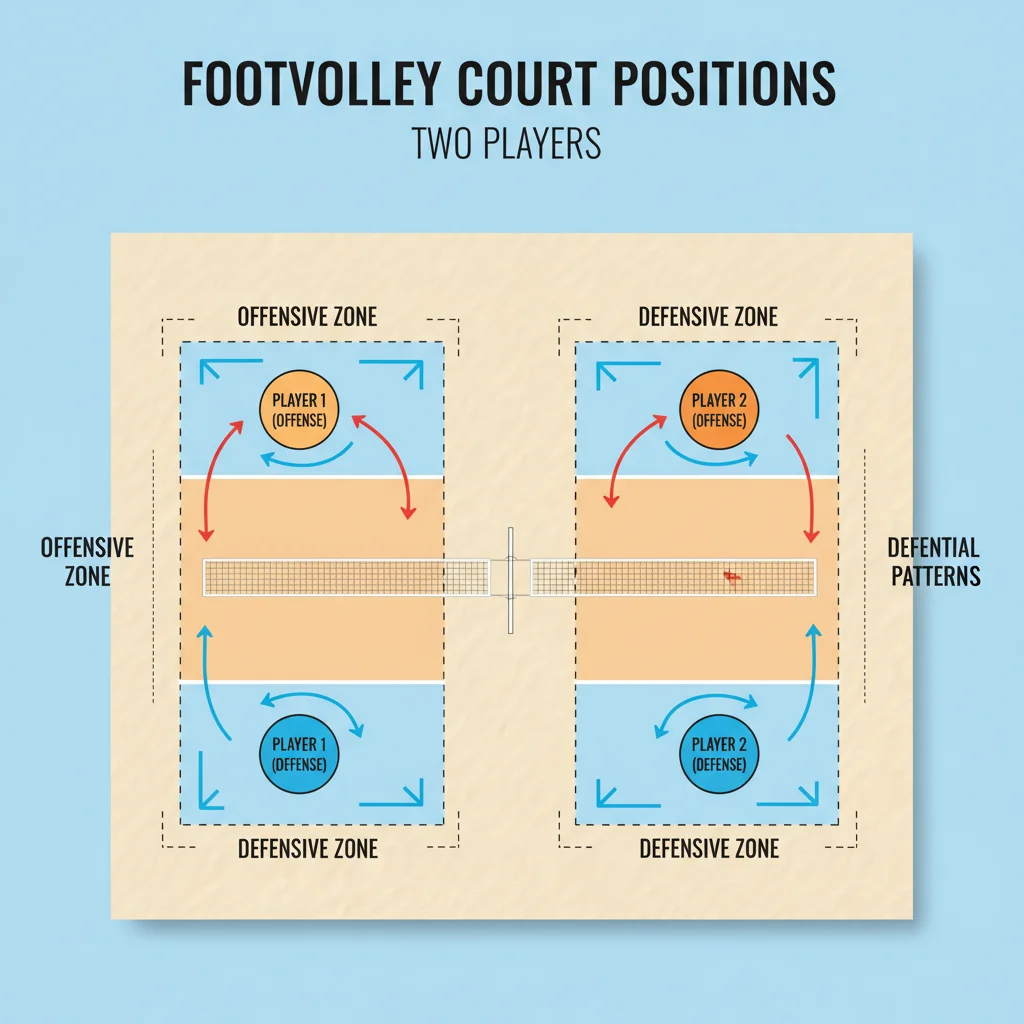
Drill 3: "Attack and Retreat" Offensive Positioning
Objective: To practice offensive positioning, attacking, and immediately retreating to a defensive ready position.
Setup: Two players on one side. Coach on the opposite side.
Execution:
- Coach initiates a ball to Player A.
- Player A passes to Player B, who sets the ball up for an attack.
- Player A attacks the ball over the net.
- Immediately after attacking, Player A retreats quickly to a defensive "home base" position, covering Player B who is also retreating after setting.
- The coach returns the ball, forcing a defensive play from either player.
Variations: Vary the attack type (power shot, drop shot), require specific attack zones, introduce a block from the coach to force a scramble defense.
Focus Points: Aggressive attack followed by rapid defensive transition, understanding when to commit to an attack and when to pull back, effective communication about who is covering what.
Drill 4: "The Zig-Zag Communication"
Objective: To enhance non-verbal communication and court coverage through dynamic, unpredictable movement.
Setup: Two players on one side of the court. Coach or third player with multiple balls.
Execution:
- The coach tosses a ball to a random spot on the players’ side of the court (e.g., deep corner).
- The player closest to the ball calls "Mine!" and moves to play it, aiming for a controlled pass to their partner.
- The partner immediately moves to cover, anticipating a return from the coach.
- After the first touch, the coach immediately tosses another ball to a different, random spot, forcing the players to react and reposition.
- Continue for a set number of touches or time.
Variations: Introduce a "live" attack after a certain number of touches, require players to use specific body parts, increase the speed and unpredictability of the tosses.
Focus Points: Constant movement, clear verbal and non-verbal communication, quick decision-making, covering open court space.
Drill 5: "Shadow Defense"
Objective: To improve defensive positioning and reaction time against various attack angles without a ball.
Setup: Two players on one side. Coach on the other side, acting as an attacker.
Execution:
- Players assume their defensive "home base" positions.
- The coach simulates various attack approaches: winding up for a power shot, faking a drop shot, aiming for line, cross-court, or deep.
- Players, without a ball, must react to the coach’s simulated attack by moving into the correct defensive position (e.g., if coach fakes a deep shot but aims short, players must quickly move forward).
- The non-active player must always cover the "defending" player.
Variations: Add verbal cues from the coach (e.g., "Line!" "Cross!"), introduce a light resistance band for movement, increase the speed of the coach’s "attacks."
Focus Points: Reading body language, quick lateral and forward/backward movement, maintaining a low stance, anticipating shot trajectory.
Implementing Footvolley Positional Drills into Your Training Regimen
Consistency is key when incorporating these footvolley positional drills into your training. Here’s how to maximize their effectiveness:
Structured Practice Sessions
Dedicate a specific portion of each training session (e.g., 20-30 minutes) to positional drills. Start with simpler drills and gradually increase complexity. Don’t rush; focus on precision and understanding before speed.
Repetition with Purpose
Mere repetition isn’t enough. Each repetition should have a clear purpose: to improve a specific aspect of positioning, communication, or movement. After each drill, take a moment to discuss what went well and what could be improved.
Video Analysis
Record your training sessions, especially when working on footvolley positional drills. Watching yourselves play provides invaluable insights into your movement patterns, gaps in coverage, and communication breakdowns. This objective feedback is crucial for identifying areas for improvement.
Gradual Increase in Intensity
Start these drills at a moderate pace to allow players to think and react. As proficiency improves, gradually increase the speed and intensity to simulate game-like pressure. This will help players execute these movements instinctively during actual matches.
Focus on Communication
Continuously emphasize both verbal and non-verbal communication during all drills. Encourage players to call out "Mine!" or "Yours!" and to use their movement to signal intentions to their partner. A silent team is often a disorganized team.
Incorporate Scenario-Based Training
Once players are comfortable with the basic drills, introduce scenario-based training. For example, "You’re down 14-13 in the tie-breaker, opponent serves to the deep corner. What’s your positioning?" This adds a layer of mental pressure and strategic thinking.
The Impact of Optimized Positional Drills on Reducing Unforced Errors
The direct correlation between effective footvolley positional drills and a reduction in unforced errors is profound. Let’s break down how these drills contribute to a cleaner, more efficient game:
Improved Court Coverage
By consistently practicing dynamic movement and coverage, teams eliminate the "holes" in their defense. This means fewer balls landing untouched, fewer scrambling last-ditch efforts, and ultimately, fewer errors born from being out of position. When players are in the right place at the right time, they can execute plays with greater control and confidence.
Enhanced Decision-Making
Positional drills train players to make quicker, more accurate decisions. When you know where you need to be and where your partner will be, the mental load of decision-making decreases, allowing for more focus on executing the actual touch. This reduces errors like hitting the ball out, into the net, or sending it to an easily defended spot.
Better Ball Control
Being in an optimal position allows players to approach the ball with better balance and body alignment. This leads to cleaner touches, more accurate passes, and more powerful attacks. Poor positioning often results in players reaching awkwardly or hitting the ball off-balance, significantly increasing the chance of an unforced error.
Reduced Communication Breakdowns
Many unforced errors stem from miscommunication – two players going for the same ball, or neither going for it. Drills that emphasize verbal and non-verbal cues build a shared understanding and trust between partners, minimizing these costly overlaps or gaps in coverage.
Increased Confidence
When players consistently find themselves in good positions, their confidence soars. This confidence translates into more aggressive, yet controlled, play. A confident team is less likely to make tentative plays or second-guess their decisions, which are common precursors to unforced errors.
Anticipation and Proactive Play
As mentioned, effective positioning is proactive. By anticipating opponents’ moves, players can intercept balls that would otherwise be winners, or position themselves to set up powerful counter-attacks. This proactive approach turns potential errors into opportunities.
The 12% Reduction Goal
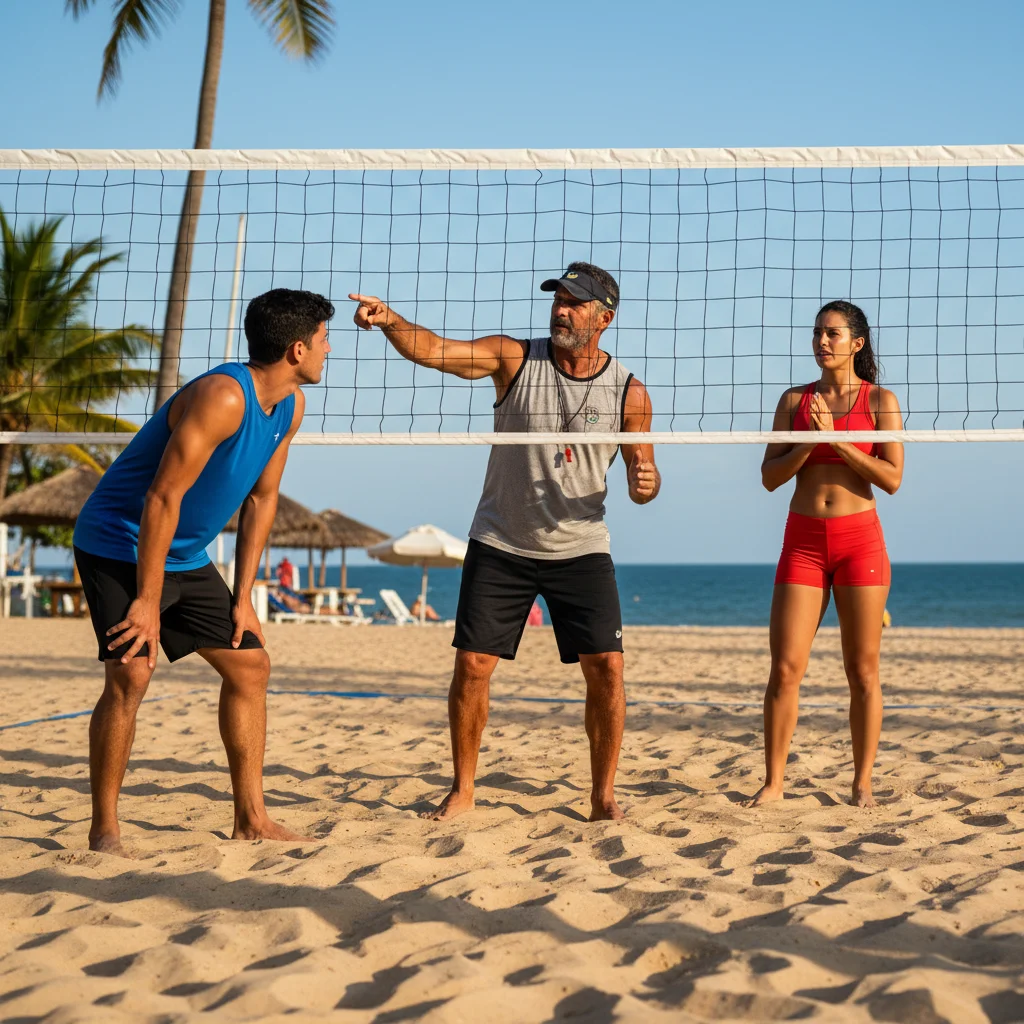
Achieving a 12% reduction in unforced errors might seem ambitious, but it’s entirely attainable through dedicated practice of footvolley positional drills. Consider tracking your unforced errors over several matches before implementing these drills. Then, after consistent training for a few weeks or months, re-evaluate. You’ll likely find a significant improvement, not just in error reduction, but also in overall game flow, rally length, and match outcomes. This improvement is a direct result of smarter, more coordinated movement and better decision-making under pressure.
Advanced Positional Strategies for Competitive Play
Once you’ve mastered the fundamentals through basic footvolley positional drills, it’s time to explore more advanced strategies that can give you a competitive edge.
Dynamic Offensive-Defensive Shifts
In high-level footvolley, players are constantly shifting between offensive and defensive roles. An advanced drill would involve one player attacking, then immediately transitioning to a deep defensive cover, while the partner, after setting, moves into a blocking or mid-court defensive position. This fluid exchange of roles requires intense focus and seamless communication.
Targeted Zone Defense
Instead of just covering "your side," advanced teams often employ targeted zone defense based on opponent tendencies. For example, if an opponent consistently attacks the deep cross-court, the defending player might cheat slightly more towards that zone, while their partner adjusts their cover accordingly. This requires a deep understanding of opponent scouting and rapid in-game adjustments.
Aggressive Net Play and Retreat
When an opportunity arises for an aggressive net attack (e.g., a drop shot or a quick touch over the net), the attacking player must execute, but then immediately retreat to cover the subsequent return. The covering partner must anticipate this retreat and adjust their position from a deep cover to a more forward-ready stance. This coordinated movement puts immense pressure on opponents.
The beauty of footvolley positional drills lies in their ability to simulate game-like scenarios, allowing players to practice dynamic movement patterns, refine their spatial awareness, and build intuitive communication. By systematically working through these drills, teams can develop a cohesive unit that anticipates opponents’ moves, covers the court efficiently, and minimizes the costly mistakes that often decide close matches. Let’s embark on this journey to elevate your footvolley prowess, starting with the fundamental principles that underpin effective positioning.
Footvolley Positional Drills with Constraints
Introduce constraints to make drills more challenging and simulate game pressure. Examples include: "You can only use your head for the first touch," "You must play the ball within two steps of receiving it," or "Score a point after three passes and an attack." These constraints force players to think creatively within positional structures.
Understanding Opponent Tendencies
Advanced positioning isn’t just about your team; it’s about reacting to and exploiting the opponent. During drills, practice anticipating where different types of attacks (e.g., strong kick, soft drop, bicycle kick) are likely to land, and adjust your team’s "home base" and coverage accordingly. This requires studying opponents and integrating that knowledge into your positional play.
Conclusion: The Path to Footvolley Excellence Through Positional Mastery
Mastering footvolley positional drills is not merely about improving individual skills; it’s about forging an unbreakable partnership, optimizing team movement, and building a strategic advantage that significantly reduces unforced errors. By committing to these drills, you’re not just practicing; you’re building a foundation of spatial awareness, communication, and anticipation that will elevate every aspect of your game.
Remember, the goal of a 12% reduction in unforced errors is a tangible metric of your progress. Track your performance, celebrate small victories, and continually strive for seamless, intuitive movement with your partner. The sand court is a dynamic environment, and those who can adapt, anticipate, and move as a cohesive unit are the ones who consistently emerge victorious.
Invest your time and effort into these footvolley positional drills. The rewards will be evident in tighter rallies, fewer mistakes, and a more dominant presence on the court. Go forth, train smart, and transform your footvolley game!