US Soccer’s 3-4-3 Formation: A 2026 Tactical Revolution Analysis

Anúncios
The landscape of international soccer is in a perpetual state of evolution, with tactical innovation being a cornerstone of success. As the United States prepares to co-host the FIFA World Cup in 2026, there’s growing speculation and analysis regarding the potential tactical shifts the US Men’s National Team (USMNT) might undergo. One formation gaining significant traction in discussions among coaches, analysts, and fans alike is the 3-4-3. This article delves deep into the implications, advantages, and challenges of the USMNT potentially adopting a 3-4-3 formation for 2026, offering a comprehensive look at this intriguing tactical evolution.
The Impending Tactical Evolution: US Soccer’s Embrace of the 3-4-3 for 2026?
The 2026 World Cup represents an unprecedented opportunity for US Soccer to showcase its growth and capabilities on home soil. Beyond the logistical and infrastructural preparations, the tactical blueprint of the national team will be under intense scrutiny. The traditional 4-3-3 and 4-2-3-1 formations have long been staples, but modern soccer’s demands for versatility, fluid transitions, and overwhelming attacking presence have opened the door for more audacious systems. The 3-4-3 formation, with its emphasis on wide play, central midfield dominance, and a potent attacking trio, presents a compelling case for the USMNT’s strategic future. Our analysis of US soccer tactics 2026 suggests a significant paradigm shift could be on the horizon.
Anúncios
Understanding the 3-4-3 Formation: A Modern Renaissance
The 3-4-3 formation is not new to soccer, having seen varying degrees of success across different eras and leagues. However, its modern interpretation, popularized by innovative coaches like Antonio Conte and Thomas Tuchel, emphasizes a high-pressing game, wing-back dynamism, and intricate attacking patterns. At its core, the 3-4-3 consists of three central defenders, four midfielders (typically two central midfielders and two wing-backs), and three forwards. This structure allows for numerical superiority in various areas of the pitch, creating both defensive solidity and attacking flair. The adaptability of this system makes it a fascinating prospect for US soccer tactics 2026.
The Defensive Structure: Three at the Back
The foundation of the 3-4-3 is its three central defenders. This trio typically comprises a central sweeper/libero flanked by two wider center-backs. This setup provides robust central defense, crucial for dealing with direct attacking threats and aerial balls. It also allows for greater flexibility in build-up play from the back, as the three defenders can spread out, creating wider passing lanes and drawing opposition attackers. The key here is the quality of these defenders – they must be comfortable on the ball, possess excellent positional awareness, and be capable of stepping into midfield when necessary to break lines. The success of this defensive unit directly impacts the entire team’s ability to transition effectively.
Anúncios
Midfield Engine Room: The Four-Man Core
The midfield in a 3-4-3 is arguably its most critical component. It typically features two central midfielders who act as the team’s engine, responsible for distributing the ball, breaking up play, and supporting both defense and attack. Their roles can vary from deep-lying playmakers to box-to-box dynamos. Flanking them are the wing-backs, who are perhaps the most demanding positions in this system. These players must possess exceptional stamina, speed, and technical ability, as they are expected to cover the entire flank, contributing to both defensive duties and providing width in attack. Their ability to deliver dangerous crosses, make overlapping runs, and track back diligently is paramount. This dynamic midfield is central to any discussion on US soccer tactics 2026.
Attacking Prowess: The Front Three
Upfront, the 3-4-3 deploys three attackers. This usually involves a central striker supported by two wide forwards. These wide forwards are often inverted wingers, cutting inside to shoot or combine with the central striker, creating havoc for opposition defenses. The central striker can be a traditional target man, a false nine, or a poacher, depending on the team’s philosophy and available personnel. The combined movement and interchanging positions of these three players are designed to overload defenders, create space, and generate numerous goal-scoring opportunities. The offensive potential of this formation is a major draw for the USMNT as they consider their US soccer tactics 2026.
Why the 3-4-3 for US Soccer in 2026?
Several factors suggest that the 3-4-3 could be a highly effective system for the USMNT, particularly with the talent pool expected to mature by 2026.
Leveraging Existing Talent and Future Prospects
The current generation of American players boasts an impressive array of talent, many of whom are already playing in top European leagues. Players like Christian Pulisic, Timothy Weah, and Gio Reyna possess the technical skills and tactical intelligence to thrive as wide forwards in a 3-4-3. In midfield, players such as Weston McKennie, Tyler Adams, and Yunus Musah offer the athleticism, work rate, and passing range required for the central midfield roles. The emergence of promising full-backs who can be converted into dynamic wing-backs further strengthens this argument. The development pathway for US soccer tactics 2026 is aligning with the requirements of this formation.
Dominance in Wide Areas
One of the significant advantages of the 3-4-3 is its ability to dominate wide areas. With dedicated wing-backs and wide forwards, the team can create numerical overloads on the flanks, facilitating dangerous crosses and cut-backs. This is particularly effective against teams that play with traditional four-at-the-back defenses, as their full-backs can be stretched and isolated. For a team looking to impose its will and dictate the tempo, controlling the width of the pitch is crucial.
Defensive Solidity and Flexibility
While often perceived as an attacking formation, the 3-4-3 can offer significant defensive solidity. When defending, the wing-backs drop back, forming a compact back five, making it difficult for opponents to break through centrally or down the flanks. The two central midfielders provide an additional shield in front of the defense, while the front three can initiate a high press, disrupting the opponent’s build-up play. This defensive versatility is a key component of effective US soccer tactics 2026.
Surprise Factor and Adaptability
Adopting a 3-4-3 could provide a tactical advantage, particularly if opponents are accustomed to facing the USMNT in a 4-3-3 or 4-2-3-1. The element of surprise can be a powerful weapon in international tournaments. Furthermore, the 3-4-3 is highly adaptable; it can easily transition into a 5-4-1 defensive shape or a more aggressive 3-2-5 attacking structure, depending on the game state and opponent. This tactical fluidity would be invaluable for the USMNT in 2026.
Challenges and Considerations for Implementation
Despite its potential benefits, transitioning to a 3-4-3 is not without its challenges. The successful implementation of this system requires specific player profiles, rigorous coaching, and a significant amount of adaptation time.
Player Profile Requirements
As mentioned, the 3-4-3 demands highly specialized players, particularly in the wing-back roles. These players need to possess exceptional physical attributes – endurance, speed, and strength – coupled with technical proficiency in both attacking and defending. Finding two such players who can consistently perform at the international level is a significant hurdle. Similarly, the central defenders must be comfortable in one-on-one situations and adept at playing out from the back. Any deficiency in these areas can expose the team defensively.
Tactical Discipline and Understanding
The 3-4-3 is a complex system that requires immense tactical discipline and understanding from every player. Each player must be aware of their positioning, their teammates’ movements, and how to react in different phases of play – offense, defense, and transitions. This level of tactical sophistication takes time to instill and perfect, especially with players who are accustomed to different systems at their club level. The coaching staff would need to dedicate considerable effort to ensure every player fully grasps the intricacies of the formation for US soccer tactics 2026.
Vulnerability to Counter-Attacks
While the 3-4-3 can offer defensive solidity, it can also be vulnerable to quick counter-attacks, especially if the wing-backs are caught high up the pitch. If the central midfielders are bypassed, the three central defenders can be exposed to numerical disadvantages. This necessitates a strong defensive midfield presence and quick transitions from attack to defense. Managing these vulnerabilities will be a critical aspect of mastering US soccer tactics 2026.
Adaptation Time
Implementing a new tactical system, especially one as demanding as the 3-4-3, requires significant adaptation time. The USMNT would need ample opportunities to train and experiment with the formation in competitive matches before the 2026 World Cup. This includes friendly matches, CONCACAF Nations League fixtures, and potentially Gold Cup tournaments. Rushing the implementation could lead to disjointed performances and undermine team cohesion.
Historical Context and Precedents in US Soccer
While the 3-4-3 hasn’t been a consistent staple for the USMNT, there have been periods and coaches who have experimented with three-at-the-back systems. Understanding these past attempts can offer valuable lessons for any future implementation. Historically, US soccer has often favored more conservative, defensively solid formations, but the increasing quality of American players and the global trend towards more attacking football could pave the way for a bolder approach. The evolution of US soccer tactics 2026 will undoubtedly draw on lessons from the past.
Youth Development and Academy Systems
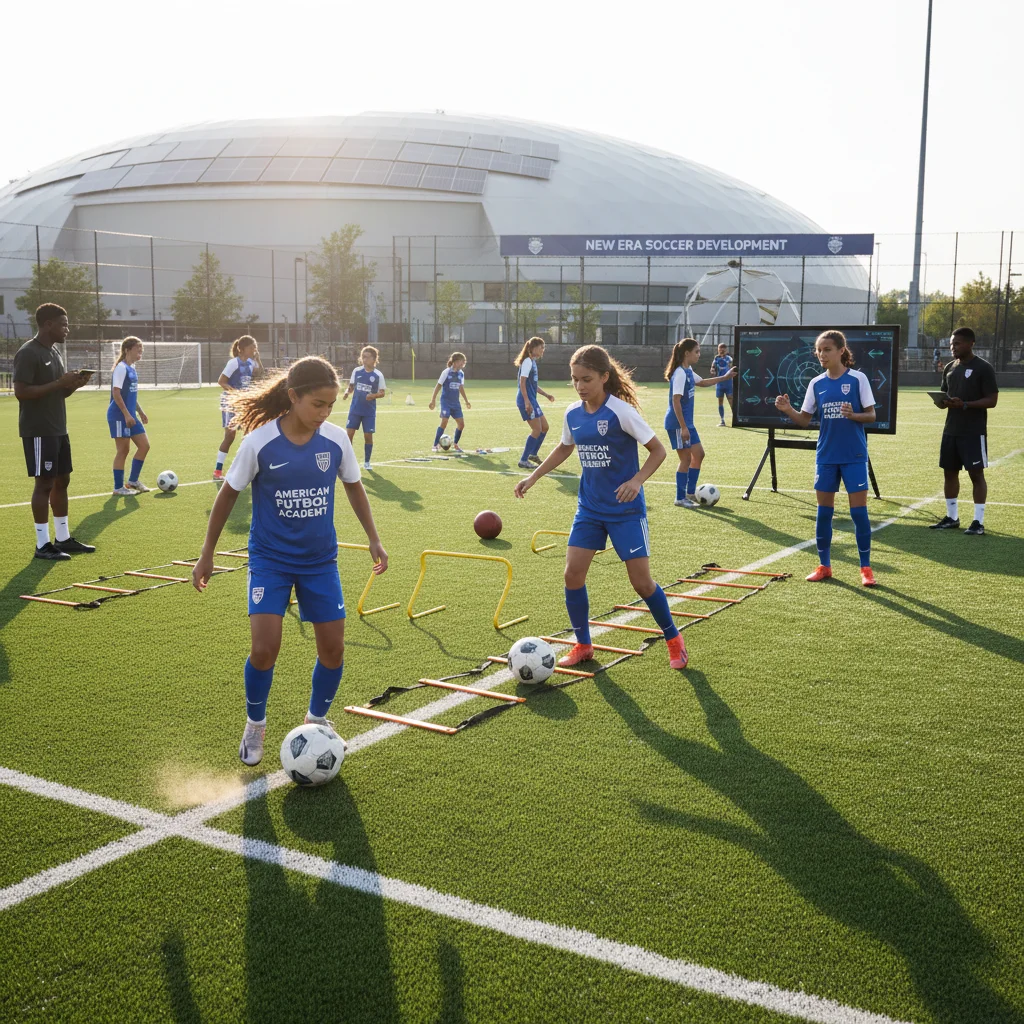
For a tactical shift to be truly sustainable, it must be integrated into the youth development pathways. If the USMNT aims to consistently play a 3-4-3, then academy systems across the country should begin to expose young players to the demands and nuances of this formation. This includes coaching players on the specific roles of wing-backs, ball-playing center-backs, and inverted forwards from an early age. A coherent national tactical philosophy would ensure a steady supply of players suitable for the system, solidifying US soccer tactics 2026 for the long term.
Impact on Player Roles and Development
A shift to a 3-4-3 would inevitably redefine roles for many players within the USMNT setup and, by extension, impact how young American players are developed. Central defenders would need to be more comfortable carrying the ball forward and initiating attacks. Midfielders would require even greater stamina and tactical awareness to cover vast areas. Forwards would need to be versatile, capable of playing centrally or wide, and adept at interchanging positions. This demands a holistic approach to player development, focusing on technical skills, physical conditioning, and tactical intelligence from a young age. The success of US soccer tactics 2026 hinges on nurturing players who fit this mold.
The Wing-Back Conundrum
The wing-back position is perhaps the most specialized and physically demanding role in a 3-4-3. Players in this role must possess the defensive discipline of a full-back and the attacking prowess of a winger. They are responsible for providing width in attack, delivering crosses, making overlapping runs, and tracking back to defend their flank. Finding two elite-level wing-backs who can consistently perform these duties at the international level will be a significant challenge and a key determinant of the formation’s success for US soccer tactics 2026. The current US talent pool has several strong candidates who could adapt, but dedicated coaching and focus would be essential.
Central Midfield Dominance
The two central midfielders are the engine room of the 3-4-3. They must be adept at winning possession, distributing the ball, and supporting both defense and attack. One might be a more defensive-minded pivot, shielding the back three, while the other acts as a box-to-box midfielder, driving forward and linking up with the attack. Their ability to control the tempo of the game, break up opposition attacks, and initiate transitions will be crucial. The depth and quality in the US central midfield pool are encouraging, offering promising options for these pivotal roles in the US soccer tactics 2026 strategy.
Comparison with Traditional Formations (4-3-3, 4-2-3-1)
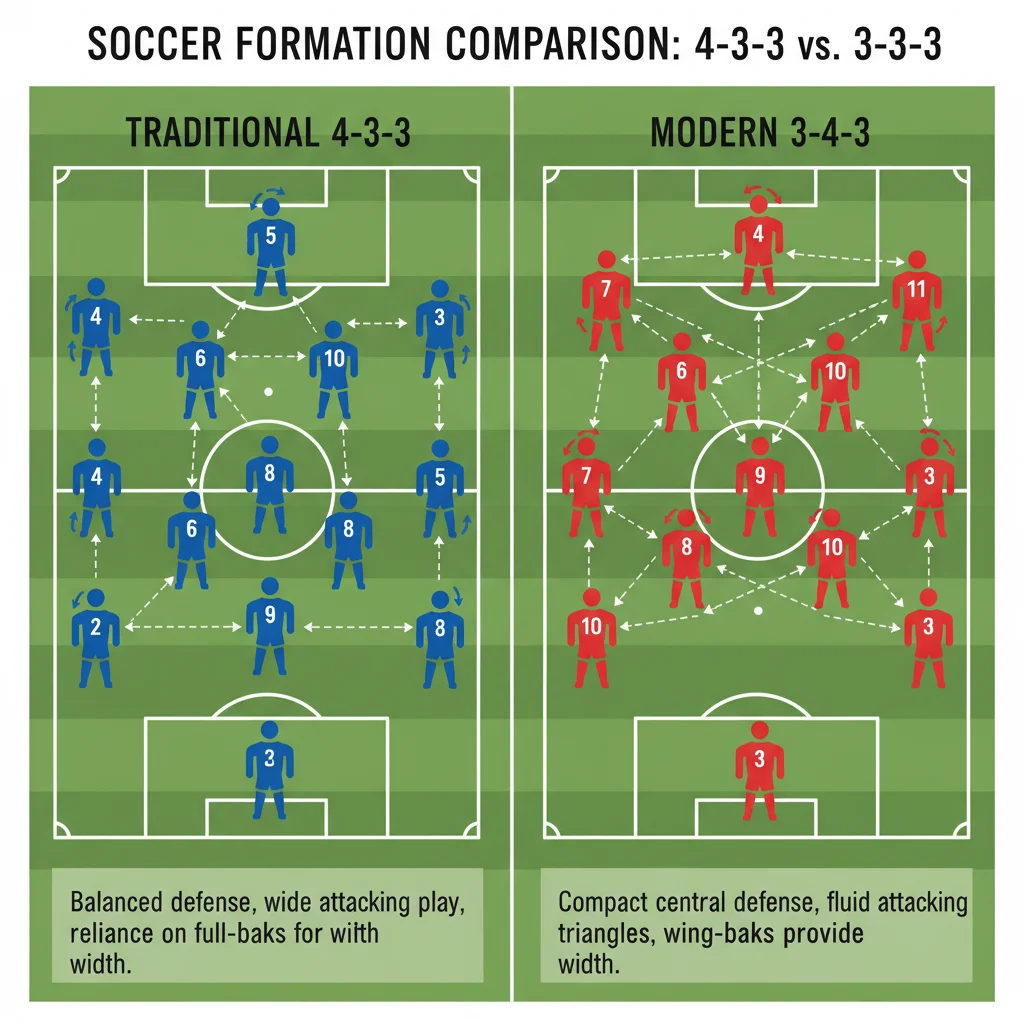
To fully appreciate the potential of the 3-4-3, it’s helpful to compare it with the formations the USMNT has traditionally employed. The 4-3-3 offers strong attacking width and a balanced midfield, while the 4-2-3-1 provides a solid defensive base with a creative attacking midfielder. However, both can sometimes struggle with creating numerical advantages in specific areas of the pitch against top-tier opposition. The 3-4-3, by contrast, explicitly seeks to create these overloads, especially in wide attacking zones and through central midfield density. It sacrifices an extra defender (compared to a 4-2-3-1 with two holding midfielders) or an extra midfielder (compared to a traditional 4-4-2) for more attacking options, relying on the dynamism of the wing-backs to cover defensive duties. This comparison highlights the bold shift in US soccer tactics 2026 if this formation is adopted.
Advantages Over 4-3-3:
- Central Defensive Solidity: Three dedicated center-backs offer more protection against central strikers.
- Width in Attack: Wing-backs provide natural width, allowing wide forwards to cut inside.
- Midfield Overload Potential: Can create 4v3 in midfield against teams playing with three central midfielders.
Advantages Over 4-2-3-1:
- Greater Attacking Presence: Three dedicated forwards can put more pressure on opposition defenses.
- Better Build-Up from Back: Three defenders provide more passing options to bypass the first line of press.
- Dynamic Wing Play: Wing-backs offer relentless attacking and defensive contributions along the entire flank.
The Road to 2026: Preparation and Implementation
If the USMNT coaching staff, led by Gregg Berhalter or his successor, decides to seriously consider the 3-4-3, the preparation timeline leading up to 2026 will be critical. This would involve:
- Player Identification and Recruitment: Actively scouting and developing players who fit the specific demands of the 3-4-3, particularly wing-backs and ball-playing center-backs.
- Extensive Training Camps: Dedicating significant time in national team camps to drilling the tactical movements, defensive responsibilities, and attacking patterns of the formation.
- Experimental Matches: Utilizing friendly matches and less critical competitive fixtures to test the formation against various opponents and make necessary adjustments.
- Psychological Preparation: Ensuring players are mentally prepared for the demanding roles and the high level of tactical discipline required.
- Flexibility: While potentially favoring the 3-4-3, the team must also retain the ability to switch to other formations (like a 4-3-3) as tactical situations demand, making them less predictable.
The journey to mastering US soccer tactics 2026 with a 3-4-3 will be challenging but could yield significant rewards.
Conclusion: A Bold New Chapter for US Soccer?
The potential adoption of a 3-4-3 formation for the USMNT in 2026 represents a bold and exciting tactical direction. It aligns with modern soccer trends, leverages the strengths of the current and emerging American talent pool, and offers a compelling pathway to dominating games both defensively and offensively. While significant challenges in terms of player profiles, tactical discipline, and adaptation time remain, the rewards of a successful implementation could be immense. As the host nation, the US will be under immense pressure to perform, and a well-executed tactical strategy like the 3-4-3 could be the key to unlocking their full potential and making a deep run in their home World Cup. The evolution of US soccer tactics 2026 is a narrative worth following closely, as it could define a generation of American football.