US Soccer Tactical Evolution: 4-3-3 Dominance 2025-2026
Anúncios
The Unstoppable Rise: US Soccer Tactical Evolution and the 4-3-3 Formation’s Dominance in 2025 and Beyond
The landscape of US soccer is in a constant state of flux, a vibrant tapestry woven with emerging talent, innovative coaching, and a relentless pursuit of global recognition. As we approach the pivotal years of 2025 and 2026, the tactical evolution within the sport is becoming increasingly clear. One formation, in particular, stands out as a dominant force: the 4-3-3. This article will delve deep into the reasons behind its ascendancy, its current impact, and its projected trajectory in shaping the future of US soccer tactics.
Anúncios
Understanding the 4-3-3: A Tactical Blueprint for Success
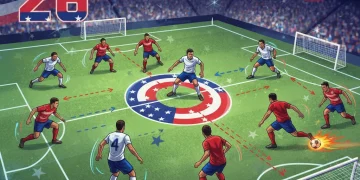
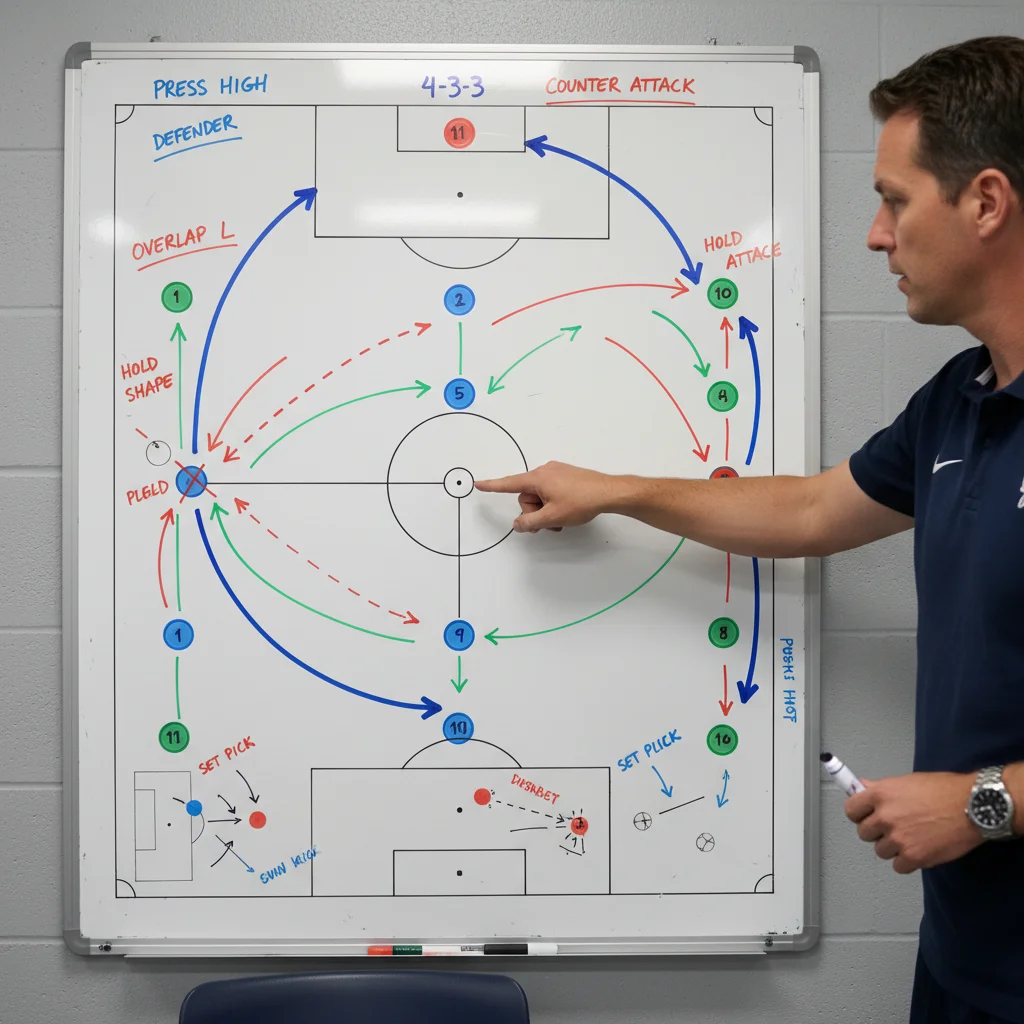
The 4-3-3 formation, at its core, is a system designed for attacking football, emphasizing width, fluid movement, and numerical superiority in key areas. It typically consists of four defenders, three midfielders, and three forwards. However, its beauty lies in its adaptability, allowing for various interpretations depending on the coach’s philosophy and the players’ strengths. In the context of US soccer tactics, this flexibility has proven invaluable.
Historical Context and Global Influence
While often associated with legendary Dutch and Spanish teams, the 4-3-3 has a rich history that predates modern football. Its principles of positional play and offensive thrust have been refined over decades. In recent years, its adoption by top European clubs and national teams has provided a clear blueprint for aspiring footballing nations, including the United States. The exposure of American players to these systems in Europe, coupled with the increasing sophistication of coaching in MLS and youth academies, has accelerated its integration into the US soccer ecosystem.
Key Characteristics and Advantages
- Attacking Prowess: With three dedicated forwards, the 4-3-3 naturally lends itself to creating numerous scoring opportunities. The wide forwards can stretch defenses, while the central striker acts as a focal point.
- Midfield Control: The three-man midfield offers a strong central presence, allowing for control of possession, breaking up opposition attacks, and dictating the tempo of the game. A common configuration includes a defensive midfielder (holding midfielder) flanked by two more advanced central midfielders (box-to-box or attacking midfielders).
- Defensive Solidity (with pressing): While often seen as an attacking formation, a well-drilled 4-3-3 can be defensively robust. High pressing from the forwards and midfielders can disrupt build-up play, forcing turnovers in dangerous areas. The full-backs are crucial in providing defensive cover and attacking width.
- Fluidity and Interchanges: The system encourages dynamic movement and positional interchanges, making it difficult for opponents to mark individual players. This fluidity is a hallmark of modern US soccer tactics.
The 4-3-3’s Dominance in 2025: Why Now?
The year 2025 is shaping up to be a significant period for US soccer tactics, with the 4-3-3 formation establishing itself as the preferred system across various levels of the sport. Several factors contribute to this dominance:
Anúncios
Player Development and Profile
The current generation of American players, particularly those emerging from sophisticated MLS academies and European youth systems, are increasingly well-suited to the demands of the 4-3-3. We are seeing a proliferation of:
- Technically Proficient Midfielders: Players capable of retaining possession, distributing the ball effectively, and making incisive runs.
- Dynamic Wingers: Fast, skillful players who can beat defenders one-on-one, cut inside, or deliver dangerous crosses.
- Athletic Full-backs: Defenders who can contribute significantly in both attack and defense, providing width and overlapping runs.
- Versatile Strikers: Forwards who are not just goal poachers but can also link play, press from the front, and create space for others.
This player profile aligns perfectly with the requirements of the 4-3-3, making its implementation more natural and effective for US teams.
Coaching Philosophy and Education
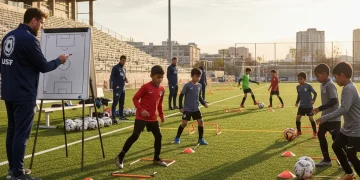
The coaching landscape in the US has evolved dramatically. There’s a growing emphasis on modern tactical principles, with coaches increasingly educated in possession-based, attacking football. Coaching licenses and development programs now heavily feature the intricacies of systems like the 4-3-3, ensuring that coaches are well-equipped to teach and implement these strategies from youth levels upwards. This consistent pedagogical approach fosters a unified tactical understanding across different age groups and leagues, cementing the 4-3-3’s place in US soccer tactics.
MLS Influence and International Exposure
Major League Soccer (MLS) has become a tactical laboratory for American football. Many MLS teams have successfully adopted and adapted the 4-3-3, showcasing its effectiveness within the league’s competitive environment. The influx of international players and coaches with experience in top European leagues has also brought a deeper understanding and appreciation for this formation. Furthermore, the US Men’s National Team (USMNT) and Women’s National Team (USWNT) have both demonstrated a preference for dynamic, attacking formations, often utilizing variations of the 4-3-3, further solidifying its status as a benchmark for US soccer tactics.
Case Studies: MLS Teams and the USMNT in 2025
In 2025, we’ve seen numerous examples of the 4-3-3’s successful implementation. Teams like the Seattle Sounders, LAFC, and Atlanta United have, at various points, showcased the formation’s strengths, albeit with their unique stylistic nuances. Their ability to control midfield, generate wide attacking threats, and press high has often been a direct result of a well-executed 4-3-3.
The USMNT, under its current coaching staff, has also leaned heavily into systems that resemble the 4-3-3, particularly when facing opponents where they aim to dominate possession and dictate play. The tactical flexibility within this framework allows them to transition seamlessly between attacking phases and defensive solidity, a crucial aspect for international success.
Adapting the 4-3-3: Variations and Nuances in US Soccer
While the core principles remain, the 4-3-3 is not a monolithic entity. Its strength in US soccer tactics lies in its adaptability. Coaches are constantly tweaking its application to suit specific opponents, player availability, and match situations.
The False Nine
One notable adaptation is the use of a ‘false nine’ – a central forward who drops deep into midfield, pulling central defenders out of position and creating space for wide forwards or attacking midfielders to exploit. This tactic requires intelligent, technically gifted players who are comfortable operating in different zones. It’s a strategy that has seen increasing use as US players develop a higher footballing IQ.
Inverted Wingers and Overlapping Full-backs
The deployment of ‘inverted wingers’ (e.g., a right-footed player on the left wing) who cut inside to shoot or combine with midfielders, combined with overlapping full-backs providing natural width, is another common variation. This creates multifaceted attacking threats and stretches opposition defenses both horizontally and vertically. The athleticism and technical skill of modern American full-backs make this a particularly effective strategy in US soccer tactics.
Midfield Triangles: The Engine Room
The midfield trio is the engine of the 4-3-3. The specific roles within this triangle can vary: a deep-lying playmaker, a box-to-box midfielder, and an advanced attacking midfielder (a ‘number 8’ or ‘number 10’ hybrid). The balance and chemistry within this unit are paramount for controlling the game, transitioning effectively, and providing defensive cover. The evolution of American midfielders, capable of performing these nuanced roles, has been crucial to the formation’s success.
The Future of US Soccer Tactics: The 4-3-3 in 2026 and Beyond
Looking ahead to 2026, the 4-3-3 is not merely a fleeting trend; it’s poised to be a foundational element of US soccer tactics for years to come. The World Cup on home soil will undoubtedly be a catalyst for further tactical innovation and refinement, and the 4-3-3 will likely play a central role.
Continued Player Development and Specialization
The focus on developing players specifically suited to the demands of the 4-3-3 will only intensify. Academies will continue to prioritize technical proficiency, tactical intelligence, and physical conditioning that supports this dynamic system. We can expect to see even more specialized roles emerge within the formation, with players trained from a young age to excel in specific positions within the 4-3-3 framework.
Technological Integration and Data Analytics
The use of advanced technology and data analytics will further refine the application of the 4-3-3. Coaches will have access to unprecedented levels of information regarding player performance, opponent analysis, and tactical effectiveness. This data will allow for even more precise adjustments and personalized training regimens, optimizing the 4-3-3 for peak performance. This data-driven approach is becoming an indispensable part of modern US soccer tactics.
Global Tactical Trends and Counter-Tactics
While the 4-3-3 is dominant, the tactical landscape is always evolving. Opposing teams will inevitably develop counter-tactics to nullify its strengths. This will force US coaches to constantly innovate and adapt their 4-3-3 approach, perhaps integrating elements of other formations or developing more sophisticated in-game adjustments. The ability to switch seamlessly between formations or modify roles within the 4-3-3 will be a key differentiator.
Youth Soccer and Grassroots Impact
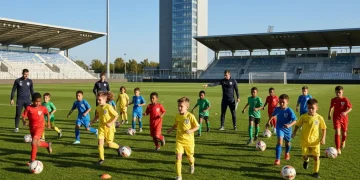
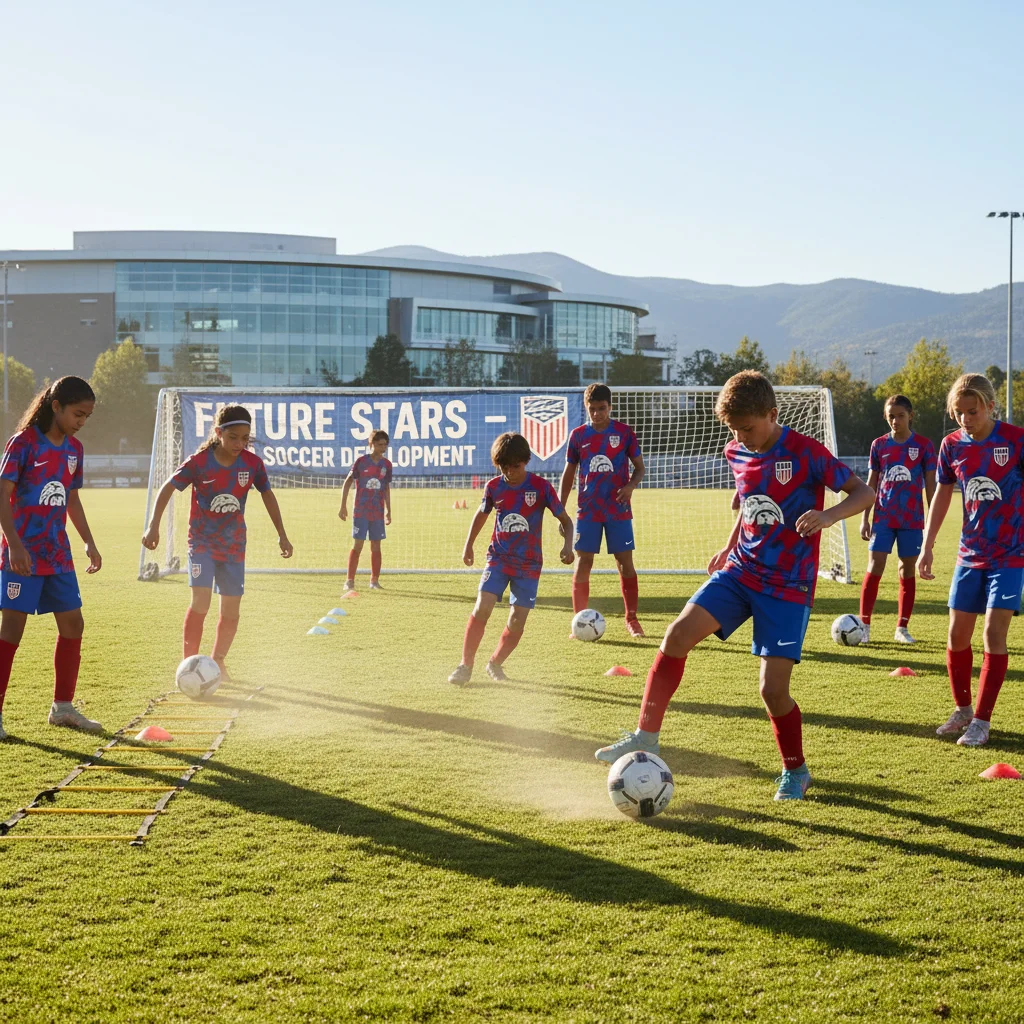
The influence of the 4-3-3 extends far beyond professional leagues. Youth soccer programs across the country are increasingly adopting this formation, laying the groundwork for future generations of players who are comfortable and proficient in its demands. This grassroots adoption ensures a consistent tactical philosophy from the earliest stages of development, creating a pipeline of talent that understands and can execute complex US soccer tactics.
Challenges and Considerations for the 4-3-3 in US Soccer
Despite its dominance, the 4-3-3 is not without its challenges. Implementing it effectively requires specific player profiles and a high level of tactical discipline.
Vulnerability to Counter-Attacks
With full-backs often pushed high up the pitch and midfielders joining the attack, the 4-3-3 can be vulnerable to quick counter-attacks if possession is lost in dangerous areas. This necessitates a strong defensive midfielder and disciplined recovery runs from all players. The ability to transition quickly from attack to defense is paramount.
Demanding Physical Requirements
The high-pressing and fluid movement inherent in the 4-3-3 demand exceptional physical fitness and stamina from all players. Maintaining intensity for 90 minutes, especially in the demanding climates of US soccer, is a significant challenge that requires meticulous physical preparation.
Reliance on Key Individuals
While a strong collective is essential, the 4-3-3 often relies on the individual brilliance of its wide forwards or the creativity of its central midfielders to unlock stubborn defenses. Injuries or a dip in form for these key players can significantly impact the formation’s effectiveness. Developing depth in these crucial positions is a continuous challenge for US soccer tactics.
Tactical Rigidity vs. Flexibility
Coaches must strike a delicate balance between instilling a clear tactical identity and maintaining enough flexibility to adapt to different match scenarios. Over-reliance on a single system, even one as versatile as the 4-3-3, can make a team predictable. The ability to switch seamlessly between formations or modify roles within the 4-3-3 will be a key differentiator.
The Role of the National Team in Shaping Tactical Identity
The US Men’s and Women’s National Teams play a pivotal role in shaping the tactical identity of US soccer tactics. Their successes and failures on the international stage provide valuable lessons and benchmarks for the entire ecosystem. When the national teams adopt and succeed with the 4-3-3, it sends a clear message down to the youth levels, encouraging its widespread implementation and refinement.
USWNT’s Influence
The USWNT has long been a trailblazer, often employing dynamic attacking formations that share many characteristics with the 4-3-3. Their consistent success has inspired a generation of female players and coaches to embrace proactive, possession-based football. This influence trickles down to youth development, ensuring that young players are exposed to these advanced tactical concepts early in their careers.
USMNT’s Evolution
The USMNT’s tactical evolution has been more varied, but recent years have seen a strong leaning towards systems that prioritize technical quality, pressing, and fluid attacking movements, often manifesting as a 4-3-3 or a close variant. As the team prepares for the 2026 World Cup, the refinement of these tactics will be paramount, and the 4-3-3 is expected to be a cornerstone of their strategic approach.
Conclusion: A Bright Future for US Soccer Tactics with the 4-3-3 at its Core
The tactical evolution of US soccer is a fascinating journey, and as we navigate 2025 and look towards 2026, the 4-3-3 formation stands out as a beacon of modern football. Its ability to combine attacking prowess with midfield control and defensive solidity, coupled with the growing talent pool and sophisticated coaching within the US, makes it an ideal system for the nation’s footballing ambitions. While challenges remain, the continuous adaptation, technological integration, and grassroots adoption of the 4-3-3 suggest a bright future for US soccer tactics, one that promises exciting, high-quality football on both the domestic and international stages. The dominance of this versatile formation is not just a trend; it’s a testament to the maturation and strategic foresight within American soccer, setting the stage for an impactful showing on the global stage and a lasting legacy for the sport in the United States.