MLS Set Piece Dominance: Unpacking 20% of Goals from Free Kicks and Corners in 2025

Anúncios
In the ever-evolving landscape of Major League Soccer (MLS), where athleticism, tactical ingenuity, and individual brilliance often steal the spotlight, one area has consistently proven to be a crucial differentiator: set pieces. For years, the importance of free kicks and corners has been acknowledged, but the 2025 MLS season has brought this into sharper focus than ever before. A staggering 20% of all goals scored in the league during this period originated from these dead-ball situations, a statistic that underscores a profound tactical shift and a renewed emphasis on maximizing every opportunity. This comprehensive analysis will explore the factors contributing to this trend, delve into the tactical innovations employed by MLS teams, highlight the key players making a difference, and project the future impact of set pieces on the league.
The Unmistakable Rise of MLS Set Piece Goals in 2025
The 2025 MLS season will be remembered not just for its thrilling matches and burgeoning talent, but for the undeniable impact of set pieces on goal-scoring records. The data is clear: one in five goals scored across the league has come from a free kick or a corner. This isn’t merely a statistical anomaly; it represents a deliberate and strategic pivot by coaches and technical staff to exploit moments of dead-ball precision. The implications are vast, affecting everything from player recruitment and training methodologies to in-game tactical adjustments. Understanding this phenomenon is key to comprehending the modern MLS game.
Anúncios
For a league often characterized by its high-tempo, end-to-end action, the increasing reliance on set pieces might seem counterintuitive. However, it reflects a growing maturity in MLS tactics, where efficiency and maximizing scoring opportunities are paramount. As defenses become more organized and open-play chances harder to create, set pieces offer a structured pathway to goal. They provide a brief window of predictability in an otherwise chaotic sport, allowing for meticulously planned routines and specialized roles to come to the fore.
Why the Surge in MLS Set Piece Goals? Tactical Deep Dive
Several interconnected factors contribute to the significant rise in MLS set piece goals. Firstly, the overall quality of players in the league has improved dramatically. Teams now boast specialists capable of delivering pinpoint crosses from corners and executing precise free kicks with both power and curl. These aren’t just one-off moments of brilliance; they are the result of countless hours on the training ground, honing technique and understanding spatial relationships within the penalty area.
Secondly, coaching strategies have evolved. MLS coaches are increasingly employing dedicated set-piece coaches or allocating significant time to set-piece drills. This specialized attention allows for the development of complex routines, decoy runs, and intelligent blocking schemes designed to create space for attackers. The days of simply lumping the ball into the box are largely over; modern set pieces are intricate plays, akin to offensive schemes in American football or basketball.
Anúncios
Thirdly, the physical attributes of MLS players play a role. The league features a growing number of tall, athletic defenders and forwards who are dominant in aerial duels. When these players are strategically positioned during set pieces, they become formidable targets, capable of winning headers and converting chances. The combination of expert delivery and strong aerial presence is a potent recipe for set-piece success.
The Art of the Corner Kick: Crafting Opportunities
Corners represent a significant portion of the 20% of MLS set piece goals. The evolution of corner kick routines is fascinating. Teams are moving beyond the traditional inswinging or outswinging delivery to explore a wider array of options. Short corners, designed to draw defenders out and create space centrally, are becoming more prevalent. Additionally, ‘second ball’ strategies, where teams aim to win the initial header and then capitalize on the ensuing scramble, are meticulously rehearsed.
The targeting of specific zones within the penalty area is also crucial. Some teams focus on the near post for flick-ons, while others aim for the far post to exploit mismatches or late runs. The element of surprise is key, with teams often varying their delivery and attacking patterns to keep defenders guessing. The psychological aspect is also important; a well-executed corner can inject confidence into the attacking team and sow doubt among the defenders.
Moreover, the defensive setups against corners have also become more sophisticated. Man-marking, zonal marking, and hybrid systems are all employed, but the best attacking teams find ways to disrupt these structures. This constant tactical arms race between offense and defense makes set pieces a captivating aspect of the game.
Free Kick Finesse: Direct and Indirect Threats
Free kicks, both direct and indirect, contribute significantly to the MLS set piece goals tally. Direct free kicks from dangerous positions outside the box are often opportunities for moments of individual brilliance. Players with exceptional striking technique can bend the ball over walls, dip it under the crossbar, or place it precisely into the top corner. The ability to do this consistently is a rare and valuable asset.
Indirect free kicks, particularly those around the penalty box, often mirror corner kick routines in their complexity. Teams use elaborate setups to create shooting opportunities or to deliver dangerous crosses into the box. The advantage of an indirect free kick over a corner is the closer proximity to goal and the ability to choose the exact angle of delivery without the constraint of the corner flag.
The defensive wall, while a primary deterrent, can also be exploited. Clever free-kick takers might aim for gaps in the wall, or use a ‘dummy’ runner to distract the goalkeeper or create a momentary opening. The psychological battle between the free-kick taker and the goalkeeper is a mini-drama in itself, often decided by split-second decisions and perfect execution.
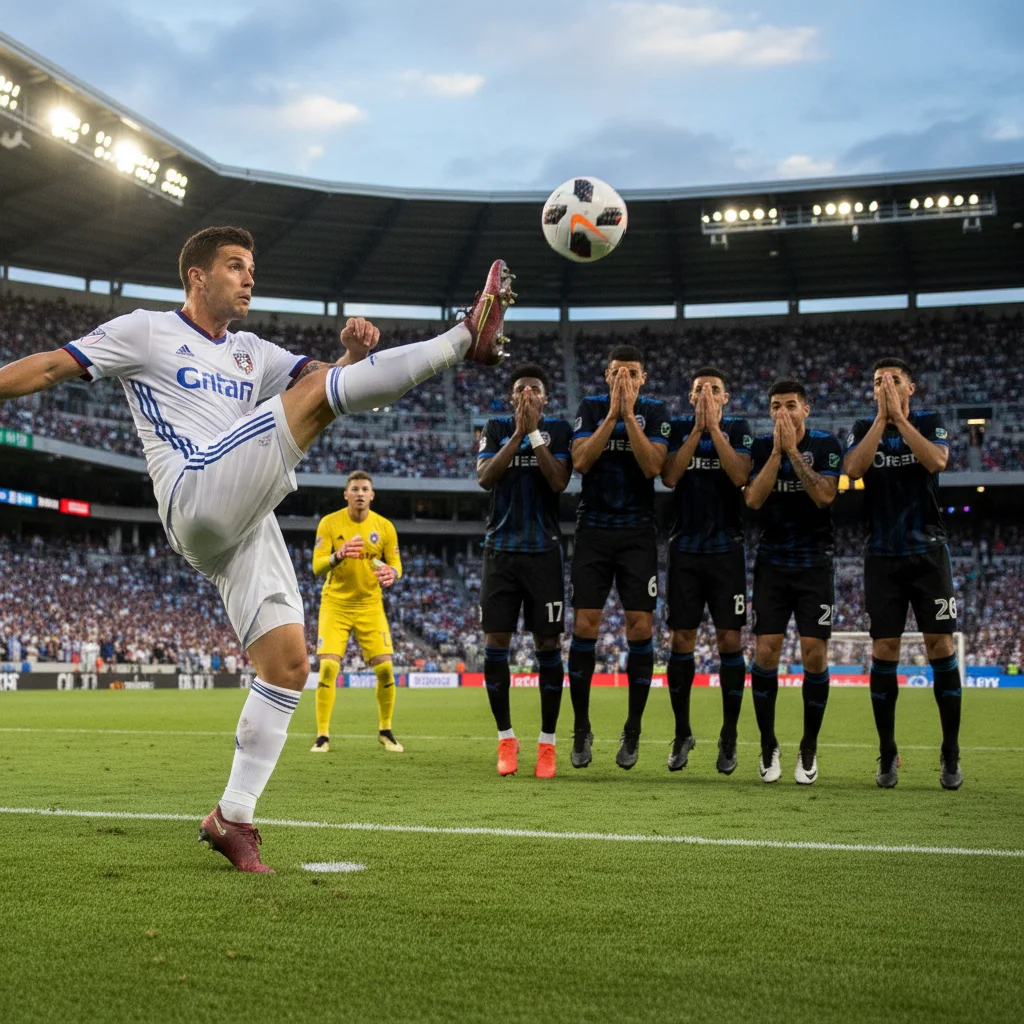
Furthermore, the role of VAR (Video Assistant Referee) in set pieces cannot be overlooked. The scrutiny of fouls leading to free kicks and potential infringements during set-piece plays means that every detail is analyzed. This increased precision can sometimes lead to more free kicks being awarded in dangerous areas, indirectly contributing to the goal count.
Key Players and Their Impact on MLS Set Piece Goals
The success of MLS set piece goals is inextricably linked to the individuals who execute them. Every team has its designated set-piece specialists, players who possess the technical skill, vision, and composure to deliver under pressure. These players are often the creative engines of their teams, capable of turning a static situation into a goal-scoring opportunity.
For corner kicks, look for players with exceptional crossing ability, capable of delivering the ball with pace, accuracy, and the right amount of spin. These might be wingers or attacking midfielders who have mastered the art of finding their teammates in crowded areas. Their ability to consistently put the ball into dangerous zones is invaluable.
For free kicks, the spotlight falls on dead-ball specialists who can strike the ball with power, precision, and curve. These are often midfielders or forwards who have a knack for finding the back of the net from distance. Their presence on the field immediately raises the threat level whenever a free kick is awarded in a scoring zone.
Beyond the deliverers, the target men are equally vital. These are typically central defenders or powerful forwards who excel in aerial duels. Their ability to outjump opponents, hold off challenges, and direct headers on target is a critical component of set-piece success. Teams actively seek out players with these specific attributes during transfers, recognizing their value in maximizing set-piece returns.
Training Ground Innovations: Mastering the Dead Ball
The 20% statistic for MLS set piece goals is not accidental; it is the culmination of rigorous training and strategic planning. Modern MLS teams are dedicating significant portions of their training sessions to set pieces. This includes:
- Repetition and Refinement: Players practice specific corner and free-kick routines repeatedly, ensuring every player understands their role, movement, and timing.
- Video Analysis: Teams meticulously analyze opponents’ defensive set-up for set pieces, identifying weaknesses and developing tailored strategies to exploit them. They also review their own set-piece execution to identify areas for improvement.
- Specialized Coaching: As mentioned, dedicated set-piece coaches are becoming more common, bringing expert knowledge and innovative ideas to the team.
- Game Simulation: Training drills often simulate game-day pressure, with defenders actively trying to prevent the set-piece from succeeding, making the practice more realistic and challenging.
- Biometric Data: Some teams use technology to analyze jump height, heading accuracy, and sprint speeds during set-piece drills, providing data-driven insights to optimize performance.

These innovations highlight a broader trend in professional soccer: the marginal gains approach. In a sport where outcomes can be decided by the narrowest of margins, perfecting every aspect of the game, including set pieces, can provide a significant competitive advantage. The 2025 MLS season is a testament to the effectiveness of this approach.
The Impact on Match Outcomes and League Standings
The high percentage of MLS set piece goals has a profound impact on match outcomes and, consequently, on league standings. A team that is proficient in set pieces effectively has an extra weapon in its arsenal. In tight games, where open-play goals are hard to come by, a single well-executed corner or free kick can be the difference between a win, a draw, or a loss.
Teams that consistently score from set pieces are often more resilient, capable of finding a way to score even when they are not dominating possession or creating numerous chances from open play. This makes them harder to beat and can elevate their performance over the course of a long season. Conversely, teams that are poor at defending set pieces are constantly vulnerable, regardless of how well they play in other areas.
The psychological boost of scoring from a set piece can also be significant. It can change the momentum of a game, lift player morale, and put pressure on the opposition. Similarly, conceding a goal from a set piece can be demoralizing, especially if it’s due to a defensive lapse that could have been avoided.
Looking Ahead: The Future of Set Pieces in MLS
Given the success of MLS set piece goals in 2025, it is highly probable that this trend will continue and even intensify. Teams that have lagged in this area will undoubtedly invest more resources into improving their set-piece prowess, both offensively and defensively. This could lead to an even higher percentage of goals coming from dead-ball situations in future seasons.
We can anticipate further innovations in set-piece routines, with teams constantly seeking new ways to surprise opponents. The use of advanced analytics to identify defensive weaknesses and predict opponent movements during set pieces will become even more sophisticated. Player recruitment might increasingly prioritize individuals with strong aerial abilities or exceptional dead-ball delivery.
The tactical battle surrounding set pieces will become a more prominent feature of every MLS match. Coaches will spend more time analyzing and preparing for these moments, and fans will increasingly appreciate the intricate strategies at play during corners and free kicks. The era of dismissing set pieces as mere ‘bonus’ opportunities is over; they are now an integral and decisive part of the modern MLS game.
The Role of Technology and Analytics
The advancement of technology and analytics will play an increasingly vital role in optimizing MLS set piece goals. Teams are already using sophisticated software to track player movements, analyze defensive structures, and model potential outcomes during set pieces. This data-driven approach allows coaches to refine existing routines and develop new ones with a higher probability of success.
For instance, heat maps can show where defenders are most vulnerable in the box during a corner, or where a free kick taker has the highest chance of scoring based on previous attempts. Eye-tracking technology could even be used to analyze a goalkeeper’s focus during a free kick, helping takers to exploit momentary lapses.
Furthermore, virtual reality (VR) training could become a standard tool, allowing players to practice set-piece scenarios in a simulated match environment, improving their decision-making and execution under pressure without the physical toll of on-pitch training. This integration of technology will push the boundaries of set-piece effectiveness even further.
Conclusion: Set Pieces – The Silent Game-Changers of MLS
The 2025 MLS season has unequivocally demonstrated the critical importance of set pieces. With 20% of all goals originating from free kicks and corners, these dead-ball situations are no longer secondary considerations but primary avenues for goal scoring. This shift reflects a league-wide embrace of tactical sophistication, specialized coaching, and the recruitment of players with specific set-piece aptitudes.
As MLS continues to grow and compete on the global stage, the ability to maximize set-piece opportunities will remain a key differentiator for successful teams. The meticulous planning, precise execution, and strategic innovation surrounding set pieces are transforming the way the game is played and won. Fans and analysts alike must recognize that the seemingly static moments of a free kick or a corner are, in fact, dynamic showcases of tactical brilliance and individual skill, profoundly impacting the beautiful game in Major League Soccer.
Embracing and excelling in the realm of set pieces is not just about scoring more goals; it’s about showcasing a comprehensive understanding of soccer’s tactical nuances and a commitment to exploiting every possible advantage. The MLS set piece goals phenomenon of 2025 is a clear indicator that the league is evolving, becoming more strategic, and offering a richer, more complex footballing experience for everyone involved.