The beautiful game of soccer is a constant dance of strategy, skill, and philosophy. In the ever-evolving landscape of US Soccer, two dominant tactical approaches frequently emerge as focal points of discussion and implementation: US Soccer Tactics centered around Positional Play and those embracing Direct Play. As we look towards 2025, the trends, successes, and challenges associated with each philosophy offer a fascinating insight into the future direction of American football.
This comprehensive analysis will delve deep into both Positional Play and Direct Play, dissecting their core principles, examining their prevalence in US Soccer at various levels – from youth academies to Major League Soccer (MLS) – and evaluating their impact on player development and international competitiveness. We will also project how these tactical philosophies are likely to shape the game in the coming years, drawing on recent data and expert opinions.
Anúncios
Understanding Positional Play: The Philosophy of Control in US Soccer
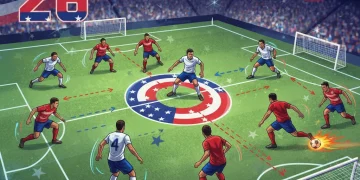
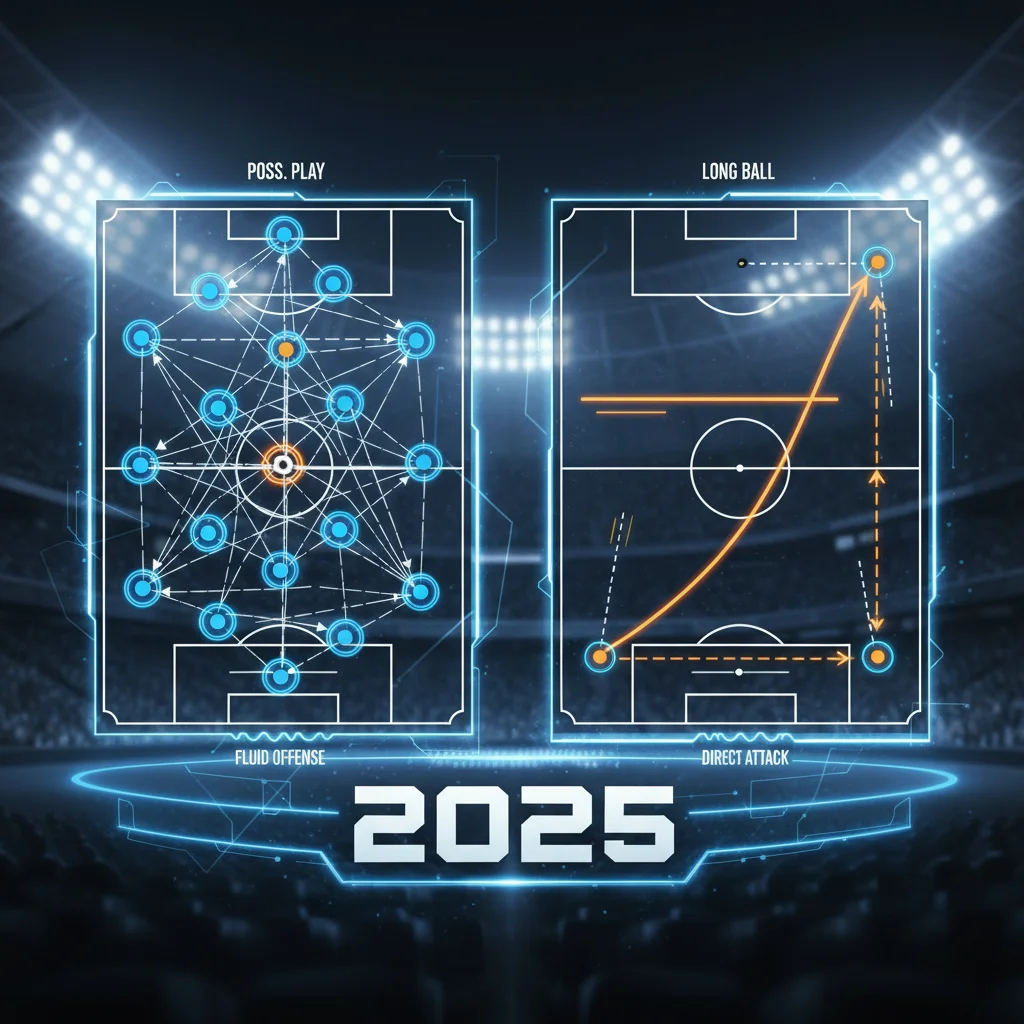
Positional Play, often associated with legendary figures like Johan Cruyff and Pep Guardiola, is a tactical philosophy that prioritizes ball retention, intelligent movement, and the creation of superiorities (numerical, positional, or qualitative) across the pitch. Its fundamental aim is to control the game through possession, manipulating the opponent’s shape to create openings and exploit space.
Core Principles of Positional Play
- Possession with Purpose: It’s not just about holding the ball; it’s about using possession to advance play, draw out defenders, and create goal-scoring opportunities. Every pass has an intention.
- Superiority: This can be numerical (having more players in an area), positional (players occupying advantageous spaces), or qualitative (a player with superior skill in a key area). Positional Play seeks to create these superiorities systematically.
- Structured Movement and Occupancy of Space: Players are assigned specific zones and roles, but also have the freedom to move and interchange positions to maintain balance and create passing lanes. The pitch is divided into imaginary zones, and players are encouraged to occupy specific zones to ensure optimal spacing and support.
- Circulation of the Ball: Quick, short passes are used to move the ball around the opponent, stretching their defense and creating gaps. The ball moves faster than any player.
- Pressing and Counter-Pressing: When possession is lost, teams quickly attempt to win the ball back high up the pitch (counter-pressing) to prevent the opponent from transitioning effectively and to regain control.
Positional Play in US Soccer: Current Trends and Adoption (2025 Data)
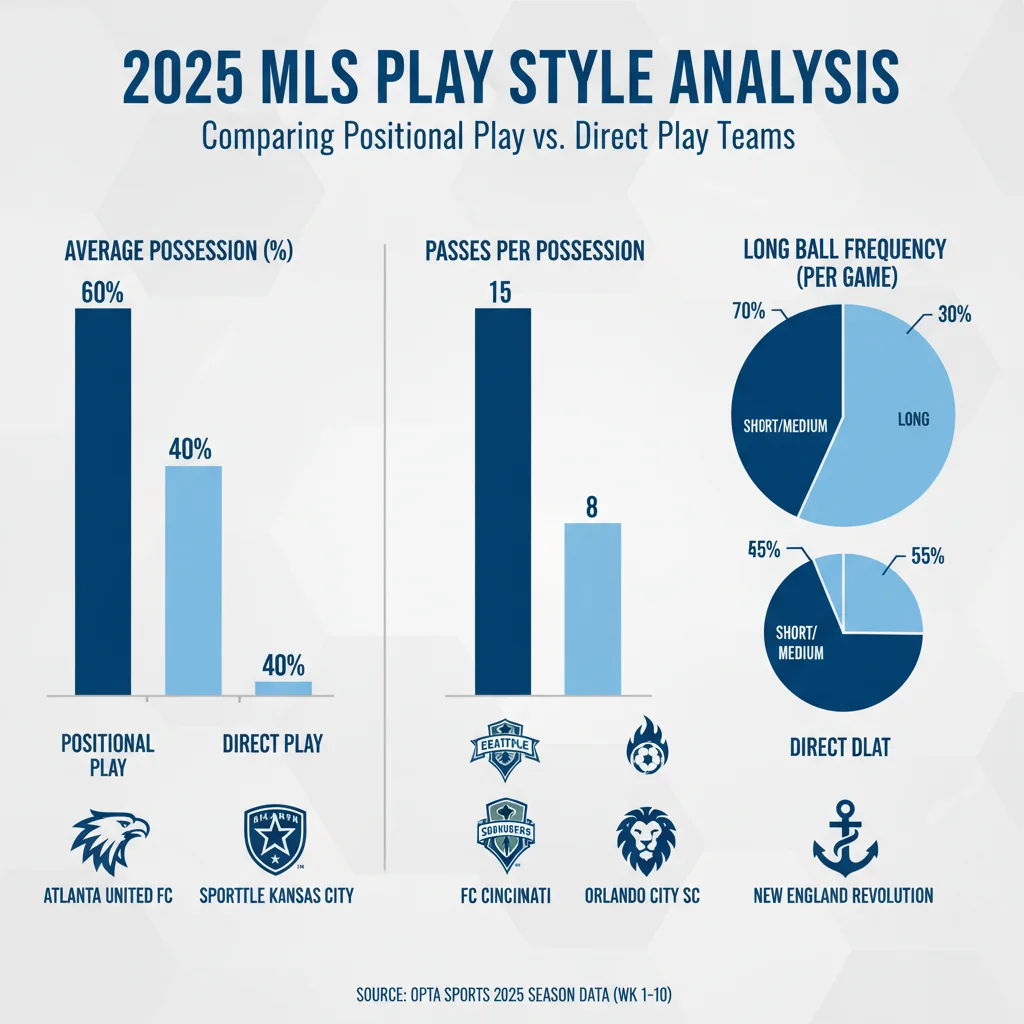
In 2025, the influence of Positional Play on US Soccer Tactics is undeniable. Many MLS teams, inspired by global trends and the influx of foreign coaches, have adopted elements of this philosophy. Data from the first half of the 2025 MLS season indicates a noticeable increase in average possession percentages across the league, with several top-performing teams consistently maintaining over 55% possession. Furthermore, metrics such as ‘passes completed per offensive third entry’ and ‘build-up attacks ending in a shot’ have seen an upward trend for teams employing a more possession-based approach.
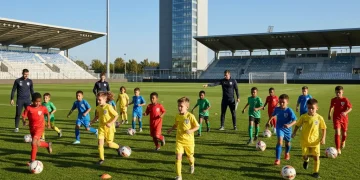
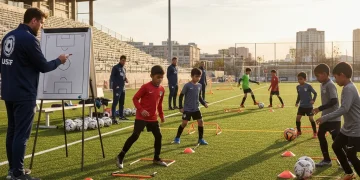
Youth academies across the US are also increasingly integrating Positional Play principles into their curriculum. The focus on technical proficiency, spatial awareness, and decision-making under pressure aligns perfectly with the developmental goals of young players. Coaches are emphasizing the importance of understanding game situations, rather than just executing isolated skills.
Anúncios
The Power of Direct Play: Efficiency and Speed in US Soccer
In stark contrast to the methodical build-up of Positional Play, Direct Play is a tactical philosophy that prioritizes verticality, speed, and efficiency in attacking. The objective is to move the ball into dangerous areas of the pitch as quickly as possible, often bypassing the midfield with longer passes.
Core Principles of Direct Play
- Verticality and Forward Passes: The primary aim is to get the ball from defense to attack in the fewest possible touches, often through long passes over the opponent’s midfield or defense.
- Exploiting Space in Behind: Direct Play often targets the space behind the opponent’s defensive line, utilizing fast attackers who can run onto through balls or long clearances.
- Quick Transitions: Upon winning possession, teams look to transition rapidly from defense to attack, capitalizing on disorganized opponents.
- Set Pieces and Aerial Duels: Given the emphasis on getting the ball into the box quickly, set pieces (corners, free kicks) and aerial duels become crucial offensive weapons.
- Compact Defending: While attacking directly, teams often defend in a compact, organized shape, aiming to win the ball and launch quick counter-attacks.
Direct Play in US Soccer: Enduring Relevance and Evolution (2025 Data)
Despite the growing popularity of Positional Play, Direct Play remains a vital and effective strategy in US Soccer Tactics, particularly at certain levels and for teams with specific player profiles. In 2025, some MLS teams, especially those with athletic, powerful forwards and strong defensive midfielders, continue to find success with a more direct approach. Statistical analysis from 2025 shows that teams employing Direct Play often have lower possession statistics but higher numbers of ‘fast breaks’ and ‘shots from counter-attacks’. Their ‘goals per shot on target’ can also be surprisingly efficient due to the nature of the chances created.
Furthermore, in collegiate soccer and lower professional leagues, where player technical abilities can vary more widely, Direct Play offers a pragmatic and often successful pathway to victory. Its emphasis on athleticism, work rate, and exploiting specific matchups can be highly effective. The US Men’s National Team (USMNT) has also, at times, incorporated direct elements into its game, particularly when facing high-pressing opponents or seeking to capitalize on individual speed.
A Comparative Analysis: Strengths and Weaknesses of Each Approach
Both Positional Play and Direct Play offer distinct advantages and disadvantages, and their effectiveness often depends on the specific context, available players, and opponent.
Strengths of Positional Play
- Control and Dominance: Teams dictate the tempo and flow of the game, often tiring out opponents who chase the ball.
- Reduced Defensive Exposure: By keeping possession, the team limits the opponent’s opportunities to attack.
- Player Development: Fosters technical excellence, tactical intelligence, and decision-making skills.
- Aesthetically Pleasing: Often associated with attractive, fluid football that engages fans.
Weaknesses of Positional Play
- Vulnerability to Counter-Attacks: If possession is lost in dangerous areas, the team can be exposed to quick counter-attacks.
- Requires High Technical Skill: Players need exceptional passing, receiving, and spatial awareness.
- Can Be Predictable: Opponents can sit deep and compact, making it difficult to break them down.
- Frustration if Stagnant: If possession doesn’t lead to penetration, it can become sterile and ineffective.
Strengths of Direct Play
- Efficiency and Speed: Creates goal-scoring opportunities quickly, often catching opponents off guard.
- Less Technical Demanding: Can be effective with players who have strong athletic attributes but perhaps less refined technical skills.
- Exploits Defensive Gaps: Targets weaknesses in the opponent’s high defensive line.
- Can Be Exciting: Fast-paced, end-to-end action can be thrilling for spectators.
Weaknesses of Direct Play
- Loss of Possession: Higher risk of losing the ball, leading to more defensive transitions.
- Less Control: Teams often have less control over the game’s tempo and flow.
- Reliance on Individual Brilliance: Often depends on the ability of a few key attackers to win duels or create chances.
- Can Be Predictable: Opponents can anticipate long balls and organize their defense accordingly.
The Hybrid Approach: Blending US Soccer Tactics
In 2025, the most successful US Soccer Tactics often involve a hybrid approach, blending elements of both Positional Play and Direct Play. Modern coaches recognize that rigidly adhering to one philosophy can be limiting. The ability to adapt and switch between styles based on the game situation, the opponent, and the available players is a hallmark of elite coaching.
For instance, a team might primarily employ Positional Play to control the midfield and build patiently, but also possess the ability to launch quick, direct attacks when an opponent presses high or leaves space in behind. Conversely, a direct team might develop phases of possession to rest, draw out opponents, or build confidence. This tactical flexibility is becoming increasingly important in competitive leagues like MLS.
Impact on Player Development in US Soccer (2025 Outlook)
The choice of tactical philosophy profoundly impacts player development. Youth academies and development programs in the US are grappling with how best to prepare players for the diverse tactical demands they will face.
Developing Positional Play Attributes
For players being groomed for Positional Play, the focus is on:
- Technical Mastery: Exceptional first touch, precise passing (short and medium range), and dribbling in tight spaces.
- Tactical Intelligence: Understanding spatial relationships, movement off the ball, decision-making under pressure, and reading the game.
- Physical Attributes: Agility, endurance, and the ability to maintain intensity over long periods of possession.
Developing Direct Play Attributes
Players suited for Direct Play emphasize:
- Athleticism: Speed, strength, jumping ability, and stamina for high-intensity sprints.
- Aerial Prowess: Winning headers, both defensively and offensively.
- Clinical Finishing: Converting limited chances into goals.
- Defensive Aggression: Winning tackles and duels to regain possession quickly.
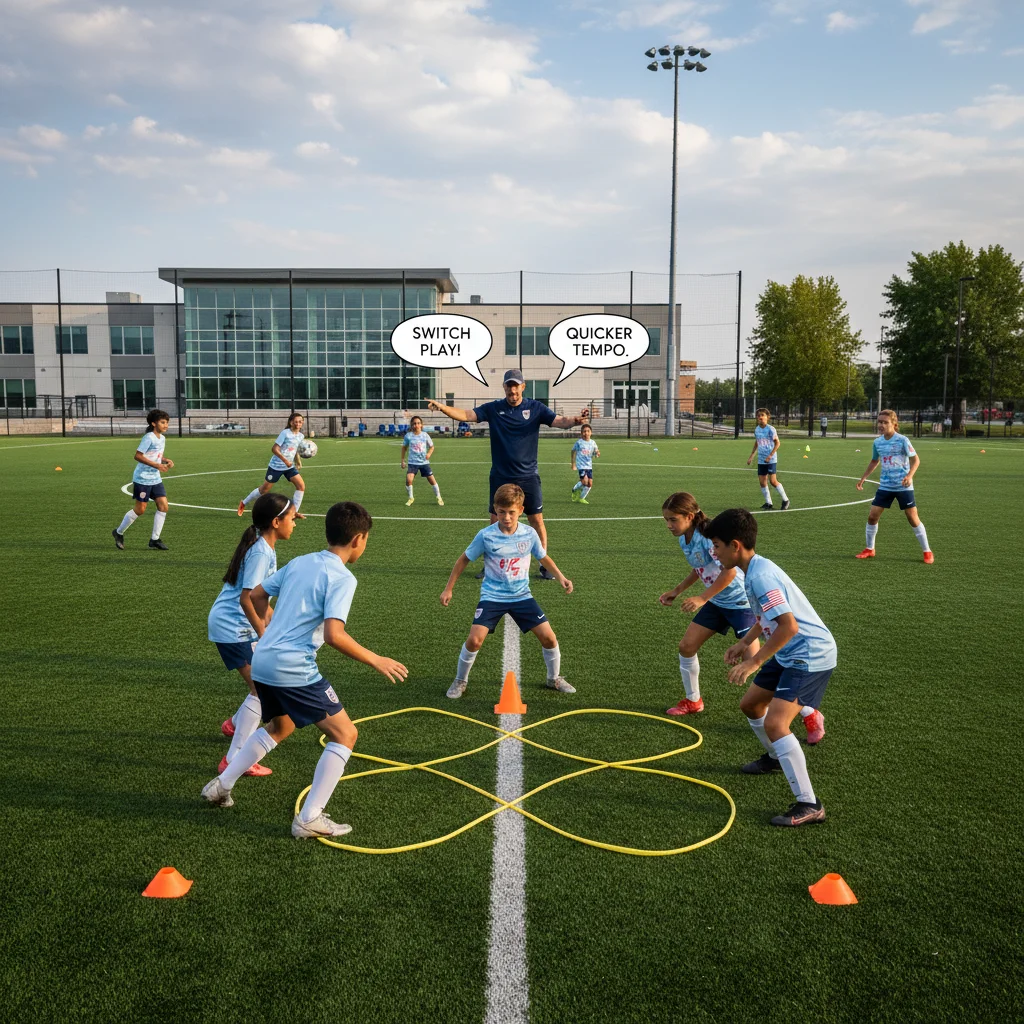
The ideal scenario for US Soccer Tactics development in 2025 is to produce well-rounded players who are proficient in both aspects. A central midfielder, for example, should be able to execute intricate passing patterns but also deliver a precise long ball when the situation demands. This holistic approach ensures players are adaptable to various coaching philosophies they may encounter throughout their careers.
The Future of US Soccer Tactics: 2025 and Beyond
Looking ahead to 2025 and beyond, the tactical landscape of US Soccer will likely continue to evolve. Several factors will influence this evolution:
- Global Influences: The continuous flow of coaching knowledge and player talent from international leagues will introduce new tactical ideas and refine existing ones. European and South American trends will always find their way into American coaching philosophies.
- Data Analytics and Technology: Advanced analytics are providing coaches with unprecedented insights into player performance and tactical effectiveness. This data will inform decisions on which philosophies are most effective given player strengths and opponent weaknesses.
- Player Pool Development: As the quality and diversity of the US player pool improve, coaches will have more options to implement complex tactical systems, including nuanced versions of Positional Play.
- Youth Development Pathways: Continued investment in youth academies and standardized coaching licenses will ensure a consistent understanding and application of tactical principles from the grassroots to the professional level.
- Success of the USMNT: The tactical choices and successes (or failures) of the US Men’s National Team on the international stage will undoubtedly influence the philosophies adopted at lower levels. A successful USMNT employing a particular style could create a ripple effect throughout the entire soccer pyramid.
The trend towards a more possession-oriented, Positional Play style is likely to continue its ascent in MLS and elite youth academies, reflecting a global shift towards controlling the game through the ball. However, Direct Play will not disappear. It will remain a potent weapon, particularly in moments of transition, against specific opponents, or when a team possesses unique athletic talents. The art will be in mastering the transition between these two philosophies, creating teams that are tactically flexible and unpredictable.
Conclusion: The Dynamic Balance of US Soccer Tactics
In conclusion, the debate between Positional Play and Direct Play is not about choosing one over the other as an absolute truth. Instead, it highlights the dynamic and multifaceted nature of US Soccer Tactics in 2025. Both philosophies offer valuable frameworks for success, each with its unique demands and rewards.
The most successful teams and coaches in US Soccer will be those who understand the nuances of both approaches, who can identify when to control the tempo with intricate passing and when to unleash a swift, direct attack. They will be the ones who can develop players capable of executing both styles with precision and intelligence. As US Soccer continues its journey towards becoming a global powerhouse, this tactical adaptability will be a cornerstone of its success, ensuring that the beautiful game played on American soil is not only effective but also captivating and unpredictable.
The future of soccer in the United States is bright, characterized by a sophisticated understanding of tactics and a commitment to developing players who are not just skilled, but also tactically astute and versatile. The ongoing evolution of Positional Play and Direct Play, and their intelligent integration, will be key to unlocking US Soccer’s full potential.