The Financial Analytics of Soccer Academies: How to Maximize Player Value by 2026
In the fiercely competitive world of professional soccer, the traditional model of player development is undergoing a profound transformation. No longer are soccer academies merely breeding grounds for talent; they are becoming sophisticated business entities where financial analytics play a pivotal role. The ability to identify, nurture, and ultimately monetize young talent effectively can make or break an academy’s financial viability and long-term success. This article delves into the critical importance of soccer academy finance, exploring how advanced financial analytics and strategic planning can maximize player value by 2026, ensuring both sporting excellence and robust financial returns.
The global soccer market is a multi-billion dollar industry, with player transfers forming a significant component of its economic engine. For academies, developing players who can command high transfer fees or contribute significantly to a senior team’s success represents the ultimate return on investment. However, this is not a simple task. It requires a deep understanding of player potential, development costs, market trends, and risk assessment. By integrating rigorous financial analytics into every aspect of academy operations, from scouting and recruitment to training and player management, academies can make data-driven decisions that enhance both on-field performance and financial outcomes.
Anúncios
The journey to maximizing player value is complex, involving a multitude of variables. It’s about more than just finding the next superstar; it’s about building a sustainable ecosystem where talent is cultivated efficiently and strategically. This means understanding the true cost of development, predicting future market values, and identifying optimal exit strategies for players. With the right financial analytical tools and methodologies, academies can move beyond guesswork and embrace a more scientific approach to talent management, setting themselves up for success in the coming years.
The Evolving Landscape of Soccer Academy Finance
The financial demands on soccer academies have grown exponentially. Operating costs, including state-of-the-art facilities, highly qualified coaching staff, medical support, and educational provisions, require substantial investment. Furthermore, the increasing pressure to produce first-team ready players or generate significant transfer revenue means that academies must justify these expenditures through tangible returns. This necessitates a shift from purely sporting objectives to a more balanced approach that integrates financial performance indicators.
Anúncios
Understanding the True Cost of Player Development
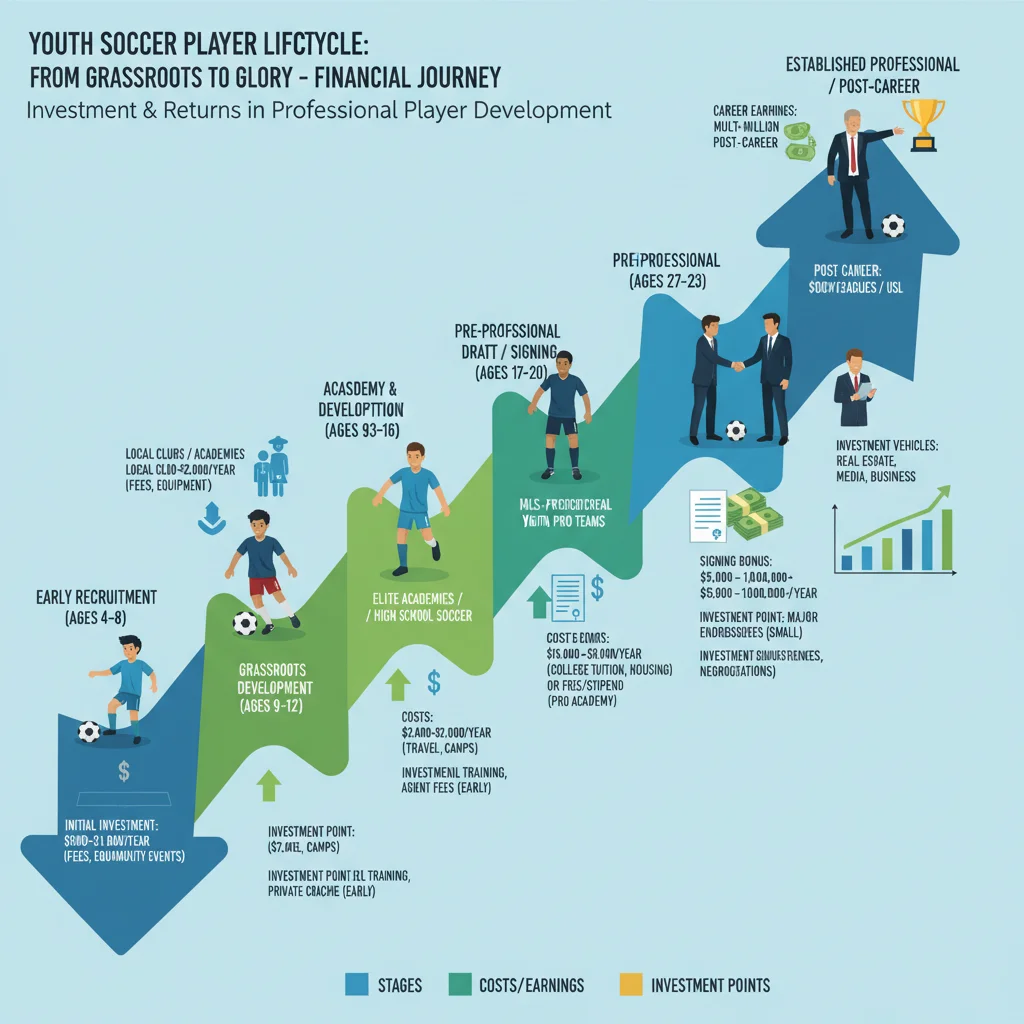
Before an academy can maximize player value, it must first understand the true cost of developing a player from youth level to professional readiness. This isn’t just about salaries; it encompasses a wide range of direct and indirect costs:
- Scouting and Recruitment: The initial investment in identifying promising talent, including travel, scout salaries, and data subscriptions.
- Coaching and Staff Salaries: Wages for technical coaches, fitness coaches, psychologists, nutritionists, and administrative staff.
- Facilities and Equipment: Maintenance of training pitches, gymnasiums, medical centers, and provision of kits, boots, and training equipment.
- Education and Welfare: Academic support, housing, transport, and pastoral care for young players.
- Medical and Rehabilitation: Injury prevention, treatment, and rehabilitation programs.
- Competition and Travel: Costs associated with participating in leagues, tournaments, and friendly matches.
Accurate tracking and analysis of these costs are fundamental to developing a robust soccer academy finance model. Without a clear picture of investment per player, it’s impossible to assess profitability or identify areas for efficiency gains. Financial analytics allows academies to break down these costs, attributing them to individual players or age groups, thus providing a granular view of expenditure.
The Rise of Data-Driven Decision Making
The era of gut-feeling decisions in soccer is rapidly fading. Data analytics, once confined to performance metrics, is now pervasive in financial planning. Academies are leveraging big data to inform decisions ranging from player recruitment to contract negotiations. This includes:
- Predictive Analytics: Forecasting player development trajectories and potential market values based on historical data, performance metrics, and comparable player transfers.
- Cost-Benefit Analysis: Evaluating the financial viability of investing in specific players or development programs.
- Risk Assessment: Identifying potential risks such as injury susceptibility, failure to progress, or market fluctuations that could impact player value.
- Performance-Based Incentives: Designing compensation structures for staff and players that align with both sporting and financial objectives.
By adopting a data-driven approach, academies can optimize resource allocation, minimize financial waste, and strategically position themselves to capitalize on emerging talent. This proactive stance is crucial for maximizing player value in a dynamic market.
Practical Solutions for Maximizing Player Value
Maximizing player value is not a singular event but a continuous process that requires strategic planning and meticulous execution. Here are several practical solutions that academies can implement to enhance their soccer academy finance and player monetization strategies by 2026.
1. Advanced Player Valuation Models
Traditional player valuation often relies on subjective assessments or basic market comparisons. Modern academies must adopt sophisticated valuation models that incorporate a multitude of factors:
- Performance Data: Objective metrics such as goals, assists, passing accuracy, defensive contributions, and physical attributes.
- Potential and Development Trajectory: Expert assessments combined with statistical models predicting future performance based on age, position, and physiological development.
- Contract Status: Length of contract, release clauses, and salary structure significantly impact transfer value.
- Market Demand: Analyzing transfer trends, club interest, and scarcity of talent in specific positions.
- Brand and Commercial Value: A player’s marketability, social media presence, and potential for endorsement deals.
These models, often powered by machine learning algorithms, provide a more accurate and dynamic valuation, allowing academies to negotiate from a position of strength when selling players or planning for future sales.
2. Strategic Recruitment and Scouting
The foundation of maximizing player value lies in effective recruitment. Academies should move beyond traditional scouting networks to embrace data-driven scouting. This involves:
- Geographic and Demographic Targeting: Identifying regions or demographics with high potential for producing talent, based on historical data and socio-economic factors.
- Talent Identification Metrics: Utilizing advanced metrics to spot potential in young players that might be overlooked by conventional scouting methods.
- Cost-Effective Recruitment: Balancing the potential return on investment with the cost of acquiring young talent. Sometimes, investing in a player with high potential but lower initial cost can yield greater returns than pursuing already established youth stars.
A well-executed recruitment strategy ensures a continuous pipeline of high-potential players, reducing reliance on expensive external acquisitions and strengthening the academy’s financial position.
3. Optimized Player Development Programs
Investment in player development should be strategic and measurable. Academies need to design programs that not only enhance sporting skills but also protect and increase player market value. This includes:
- Individualized Development Plans (IDPs): Tailored training programs that address specific player weaknesses and maximize strengths, accelerating their progress.
- Holistic Support: Integrating psychological, nutritional, and educational support to ensure players are well-rounded individuals, which can positively impact their long-term career and marketability.
- Injury Prevention and Management: Investing in sports science and medical staff to minimize injuries, which can significantly derail a player’s development and diminish their value.
- Loan Strategies: Carefully planned loan moves to appropriate clubs and leagues can provide crucial playing time and experience, increasing a player’s readiness for senior football and boosting their market appeal.
Each aspect of the development program should be viewed through a financial lens, assessing its contribution to the overall goal of maximizing player value.
4. Smart Contract Management and Negotiations
Contract management is a critical aspect of soccer academy finance. Securing players on appropriate contracts, with suitable durations and clauses, is essential for protecting the academy’s investment. Key considerations include:
- Long-Term Contracts: Signing promising players to longer contracts to protect against losing them for free or at a reduced fee.
- Release Clauses: Strategically setting release clauses that reflect the player’s potential market value while also providing flexibility.
- Performance-Related Incentives: Structuring contracts with bonuses tied to performance milestones, aligning player motivation with academy objectives.
- Sell-On Clauses: Including clauses in transfer deals that guarantee a percentage of future transfer fees, providing long-term revenue streams.
Effective contract negotiation requires a deep understanding of market dynamics, legal frameworks, and player agent strategies. Financial analysts can provide invaluable support in these negotiations, ensuring the academy’s interests are always prioritized.
5. Leveraging Technology for Financial Insights
The adoption of specialized financial software and analytics platforms is no longer a luxury but a necessity for modern soccer academies. These tools can:
- Automate Financial Reporting: Streamline the process of tracking income and expenditure, providing real-time financial insights.
- Integrate Data Sources: Combine financial data with performance, medical, and scouting data to create a comprehensive view of player value and academy operations.
- Scenario Planning: Allow academies to model different financial scenarios, such as the impact of a major player sale or a significant investment in infrastructure.
- Benchmarking: Compare financial performance and player development metrics against other leading academies, identifying best practices and areas for improvement.
By harnessing technology, academies can gain a competitive edge in managing their finances and optimizing their player development pathways.
Financial Impact and Future Projections by 2026
By implementing these practical solutions, soccer academies can expect to see a significant positive financial impact by 2026. The shift towards a more analytical and data-driven approach to soccer academy finance will yield several key benefits:
Increased Transfer Revenue
The most direct financial benefit is an increase in transfer revenue. By consistently developing high-value players and executing smart transfer strategies, academies can generate substantial income. This revenue can then be reinvested into further player development, facility upgrades, or securing top coaching talent, creating a virtuous cycle of growth and success. Predicting future transfer market trends and player demand will be crucial in maximizing these revenues.
Enhanced Financial Stability and Sustainability
A robust financial model, underpinned by effective analytics, provides academies with greater stability. Reduced reliance on external funding or unpredictable revenue streams allows for more strategic long-term planning. Academies can better manage cash flow, mitigate financial risks, and build reserves, ensuring their continued operation and success even in challenging economic climates. This sustainability is vital for the long-term health of any football club’s youth system.
Improved Resource Allocation
With a clear understanding of costs and returns, academies can allocate their resources more efficiently. This means investing in the most promising players, the most impactful development programs, and the most effective scouting networks. Every dollar spent is optimized to contribute to the overarching goal of maximizing player value and achieving financial returns. This precision in resource allocation is a hallmark of successful soccer academy finance.

Greater Attractiveness to Investors and Partners
Academies that demonstrate strong financial management and a proven track record of developing valuable players become more attractive to potential investors, sponsors, and strategic partners. This can open up new avenues for funding and collaboration, further strengthening the academy’s financial position and expanding its reach. The ability to present clear financial projections and demonstrate return on investment is a powerful tool in securing external support.
Competitive Advantage in Talent Acquisition
An academy known for its financial acumen and ability to maximize player value will naturally become a more desirable destination for young talent. Players and their families will be drawn to an environment that offers not only top-tier development but also a clear pathway to professional success and financial reward. This competitive advantage in talent acquisition ensures a continuous flow of high-potential recruits, further solidifying the academy’s future prospects.
Challenges and Considerations
While the benefits of integrating financial analytics into soccer academies are clear, several challenges and considerations must be addressed:
- Data Quality and Availability: The effectiveness of analytics heavily relies on the quality and completeness of data. Academies must invest in robust data collection systems.
- Expertise Gap: There is often a shortage of professionals who possess both deep financial analytical skills and an understanding of soccer-specific dynamics. Bridging this gap through training or strategic hires is crucial.
- Long-Term Horizon: Player development is a long-term process, and financial returns may not be immediate. Academies need to maintain a patient and strategic outlook.
- Ethical Considerations: While focusing on financial returns, academies must not lose sight of their primary responsibility to nurture young individuals. A balance between commercial objectives and player welfare is paramount.
- Market Volatility: The transfer market can be unpredictable, influenced by economic factors, player performance, and unforeseen events. Financial models must account for this volatility.
Addressing these challenges requires a holistic approach, fostering collaboration between sporting directors, coaches, financial officers, and data analysts. The goal is not just to make money, but to create a sustainable model that benefits all stakeholders, especially the players.
Conclusion
The future of soccer academies is inextricably linked to their ability to embrace sophisticated financial analytics. By 2026, those academies that have successfully integrated data-driven financial strategies into their operations will be the ones leading the way, both on and off the pitch. Maximizing player value is no longer just about developing exceptional athletes; it’s about making smart, informed financial decisions at every stage of a player’s journey.
From strategic recruitment and optimized development programs to smart contract management and advanced player valuation models, every aspect of soccer academy finance must be meticulously analyzed and managed. The practical solutions outlined in this article provide a roadmap for academies to enhance their financial impact, secure their future, and continue to be the breeding ground for the next generation of soccer superstars. The time to invest in financial analytics is now, ensuring that the passion for the beautiful game is matched by a robust and sustainable financial foundation.