Serving Up Success: 3 US Volleyball Players with Dominant Serves in 2026
The sport of volleyball is constantly evolving, with athleticism, strategy, and sheer power pushing the boundaries of what’s possible on the court. One of the most critical and often game-changing aspects of volleyball is the serve. A dominant serve can disrupt an opponent’s offense, generate easy points, and shift the momentum of an entire match. As we look towards 2026, the landscape of US volleyball is brimming with talent, and a select few players are already demonstrating the potential to become household names due to their formidable serving prowess. This article delves into the careers and techniques of three US volleyball players who are set to define the art of the dominant serve in the coming years.
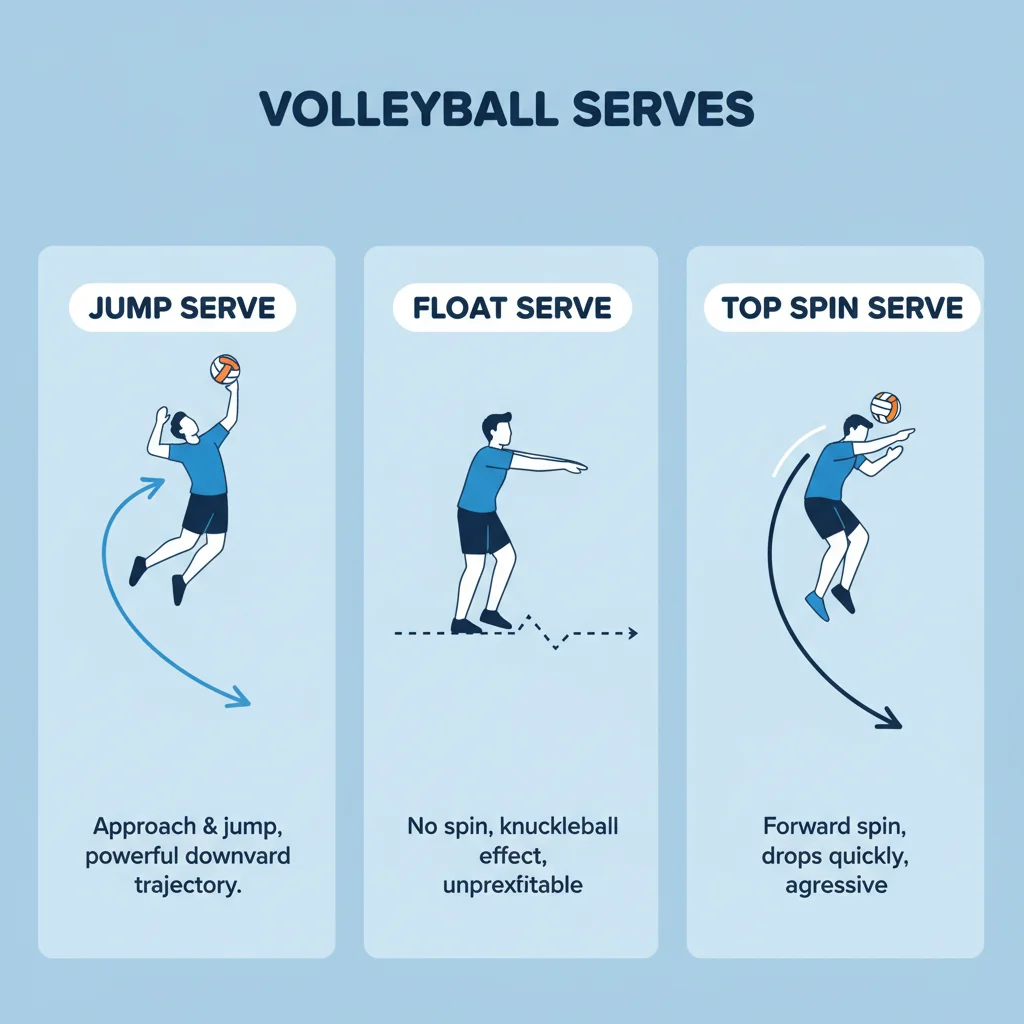
Understanding what constitutes a ‘dominant serve’ goes beyond just raw power. It encompasses a combination of speed, placement, spin, and consistency that makes it incredibly difficult for the opposition to pass effectively. Whether it’s a blistering jump serve that rockets past defenders, a deceptive float serve that dances unpredictably, or a heavy topspin serve that plunges aggressively, these players utilize their serves as a primary weapon. Our focus on US volleyball serves will highlight how these athletes are honing their craft to achieve unparalleled success.
Anúncios
The Evolution of the Serve in US Volleyball
Historically, the serve in volleyball was primarily a means to initiate play. Over the decades, however, it has transformed into a powerful offensive weapon. The advent of the jump serve, popularized in the 1970s and 80s, revolutionized the game, adding an entirely new dimension of force and strategy. Today, elite players combine athletic leaps with precise ball contact to generate serves that travel at incredible speeds, often exceeding 70 miles per hour. The strategic placement of these serves, targeting weak passers or seams in the reception formation, is just as crucial as their velocity.
In US volleyball, coaches and players are increasingly emphasizing serve training, recognizing its immense impact on match outcomes. Data analytics plays a significant role, allowing teams to identify opponent weaknesses and tailor serving strategies accordingly. The physical demands on servers have also increased, requiring exceptional core strength, shoulder health, and leg power. The three players we will discuss exemplify this modern approach, showcasing a blend of physical gifts and meticulous technique that makes their US volleyball serves truly dominant.
Anúncios
Furthermore, the mental aspect of serving cannot be overstated. Performing a high-risk, high-reward jump serve under pressure, with the game on the line, requires immense focus and confidence. These athletes spend countless hours refining their routines, visualizing success, and building the mental fortitude necessary to execute when it matters most. Their ability to consistently deliver powerful and precise US volleyball serves is a testament to their dedication to both the physical and psychological aspects of the game.
Player 1: The Powerhouse Jump Server – Alex “The Rocket” Rodriguez
Profile and Background
Alex Rodriguez, often dubbed “The Rocket” by fans and commentators, is a prodigious talent emerging from the collegiate ranks. Standing at an imposing 6’8″, his physical stature alone gives him a significant advantage, allowing him to contact the ball at an incredible height. Rodriguez’s journey in US volleyball has been marked by a rapid ascent, demonstrating consistent improvement and an unwavering commitment to perfecting his game. His early career saw him dominate high school leagues, leading his team to multiple state championships before committing to a powerhouse NCAA Division I program.
Serving Technique and Impact
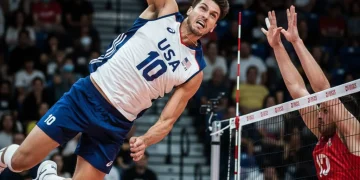
Rodriguez’s signature is undoubtedly his jump serve, which combines raw power with a deceptive trajectory. What sets his serve apart is not just the velocity, which frequently clocks in over 75 mph, but also the heavy topspin he imparts on the ball. This topspin causes the ball to drop sharply as it crosses the net, making it incredibly difficult for receivers to judge its flight path. Opponents often find themselves misjudging the ball’s final position, leading to shanked passes or overpasses that become easy attacking opportunities for his team.
His approach to the serve is methodical. He takes a long, powerful run-up, launching himself high into the air, almost as if he’s performing an attack hit. The timing of his arm swing is impeccable, generating maximum force at the point of contact. Furthermore, Rodriguez has developed an uncanny ability to target specific zones on the court, often isolating the weakest passer or exploiting gaps in the reception formation. This strategic precision, combined with his sheer power, makes his US volleyball serves a nightmare for opposing liberos and defensive specialists.
The impact of Rodriguez’s serve extends beyond just direct points. His serves often put the opposing team immediately on the defensive, forcing them into out-of-system plays. This allows his team’s blockers and defenders to anticipate attacks more easily, leading to more blocks and digs. By 2026, experts predict that Rodriguez will be a cornerstone of the US Men’s National Team, with his serve being a primary weapon in international competitions. His influence on US volleyball serves will undoubtedly inspire a new generation of players to prioritize power and precision from the service line.
Player 2: The Master of Deception – Emily “The Ghost” Chen
Profile and Background
Emily Chen, affectionately known as “The Ghost” for her elusive serves, represents the pinnacle of strategic serving in women’s US volleyball. Standing at a more modest 5’10”, Chen doesn’t rely on brute force but rather on unparalleled precision and deceptive ball movement. Her journey has been one of meticulous skill development, focusing on control and consistency over sheer power. A standout setter and server in college, Chen quickly transitioned her versatile skills to the professional arena, where her serve became her defining characteristic.
Serving Technique and Impact
Chen’s primary weapon is her float serve, but it’s a float serve unlike any other. She consistently generates a serve with virtually no spin, causing the ball to ‘float’ unpredictably in the air. What makes her serve so effective is her ability to vary the speed and trajectory while maintaining the spinless contact. One serve might be a soft, short float that drops just over the net, while the next is a deep, fast float that knifes into the backcourt. This variation keeps receivers constantly guessing and makes it incredibly difficult to establish a rhythm.
Her technique is a masterclass in control. She uses a consistent toss, but subtle changes in her arm swing and wrist snap dictate the serve’s characteristics. The contact point is crucial for a perfect float, and Chen has perfected hitting the ball dead center, minimizing any rotational movement. Her focus is always on putting the ball in the most uncomfortable position for the receiver, often targeting the seams between players or forcing passers to move awkwardly. This strategic brilliance makes her US volleyball serves a constant threat.

The impact of Chen’s serve is profound. She consistently racks up aces, but more importantly, her serves often lead to poor passes, preventing opponents from running their preferred offensive sets. This forces setters to make difficult decisions and attackers to hit out-of-system balls, significantly lowering their attack efficiency. By 2026, Chen is expected to be a key player for the US Women’s National Team, providing a crucial strategic advantage from the service line. Her mastery of the float serve is a testament to the fact that power isn’t the only path to a dominant US volleyball serve.
Player 3: The All-Around Threat – Marcus “The Apex” Davis
Profile and Background
Marcus Davis, known as “The Apex” for his peak performance in all aspects of the game, is a true all-around talent whose serving ability is just one facet of his formidable skill set. A versatile outside hitter, Davis brings an incredible blend of athleticism, intelligence, and a competitive spirit to the court. His background includes a decorated collegiate career where he excelled in hitting, blocking, and defense, but it’s his evolving serve that has caught the attention of national team scouts. Davis is a testament to the modern volleyball player: dynamic, adaptable, and constantly seeking to improve every aspect of his game.
Serving Technique and Impact
What makes Davis’s serve so exceptional is his versatility. Unlike Rodriguez’s pure power or Chen’s deceptive float, Davis possesses the ability to execute both a powerful topspin jump serve and a controlled, aggressive float serve with equal effectiveness. This dual threat makes him incredibly difficult to prepare for. One rotation, he might be unleashing a scorching jump serve, aiming for an ace. The next, he might switch to a precise float, designed to create chaos in the backcourt and set up his team’s block.
His jump serve is characterized by a strong, athletic approach and a powerful wrist snap that generates significant topspin, similar to Rodriguez but perhaps with slightly less raw velocity and more emphasis on angle. His float serve, while not as ‘ghostly’ as Chen’s, is remarkably consistent and well-placed, often targeting specific zones or individual passers who are struggling. Davis’s ability to switch between these two styles, often within the same match, is a strategic nightmare for opposing coaches. He uses his extensive understanding of the game to read the opponent’s reception patterns and choose the most effective serve for each situation.
The impact of Davis’s serve is multifaceted. He contributes to scoring directly with aces, but more importantly, he consistently puts pressure on the opposing serve reception, leading to predictable offensive opportunities for his team. His serve often sets up his own blocking assignments, as he can anticipate where the ball will go after a compromised pass. By 2026, Davis is projected to be a cornerstone of the US Men’s National Team, not only for his all-around play but specifically for his adaptable and highly effective US volleyball serves. His presence on the service line provides a crucial tactical advantage, allowing his team to dictate the tempo and flow of the game.
The Future of US Volleyball Serves and Their Global Impact
The rise of players like Alex Rodriguez, Emily Chen, and Marcus Davis signals an exciting future for US volleyball. Their diverse approaches to serving—from raw power to deceptive floats and versatile combinations—highlight the evolving sophistication of the game. These athletes are not just serving the ball; they are strategically deploying a weapon that can fundamentally alter the course of a match. Their success will undoubtedly inspire younger generations to focus more intently on serve development, recognizing it as a critical skill for elite play.
Internationally, the strength of a national team’s serving game is often a key differentiator. Teams with multiple dominant servers can consistently keep opponents out of system, leading to easier defensive plays and more effective blocking. As these three players mature and reach their prime by 2026, their impact on the global stage will be significant. They will be instrumental in elevating the competitiveness of US volleyball, potentially leading to more medals and greater international recognition. Their serves will become talking points, analyzed by coaches worldwide, and their techniques studied by aspiring players.
The continuous innovation in serving techniques, combined with advancements in sports science and analytics, ensures that the serve will remain a dynamic and crucial element of volleyball. The focus on maximizing jump height, optimizing arm swing mechanics, and perfecting ball contact will only intensify. Furthermore, the psychological resilience required to consistently deliver high-stakes serves under immense pressure will become an even more valued trait. These players embody the future of US volleyball, where the serve is not merely a starting point, but a powerful, strategic offensive tool.
Training and Development: Cultivating Dominant Servers
The journey to developing a dominant serve, as exemplified by Rodriguez, Chen, and Davis, involves a multi-faceted approach to training and development. It’s not simply about hitting the ball hard; it’s about a holistic understanding of biomechanics, strategy, and mental fortitude. For aspiring US volleyball players, understanding these elements is crucial.
Biomechanics and Physical Conditioning
For jump servers like Alex Rodriguez, core strength, explosive leg power, and shoulder stability are paramount. Training regimens include plyometrics to improve vertical leap, resistance training for arm swing velocity, and rotational exercises to enhance core power. Injury prevention, particularly for the shoulder, is also a critical component, involving targeted strengthening and flexibility exercises. Emily Chen’s float serve, while less reliant on raw power, demands exceptional fine motor control and consistent body positioning. Her training focuses on precision drills, subtle wrist movements, and maintaining a stable platform for ball contact. Marcus Davis, with his versatile serve, requires a balanced approach, incorporating elements of both power and finesse training.
Technical Refinement and Repetition
All three players spend countless hours on technical refinement. This involves breaking down the serve into its individual components: the toss, the approach, the arm swing, and the follow-through. Video analysis is a key tool, allowing players and coaches to identify minute imperfections and make necessary adjustments. Repetition, often thousands of serves, is essential for building muscle memory and consistency. This isn’t just mindless repetition; it’s deliberate practice with specific goals for speed, accuracy, and spin. The ability to replicate a perfect toss and contact point under pressure is a hallmark of truly dominant US volleyball serves.
Strategic Acumen and Game IQ
Beyond the physical and technical aspects, the best servers possess a high degree of game intelligence. They understand opponent tendencies, identify weak passers, and know when to vary their serve. This strategic acumen is developed through extensive film study, scout reports, and in-game experience. Coaches play a vital role in teaching players how to ‘read’ the game and make informed decisions on the service line. For instance, knowing whether to aim for a deep corner against a struggling passer or a short serve to disrupt a quick attack is a strategic decision that can turn the tide of a rally.
Mental Fortitude and Pressure Management
Serving is one of the few actions in volleyball where a player is entirely in control, yet it’s also fraught with pressure. A missed serve gives away a free point, while an ace can ignite a team. Developing mental toughness, the ability to stay calm and focused under pressure, is crucial. This involves visualization techniques, pre-serve routines, and learning to compartmentalize mistakes. The confidence to step up to the service line in a tight match and deliver a powerful, accurate serve is what separates good servers from truly dominant ones. The three players highlighted here have all demonstrated this exceptional mental resilience throughout their careers.
Conclusion: The Defining Role of US Volleyball Serves in Future Success
As we anticipate the 2026 volleyball season, the spotlight will undoubtedly be on the players who can consistently deliver game-changing performances. Alex Rodriguez, Emily Chen, and Marcus Davis stand out as prime examples of US volleyball talent poised to dominate with their exceptional serves. Their dedication to refining their techniques, understanding the strategic nuances of the game, and developing their physical and mental strength sets them apart.
These athletes are not just serving; they are shaping the future of US volleyball. Their powerful jump serves, deceptive floats, and versatile approaches will challenge opponents, create scoring opportunities, and inspire a new generation of players to view the serve as a paramount offensive weapon. The impact of their dominant US volleyball serves will be felt across collegiate, professional, and international stages, solidifying their legacy as innovators and champions of the game. The coming years promise thrilling volleyball action, and much of that excitement will undoubtedly originate from the service line, propelled by these incredible talents.