Master Footvolley Stamina: Ultimate Conditioning Drills for 60-Minute Matches
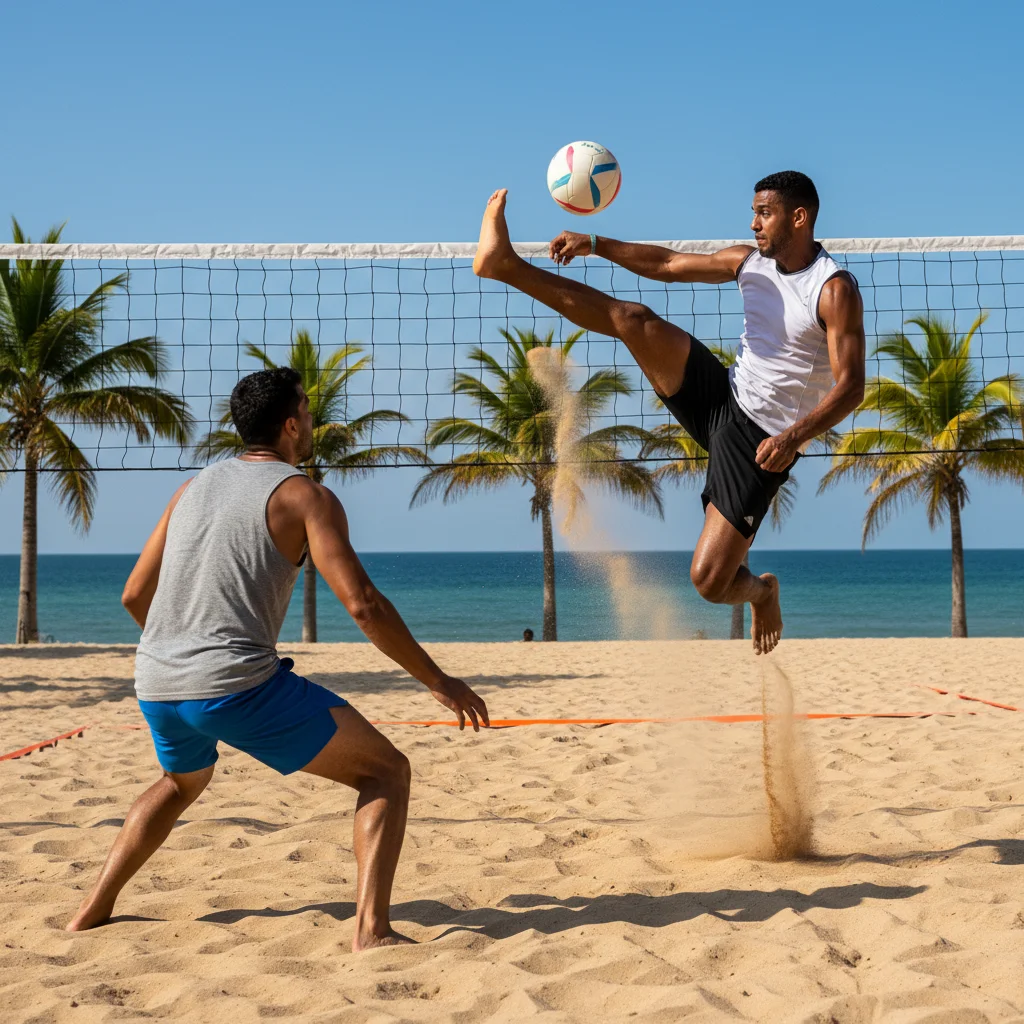
Footvolley, a captivating blend of beach volleyball and soccer, demands not only exquisite ball control and acrobatic skill but also an unparalleled level of physical endurance. Unlike many sports, footvolley matches can be relentless, often stretching to 60 minutes or more of continuous, high-intensity action. To truly excel and dominate on the sand, players must develop exceptional stamina, explosive power, and agile footwork. This comprehensive guide will delve into the most effective footvolley conditioning drills designed to optimize your stamina, ensuring you remain at peak performance from the first serve to the final point.
Many aspiring footvolley players underestimate the physical demands of the sport. It’s not enough to be skilled with the ball; without the physical capacity to sustain that skill under fatigue, your performance will inevitably suffer. Imagine being in a crucial tie-breaker, legs burning, lungs heaving, and your usually precise touch becoming sloppy. This is where dedicated conditioning comes into play. By integrating specific footvolley conditioning drills into your training regimen, you can build the resilience needed to outlast and outperform your opponents, match after match.
Anúncios
Understanding the Physical Demands of Footvolley
Before diving into specific drills, it’s crucial to understand the unique physiological requirements of footvolley. A typical 60-minute match involves:
- Repeated Sprints and Quick Directional Changes: Players are constantly sprinting, shuffling, and pivoting on loose sand, which requires significant lower body strength and anaerobic capacity.
- Explosive Jumps and Dives: Spiking, blocking, and making defensive saves often involve powerful vertical jumps and acrobatic dives, taxing the muscular and cardiovascular systems.
- Sustained High-Intensity Activity: Unlike sports with frequent breaks, footvolley often features long rallies, demanding continuous high-level effort.
- Heat and Sand Factor: Playing on sand increases energy expenditure by up to 1.6 times compared to solid ground, and exposure to sun and heat adds another layer of challenge, accelerating fatigue.
Therefore, effective footvolley conditioning drills must address these specific demands, focusing on cardiovascular endurance, muscular power, agility, and heat acclimatization. The goal is to build a robust athletic foundation that allows your body to perform optimally even when pushed to its limits.
Anúncios
Building Your Foundational Stamina: Cardiovascular Endurance Drills
Cardiovascular endurance is the bedrock of sustained performance in footvolley. Without a strong aerobic base, your anaerobic capacity will quickly diminish, leading to early fatigue. Incorporate these drills 2-3 times per week:
1. Long-Duration Beach Runs (Steady State)
Objective: Improve aerobic capacity and muscular endurance in the legs, specifically adapted to sand conditions.
Execution:
- Run at a moderate, consistent pace on soft sand for 30-45 minutes.
- Focus on maintaining a steady heart rate (60-70% of max heart rate).
- Vary your route to include slight inclines or deeper sand patches for added challenge.
Benefits: Enhances the body’s ability to utilize oxygen efficiently, delaying the onset of fatigue during prolonged rallies and matches. It also strengthens the stabilizing muscles around the ankles and knees, crucial for injury prevention on unstable surfaces.
2. Interval Sand Sprints
Objective: Develop anaerobic power and improve the body’s ability to recover quickly from high-intensity bursts.
Execution:
- Mark out a 20-30 meter sprint distance on the sand.
- Sprint at maximum effort for the marked distance.
- Walk or jog back to the start for active recovery.
- Repeat for 8-12 repetitions.
- Rest for 2-3 minutes between sets and complete 3-4 sets.
Benefits: Mimics the stop-and-go nature of footvolley, improving your ability to make repeated explosive movements without significant drop-off in performance. This is one of the most critical footvolley conditioning drills for match-specific stamina.
3. Fartlek Training on Sand
Objective: Combine aerobic and anaerobic training to improve overall cardiovascular fitness and adaptability.
Execution:
- After a warm-up, alternate between periods of high-intensity running (sprinting, fast shuffles) and lower-intensity recovery (jogging, walking) on the sand.
- Vary the duration of high-intensity and recovery periods. For example, sprint for 1 minute, jog for 2 minutes, repeat for 20-30 minutes.
- Listen to your body and adjust intensity as needed.
Benefits: Improves both your aerobic base and anaerobic threshold, making your body more efficient at switching between different energy systems, which is vital for the unpredictable pace of footvolley.
Explosive Power and Agility: Game-Changing Drills
Footvolley requires quick reactions, explosive jumps, and rapid changes of direction. These footvolley conditioning drills will hone your power and agility, giving you an edge over your opponents.
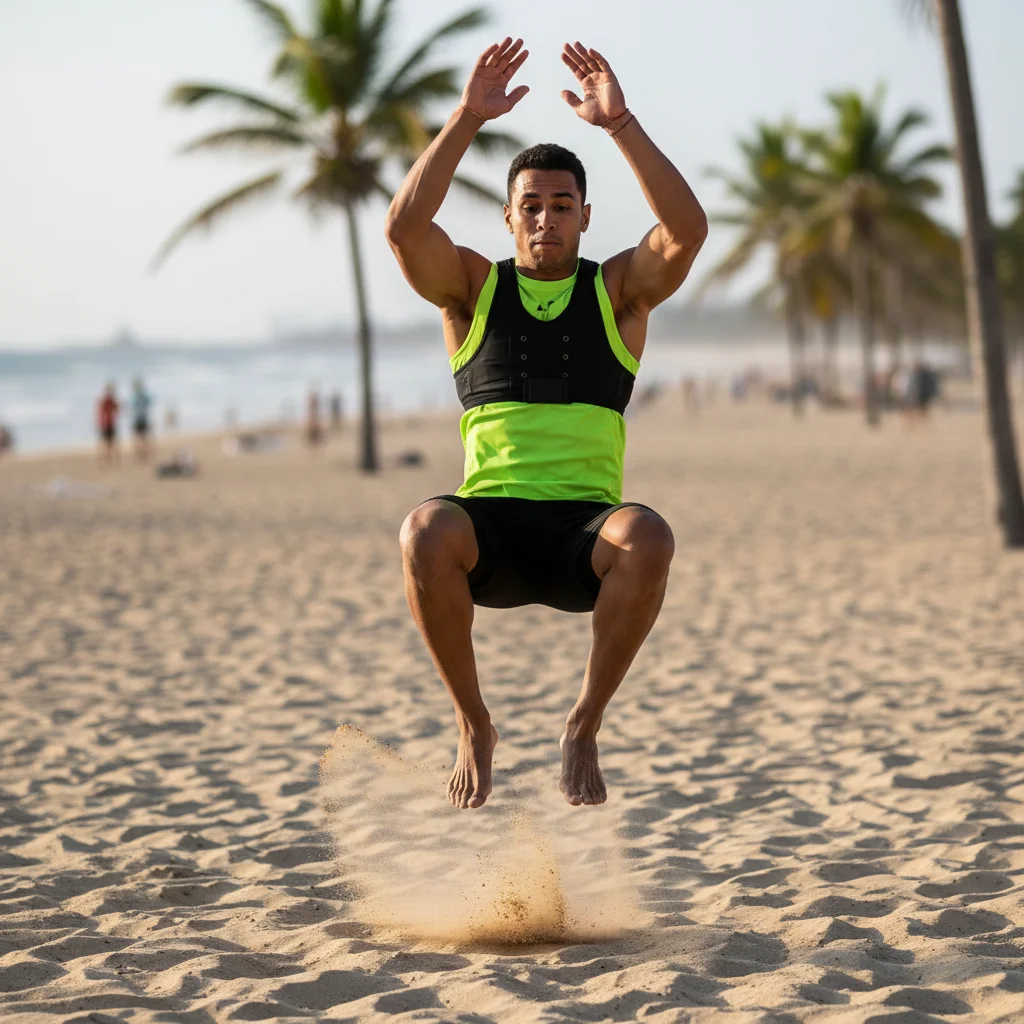
1. Plyometric Jumps on Sand
Objective: Enhance explosive power, vertical leap, and quickness off the ground.
Execution:
- Box Jumps (using a stable, low box/platform): Jump onto and off a box, focusing on soft landings and quick rebound. Perform 3 sets of 8-10 repetitions.
- Broad Jumps: Jump forward as far as possible, landing softly and immediately resetting. Perform 3 sets of 5-7 repetitions.
- Tuck Jumps: Jump vertically, bringing your knees to your chest. Perform 3 sets of 10-12 repetitions.
Benefits: Develops fast-twitch muscle fibers crucial for spiking, blocking, and quick defensive movements. The sand adds resistance, intensifying the workout and improving stability.
2. Agility Ladder Drills (on Sand)
Objective: Improve foot speed, coordination, and the ability to change direction rapidly.
Execution:
- Lay an agility ladder on a relatively flat section of sand.
- Perform various ladder patterns: In-Outs, Icky Shuffle, Lateral Shuffles, etc.
- Focus on quick, light footwork and maintaining balance.
- Complete 2-3 rounds of 5-6 different patterns.
Benefits: Directly translates to better court coverage, quicker reactions to the ball, and enhanced defensive capabilities. These footvolley conditioning drills are excellent for sharpening your footwork.
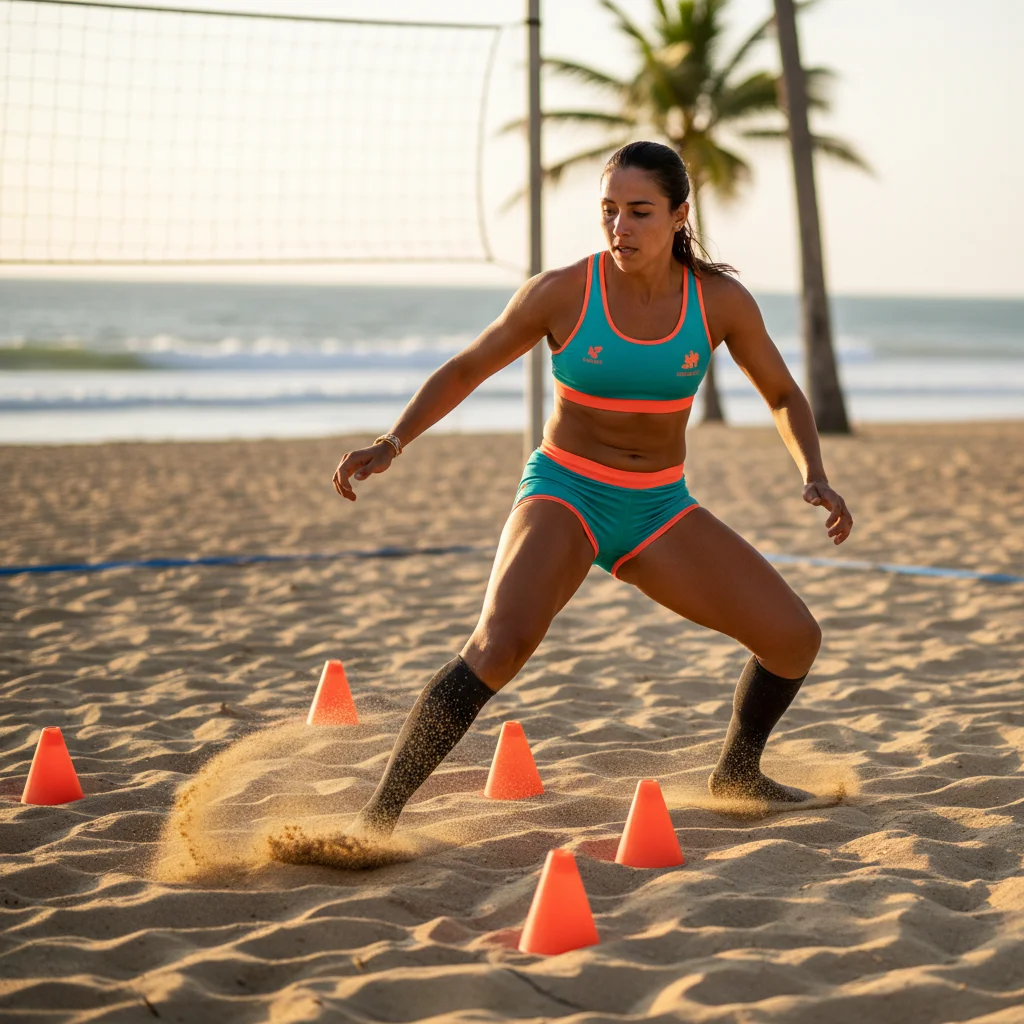
3. Cone Drills for Directional Change
Objective: Develop acceleration, deceleration, and the ability to cut and change direction efficiently.
Execution:
- Set up cones in various patterns: T-drill, Box Drill, W-drill.
- Sprint between cones, touching each one before changing direction.
- Focus on sharp cuts and explosive bursts.
- Perform 3-4 sets of each drill, with adequate rest between sets.
Benefits: Improves the agility needed to react to unpredictable ball trajectories and cover the court effectively, especially in crucial moments of a 60-minute match.
Strength and Stability: Powering Through the Match
Strength training is vital for preventing injuries, generating power, and maintaining form under fatigue. Focus on compound movements and core stability.
1. Sand Resistance Training
Objective: Build lower body strength and endurance specifically adapted to the challenging sand environment.
Execution:
- Deep Sand Lunges: Perform walking lunges in deep sand. 3 sets of 10-12 reps per leg.
- Sand Squats: Perform bodyweight or weighted squats in deep sand. 3 sets of 12-15 reps.
- Calf Raises on Sand: Stand on a slight incline or dig your heels in slightly and perform calf raises. 3 sets of 15-20 reps.
Benefits: Strengthens the glutes, quads, hamstrings, and calves, which are primary movers in footvolley. The unstable surface also recruits more stabilizing muscles, enhancing overall joint stability.
2. Core Strength Circuit
Objective: Improve trunk stability, which is crucial for powerful kicks, jumps, and maintaining balance on sand.
Execution:
- Perform a circuit of exercises: Planks, Side Planks, Russian Twists, Leg Raises, Bird-Dog.
- Hold each static exercise for 30-60 seconds, and perform 15-20 repetitions for dynamic exercises.
- Complete 2-3 rounds with minimal rest between exercises.
Benefits: A strong core translates to more powerful and controlled movements, better balance during acrobatic plays, and reduced risk of back injuries. These are foundational footvolley conditioning drills.
3. Upper Body Power (Medicine Ball Throws)
Objective: Develop rotational power and upper body strength for powerful serves and defensive moves.
Execution:
- Overhead Slams: Hold a medicine ball, raise it overhead, and slam it to the ground with force. 3 sets of 10-12 reps.
- Rotational Throws: Stand sideways to a wall or partner, rotate your torso, and throw the medicine ball. 3 sets of 10-12 reps per side.
Benefits: While footvolley is primarily lower-body driven, a strong and powerful upper body aids in balance, generating momentum for spikes, and protecting against impacts during dives.
Match Simulation and Specificity Drills
To truly optimize your stamina for 60-minute matches, your training must closely mimic the demands of the game. These footvolley conditioning drills integrate physical exertion with technical skills.
1. 1-on-1 Continuous Play
Objective: Simulate match conditions with high intensity and continuous movement.
Execution:
- Play 1-on-1 footvolley on half a court or a small designated area.
- Focus on keeping the ball in play and constantly moving.
- Play for intervals of 5-10 minutes with short rests, aiming for a total of 30-45 minutes of play.
Benefits: This drill forces you to combine technical skills with high-intensity physical effort, directly improving your match-specific endurance and decision-making under fatigue.
2. Defensive Coverage Drills
Objective: Improve lateral movement, diving technique, and sustained defensive effort.
Execution:
- Have a partner continuously spike or place balls to different areas of your court.
- Your goal is to cover every ball, even if it means diving or making acrobatic saves.
- Perform for 2-3 minute intervals, followed by 1-minute rest. Repeat 5-7 times.
Benefits: Builds resilience in defensive movements, which are often the most physically demanding aspects of footvolley. It teaches your body to recover quickly and be ready for the next play.
3. Controlled Scrimmages with Fatigue Focus
Objective: Practice playing under fatigue, making smart decisions when tired.
Execution:
- After a strenuous conditioning session, immediately transition into a 20-30 minute scrimmage.
- Alternatively, play a normal scrimmage but impose rules like no breaks between points, or mandatory continuous rallies.
Benefits: This pushes you to maintain technical precision and strategic thinking even when your body is tired, a crucial skill for 60-minute footvolley matches. It highlights areas where your technique might break down under duress.
Integrating Your Training: A Sample Weekly Schedule
Consistency is key. Here’s a sample weekly schedule incorporating these footvolley conditioning drills:
Monday: Cardiovascular Endurance & Core
- Warm-up (10 min)
- Long-Duration Beach Run (30-45 min)
- Core Strength Circuit (15-20 min)
- Cool-down & Stretching (10 min)
Tuesday: Explosive Power & Agility
- Warm-up (10 min)
- Plyometric Jumps on Sand (3 sets of 8-12 reps per exercise)
- Agility Ladder Drills (2-3 rounds, 5-6 patterns)
- Cone Drills for Directional Change (3-4 sets per drill)
- Cool-down & Stretching (10 min)
Wednesday: Active Recovery / Light Technical Practice
- Light jog or swim (30 min)
- Focus on footvolley basics: passing, setting, controlled touches.
Thursday: High-Intensity Intervals & Strength
- Warm-up (10 min)
- Interval Sand Sprints (3-4 sets of 8-12 reps)
- Sand Resistance Training (3 sets of 10-15 reps per exercise)
- Upper Body Power (Medicine Ball Throws) (3 sets of 10-12 reps)
- Cool-down & Stretching (10 min)
Friday: Match Simulation & Technical Refinement
- Warm-up (10 min)
- 1-on-1 Continuous Play (30-45 min)
- Defensive Coverage Drills (5-7 intervals)
- Controlled Scrimmage (20-30 min, focusing on fatigue management)
- Cool-down & Stretching (10 min)
Saturday & Sunday: Rest or Light Play
- Allow your body to recover.
- Optional: light, recreational footvolley or other low-impact activities.
Nutrition, Hydration, and Recovery: The Unsung Heroes of Stamina
No amount of training will yield optimal results without proper fueling and recovery. These elements are as crucial as the footvolley conditioning drills themselves.
Nutrition for Endurance
- Complex Carbohydrates: Your primary energy source. Include whole grains, fruits, and vegetables in every meal.
- Lean Protein: Essential for muscle repair and growth. Chicken, fish, beans, and lentils are great choices.
- Healthy Fats: Provide sustained energy and support hormone function. Avocados, nuts, and olive oil are excellent sources.
- Pre-Match Meal: Consume a carb-rich, easily digestible meal 2-3 hours before a match.
- Post-Match Recovery: A mix of carbs and protein within 30-60 minutes after intense activity to replenish glycogen stores and repair muscles.
Hydration Strategy
- Before: Start hydrating several hours before training or a match.
- During: Sip water or an electrolyte drink regularly, even if you don’t feel thirsty. Aim for 150-250ml every 15-20 minutes during intense activity.
- After: Continue to rehydrate to replace lost fluids.
- Remember that playing on sand in the sun increases fluid loss significantly.
The Importance of Recovery
- Sleep: Aim for 7-9 hours of quality sleep per night. This is when your body repairs and rebuilds.
- Stretching and Mobility: Regular stretching improves flexibility and reduces muscle soreness.
- Active Recovery: Light activities like walking or swimming can help blood flow and remove metabolic waste.
- Listen to Your Body: Don’t push through severe pain. Rest days are not a sign of weakness; they are essential for progress.
Mental Toughness: The Final Piece of the Puzzle
Physical stamina is paramount, but mental resilience is equally important for 60-minute footvolley matches. When fatigue sets in, your mental game can be the difference between winning and losing.
- Visualization: Before a match, visualize yourself performing well even when tired.
- Positive Self-Talk: Replace negative thoughts with empowering affirmations.
- Focus on the Present: Don’t dwell on past mistakes or future points. Focus on the current rally.
- Breathing Techniques: Use controlled breathing to manage stress and recover during short breaks.
Incorporating mental training alongside your footvolley conditioning drills will create a well-rounded athlete capable of performing under pressure for extended periods.
Conclusion: Dominate the Sand with Superior Stamina
Mastering footvolley requires a holistic approach that combines technical skill, tactical intelligence, and superior physical conditioning. By consistently implementing these footvolley conditioning drills, you will build the cardiovascular endurance, explosive power, and agile movement necessary to not only participate but to truly dominate 60-minute matches. Remember to listen to your body, prioritize recovery, and fuel yourself properly. With dedication and smart training, you’ll find yourself outlasting your opponents, making crucial plays in the final minutes, and ultimately elevating your footvolley game to new heights. Step onto the sand prepared, strong, and ready to win!