MLS 2026 Contracts: Decoding Player Performance Bonus Financial Impact

Anúncios
MLS 2026 Contracts: Decoding Player Performance Bonus Financial Impact
Anúncios
Major League Soccer (MLS) is continuously evolving, not just on the pitch but also in the intricate financial architecture that underpins its competitive landscape. As we look ahead to 2026, a pivotal year for the league with significant global attention, the structure of player contracts, particularly the inclusion and impact of MLS contract bonuses, is under intense scrutiny. These performance-based incentives are more than just add-ons; they are a critical component shaping player earnings, influencing team strategies, and ultimately, dictating the financial health and competitiveness of the league. Understanding the financial implications of player performance bonuses in 2026 MLS contracts requires a deep dive into the nuances of sports economics, player motivation, and strategic team building.
The landscape of professional sports contracts has shifted dramatically over the past few decades. Gone are the days when a simple base salary was the sole determinant of a player’s compensation. Today, a sophisticated array of incentives, including signing bonuses, roster bonuses, and crucially, performance bonuses, forms the backbone of modern athletic remuneration. In MLS, a league known for its unique salary cap structure and targeted allocation money (TAM) rules, these bonuses play an even more pronounced role. They offer a flexible mechanism for teams to reward excellence without necessarily impacting the base salary cap in the same way, thereby allowing for greater financial maneuverability. For players, these bonuses represent a direct link between their on-field output and their financial reward, fostering a culture of high performance and achievement.
As 2026 approaches, with the FIFA World Cup on North American soil, the visibility and commercial appeal of MLS are set to skyrocket. This increased profile will inevitably lead to higher expectations for player performance and, consequently, more complex and lucrative bonus structures. Teams will be looking to attract and retain top talent, and performance bonuses will be a key differentiator in these negotiations. For fans and stakeholders, comprehending how these MLS contract bonuses are structured and their financial impact is essential to truly appreciate the strategic decisions made by clubs and the broader economic dynamics of the league. This article aims to unravel these complexities, providing an insider’s perspective on the financial intricacies of MLS player performance bonuses.
Anúncios
The Evolution of Player Performance Bonuses in MLS
Historically, MLS contracts were relatively straightforward, primarily focusing on base salaries within a tightly controlled salary cap. However, as the league matured and sought to compete on a global stage for talent, the need for more flexible and attractive compensation packages became apparent. The introduction and subsequent refinement of various allocation mechanisms, such as Designated Player (DP) rules and TAM, have allowed teams greater financial freedom. Alongside these, performance bonuses have grown in prominence, evolving from simple goal-scoring incentives to a wide array of metrics covering individual achievements, team successes, and even disciplinary records.
The financial implications of these evolving bonus structures are multifaceted. For teams, they represent a way to tie a portion of a player’s compensation directly to tangible results. This can mitigate risk, as a significant part of a player’s potential earnings is contingent on their ability to perform. It also aligns player incentives with team objectives, encouraging individual excellence that contributes to collective success. For players, it offers an opportunity to significantly boost their income beyond their base salary, rewarding dedication, skill, and impact. This dynamic creates a powerful feedback loop: better performance leads to higher earnings, which in turn motivates players to strive for even greater heights.
Looking specifically at 2026, we anticipate a further sophistication in these bonus structures. With the global spotlight on North America, the pressure to deliver high-quality football will be immense. This could translate into more aggressive bonus schemes, particularly for marquee players. Teams might introduce bonuses tied to specific statistical milestones (e.g., assists for midfielders, clean sheets for goalkeepers), fan engagement metrics, or even community involvement. The challenge for clubs will be to design these bonuses in a way that is both motivating for players and financially sustainable within the league’s unique economic framework. The careful calibration of these MLS contract bonuses will be a defining characteristic of successful teams in the coming years.
Types of Performance Bonuses and Their Financial Weight
Performance bonuses in MLS contracts can be broadly categorized into several types, each carrying distinct financial implications for both players and clubs. Understanding these categories is crucial for grasping the full scope of a player’s potential earnings and a team’s financial commitments.
Individual Performance Bonuses
These are tied directly to a player’s personal achievements. Examples include:
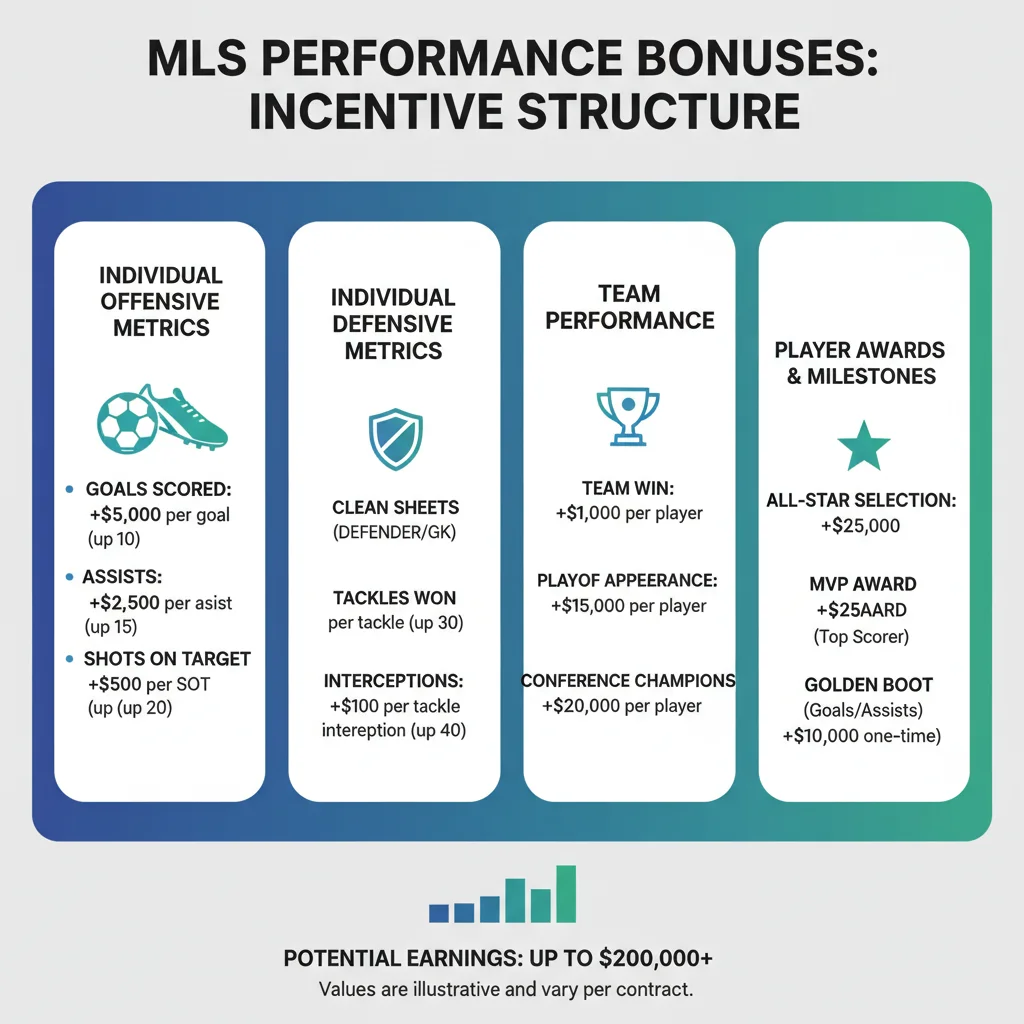
- Goal/Assist Milestones: A common bonus for attacking players, rewarding them for reaching a certain number of goals or assists in a season. The financial value of these can vary significantly based on the player’s profile and the specific milestone.
- Minutes Played: Often included for younger players or those returning from injury, incentivizing consistent availability and contribution.
- Individual Awards: Bonuses for winning accolades like MLS MVP, Golden Boot, Defender of the Year, or being named to the MLS Best XI. These usually carry substantial financial rewards, reflecting the high prestige of such honors.
- Clean Sheets: For goalkeepers and defenders, rewarding their contribution to preventing goals.
The financial weight of individual bonuses can range from a few thousand dollars for minor milestones to hundreds of thousands for major awards or significant statistical achievements. For a star player, these bonuses can add a substantial percentage to their base salary, making them a powerful motivator.
Team Performance Bonuses
These bonuses are contingent on the collective success of the team and are designed to foster a sense of shared responsibility and ambition. Common examples include:
- Playoff Qualification: A fundamental goal for every MLS team, often triggering bonuses for all rostered players.
- Conference Championship: Rewards for winning the Eastern or Western Conference.
- MLS Cup Victory: The pinnacle of team success, carrying the most significant financial bonus for players.
- Supporters’ Shield: For finishing with the best regular-season record.
- CONCACAF Champions League Qualification/Performance: As MLS teams increasingly compete internationally, bonuses tied to continental success are becoming more prevalent.
Team bonuses are typically shared among the squad, though the distribution might not always be equal, with key players potentially receiving a larger share. These bonuses can significantly inflate a team’s payroll in successful seasons, a factor that must be meticulously planned for in the club’s financial forecasting.
Other Incentive-Based Clauses
- Appearance Bonuses: Similar to minutes played, but tied to starting a certain number of games.
- Merchandise Sales: For highly marketable players, a percentage of their jersey sales or other merchandise can be included, though this is less common in MLS compared to other global leagues.
- Image Rights: Separate compensation for the use of a player’s image in promotional materials, often negotiated alongside performance incentives.
The financial impact of these varied MLS contract bonuses is profound. They create a variable cost structure for clubs, where player remuneration is directly linked to on-field outcomes. This requires sophisticated financial modeling and risk assessment from team management to ensure that potential bonus payouts do not destabilize the club’s budget. For players, it means that their ultimate annual earnings can fluctuate significantly based on their own form and their team’s fortunes, adding an element of financial uncertainty but also immense potential reward.
The Strategic Role of Bonuses in Team Building and Player Retention
Beyond direct compensation, MLS contract bonuses serve a crucial strategic role in team building, player acquisition, and retention. In a league with a salary cap, creativity in contract structuring is paramount, and bonuses offer a valuable tool for general managers and sporting directors.
Attracting Top Talent
For high-caliber players, especially those from international leagues, a competitive base salary is often a given. What can set an MLS offer apart are the additional incentives tied to performance. A robust bonus structure signals a club’s ambition and belief in a player’s ability to contribute significantly. It allows teams to offer a lower guaranteed salary while presenting a compelling potential earnings package, especially for players who are confident in their ability to meet performance targets. This flexibility is vital when competing with leagues that may have higher guaranteed wages but fewer performance-based upside opportunities.
Motivating and Retaining Players
Performance bonuses are powerful motivators. They provide clear, measurable objectives for players, encouraging them to push for excellence in every training session and match. Knowing that a significant portion of their potential income is directly linked to their output can drive players to perform at their peak consistently. For retaining key players, particularly those nearing the end of their contracts, offering enhanced bonus packages can be more appealing than simply increasing the base salary, especially if the club is nearing its salary cap limits. It aligns the player’s long-term financial interests with the club’s sustained success.
Managing Salary Cap Flexibility
This is perhaps one of the most critical strategic applications of performance bonuses in MLS. While certain bonuses count towards the salary cap, others may be exempt or have different cap implications, depending on their structure and the league’s complex rules. This allows clubs to manage their cap space more effectively. For instance, a club might offer a lower base salary with higher, but achievable, performance bonuses to fit a player under the cap, betting on the player’s ability to perform. If the player meets those targets, the club pays out the bonus, but it’s often a payment that comes with corresponding on-field success, justifying the expense. This intricate financial engineering is a hallmark of successful MLS management.
The strategic deployment of MLS contract bonuses is not a simple task. It involves careful negotiation, realistic goal setting, and a clear understanding of both the player’s potential and the team’s overall objectives. A poorly structured bonus scheme can lead to player dissatisfaction or unforeseen financial burdens, while a well-conceived one can be a cornerstone of a successful, sustainable franchise.
Insider Knowledge: Negotiation Tactics and Future Trends for 2026
For those with insider knowledge of MLS contract negotiations, the conversation around performance bonuses is often as intense as the discussions about base salary. As we look towards 2026, several trends and negotiation tactics are likely to dominate the landscape of MLS contract bonuses.
Data-Driven Bonus Structures
The increasing sophistication of sports analytics means that bonus structures are becoming more data-driven. Clubs are now able to track an immense array of metrics, from expected goals (xG) to defensive pressures, pass completion rates, and even recovery runs. This allows for the creation of highly specific and nuanced performance bonuses that go beyond simple goals and assists. For example, a defensive midfielder might have bonuses tied to tackles won, interceptions, and progressive passes. This precision ensures that bonuses are truly reflective of a player’s contribution, regardless of their position.
The ‘World Cup Bump’ and Increased Scrutiny
The 2026 World Cup will undoubtedly shine an unprecedented spotlight on MLS. This will likely lead to an increase in player wages and, consequently, more substantial performance bonuses. Players will be aware of their increased market value and will push for more lucrative incentive clauses. This also means increased scrutiny from media and fans regarding player earnings and the value clubs are getting for their investment. Transparency, or at least a clear internal rationale, for bonus structures will become even more important for clubs.
Negotiating for Both Sides
From a player’s perspective, negotiating for achievable, yet rewarding, bonuses is key. Agents will meticulously analyze a player’s historical performance, potential role within the team, and the team’s tactical system to propose realistic targets. They will also push for ‘escalator clauses’ where bonuses increase incrementally with higher performance tiers. For clubs, the challenge is to balance motivational incentives with financial prudence. They will aim to structure bonuses that are only triggered by truly impactful performances, ensuring that the financial outlay is justified by on-field success. This often involves modeling various scenarios to understand the maximum potential payout and its impact on the salary cap.
Long-Term vs. Short-Term Incentives
Another trend for 2026 is the potential for a greater emphasis on long-term performance incentives. While annual bonuses are standard, clubs might explore multi-year bonuses tied to sustained excellence or achieving specific team objectives over several seasons. This could be particularly relevant for developing young talent, offering them incentives that reward their growth and commitment to the club over a longer period. This approach to MLS contract bonuses fosters stability and long-term planning.
The negotiation of these bonus clauses is a delicate dance, requiring a blend of financial acumen, an understanding of human psychology, and a keen eye for on-field performance metrics. The clubs that master this art will be best positioned to build winning teams in the highly competitive 2026 MLS season and beyond.
Impact on Team Budgets and Financial Sustainability
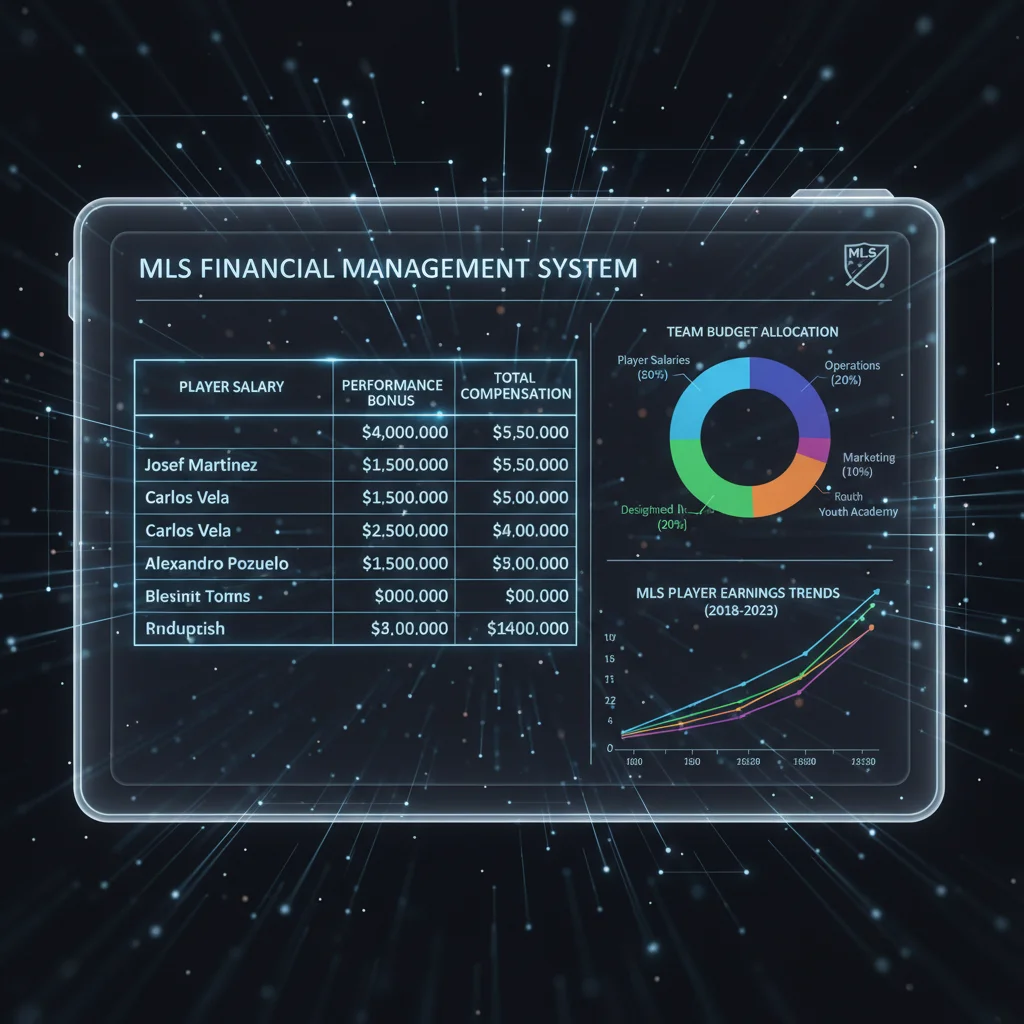
The financial implications of MLS contract bonuses extend far beyond individual player earnings; they significantly impact team budgets and the overall financial sustainability of MLS franchises. Managing these variable costs is a critical challenge for club ownership and financial departments.
Variable Cost Management
Unlike fixed salaries, performance bonuses introduce a significant variable cost component into a team’s budget. A highly successful season, with multiple playoff appearances, cup victories, and individual player accolades, can result in substantial bonus payouts. While these payouts are often celebrated as a consequence of success, they must be meticulously planned for. Clubs typically set aside contingency funds or build potential bonus payouts into their financial models, often based on conservative, moderate, and optimistic performance scenarios. Failure to adequately account for these potential expenses can lead to budgetary shortfalls or force clubs to make difficult financial decisions elsewhere.
Salary Cap Compliance
MLS’s unique salary cap rules add another layer of complexity. While some bonuses are exempt from the cap, others count fully or partially. Understanding which bonuses fall into which category is crucial for cap compliance. Clubs leverage this knowledge to structure contracts that maximize player incentives while staying within league limits. For instance, a club might front-load certain cap-exempt bonuses to free up cap space in later years, or structure bonuses to be paid out in seasons where the cap space is more abundant. This intricate financial engineering is a hallmark of successful MLS management.
Return on Investment (ROI)
From an ownership perspective, performance bonuses are viewed as an investment with an expected return. The return is not just in on-field success but also in increased revenue streams from ticket sales, merchandise, sponsorships, and media rights, all of which are positively impacted by a winning team. The financial goal is for the increased revenue generated by a successful team to at least offset, if not exceed, the additional costs incurred from bonus payouts. This ROI calculation is constantly being evaluated, influencing future contract negotiations and overall financial strategy.
Balancing Risk and Reward
Clubs must strike a delicate balance between offering attractive bonus structures to motivate players and managing the financial risk of high payouts. Too conservative a bonus structure might fail to attract or motivate top talent, while an overly aggressive one could lead to unsustainable financial commitments. The optimal strategy involves creating bonus tiers that reward increasing levels of performance, ensuring that significant payouts are only triggered by truly exceptional achievements that likely generate corresponding revenue increases. This balancing act is at the heart of sound financial management in MLS.
As MLS continues its growth trajectory towards 2026 and beyond, the careful management of MLS contract bonuses will remain a cornerstone of financial sustainability. Clubs that demonstrate shrewdness in this area will not only build competitive teams but also ensure their long-term economic viability in an increasingly competitive sports market.
The Player’s Perspective: Maximizing Earnings and Career Longevity
For players, MLS contract bonuses represent a significant opportunity to maximize their earnings and secure their financial future. Understanding how to leverage these incentives is a key aspect of a successful professional career.
Direct Link to Performance
The most immediate benefit for players is the direct link between their on-field performance and their potential income. This fosters a meritocratic environment where hard work, skill, and consistency are financially rewarded. For players who consistently deliver, bonuses can add a substantial percentage to their base salary, making them highly attractive elements of a contract.
Negotiation Power
A player with a strong track record of hitting performance targets gains significant negotiation power. During contract renewals or when moving to a new club, agents can point to past bonus achievements as evidence of a player’s value and reliability. This can lead to more favorable bonus clauses in future contracts, including higher payouts for similar achievements or the inclusion of new, more lucrative incentives.
Career Longevity and Motivation
Performance bonuses can also contribute to career longevity. For aging players, demonstrating that they can still hit key performance metrics, even if their base salary might be declining, can prove their continued value to a club. For younger players, the prospect of significant bonuses for reaching developmental milestones provides strong motivation to grow and improve their game. This continuous drive for improvement, fueled by financial incentives, ultimately benefits both the player and their club.
Financial Planning and Risk
While bonuses offer significant upside, they also introduce an element of financial variability. Players and their agents must engage in careful financial planning, recognizing that bonus income is not guaranteed. They need to assess the achievability of bonus targets based on the team’s strength, the player’s role, and potential injury risks. Diversifying income streams and building a financial cushion are crucial for players whose earnings are heavily reliant on performance incentives.
In the lead-up to 2026, with the increased visibility of MLS, players will be more attuned than ever to the potential financial rewards tied to their performance. The savviest players and their representatives will strategically negotiate MLS contract bonuses that not only reflect their worth but also incentivize them to achieve their highest potential, benefiting both their individual careers and the collective success of their teams.
Conclusion: The Evolving Landscape of MLS Financials
The financial implications of player performance bonuses in 2026 MLS contracts are profound and far-reaching. These incentives are no longer just a peripheral aspect of player compensation; they are a central pillar of the league’s economic model, influencing everything from player acquisition and retention to team budgeting and overall financial sustainability. As MLS continues its rapid ascent, particularly with the global spotlight of the 2026 World Cup on the horizon, the sophistication and strategic deployment of MLS contract bonuses will only grow.
For clubs, mastering the art of structuring these bonuses is critical for attracting and motivating top talent while remaining financially prudent and compliant with salary cap regulations. It requires a deep understanding of analytics, market trends, and a keen eye for balancing risk and reward. For players, performance bonuses offer an unparalleled opportunity to directly link their on-field excellence with significant financial gain, fostering a culture of high achievement and career longevity. However, it also demands astute financial planning and realistic self-assessment.
The interplay between individual ambition and collective success, mediated through these financial incentives, will continue to define the competitive spirit of MLS. As we move closer to 2026, the careful calibration and strategic implementation of MLS contract bonuses will be a fascinating aspect to watch, shaping the league’s trajectory and solidifying its position on the global football stage. The future of MLS finance is dynamic, complex, and inextricably linked to the performance incentives that drive its most valuable assets: its players.