Data-Driven Player Scouting: MLS Teams & Advanced Metrics for 2026

Anúncios
The landscape of professional soccer scouting has undergone a profound transformation, moving far beyond the traditional eye test to embrace the power of advanced analytics. As the 2026 World Cup approaches, bringing with it an unprecedented spotlight on North American soccer, Major League Soccer (MLS) teams are intensifying their efforts to identify and acquire top-tier talent. This quest for excellence is increasingly powered by sophisticated data-driven player scouting methodologies. Gone are the days when a scout’s intuition was the sole determinant; today, a blend of human expertise and cutting-edge data analysis is charting the course for success. This article delves into how five prominent MLS teams are leveraging advanced metrics and innovative strategies to pinpoint the next generation of stars, ensuring they are well-prepared for the heightened competition and global attention that awaits in 2026.
The Evolution of MLS Data Scouting: A New Era for Talent Identification
The beautiful game, while still reliant on moments of individual brilliance and team cohesion, is now deeply intertwined with numbers. Every pass, tackle, shot, and movement on the pitch generates a mountain of data, and forward-thinking MLS teams are sifting through this information to gain a competitive edge. The shift towards MLS data scouting is not merely a trend; it’s a fundamental change in how clubs approach player acquisition, development, and retention. The goal is clear: to minimize risk, maximize potential, and build rosters capable of sustained success, both domestically and internationally. The 2026 World Cup, co-hosted by the USA, Canada, and Mexico, serves as a powerful catalyst, pushing MLS clubs to elevate their scouting operations to global standards.
Anúncios
Traditionally, scouting involved extensive travel, countless hours watching games, and subjective assessments. While these elements still hold value, they are now augmented by objective data that provides a more comprehensive and unbiased view of a player’s capabilities. Advanced metrics allow teams to identify undervalued assets, predict future performance, and even scout players in remote leagues that might otherwise go unnoticed. This data-first approach enables clubs to make more informed decisions, reducing the likelihood of costly transfer mistakes and ensuring that every acquisition aligns perfectly with the team’s tactical philosophy and long-term vision. The integration of data science into sports has opened up new frontiers, allowing for a level of precision and insight previously unimaginable.
Beyond the Basics: Key Metrics Driving Modern MLS Player Scouting
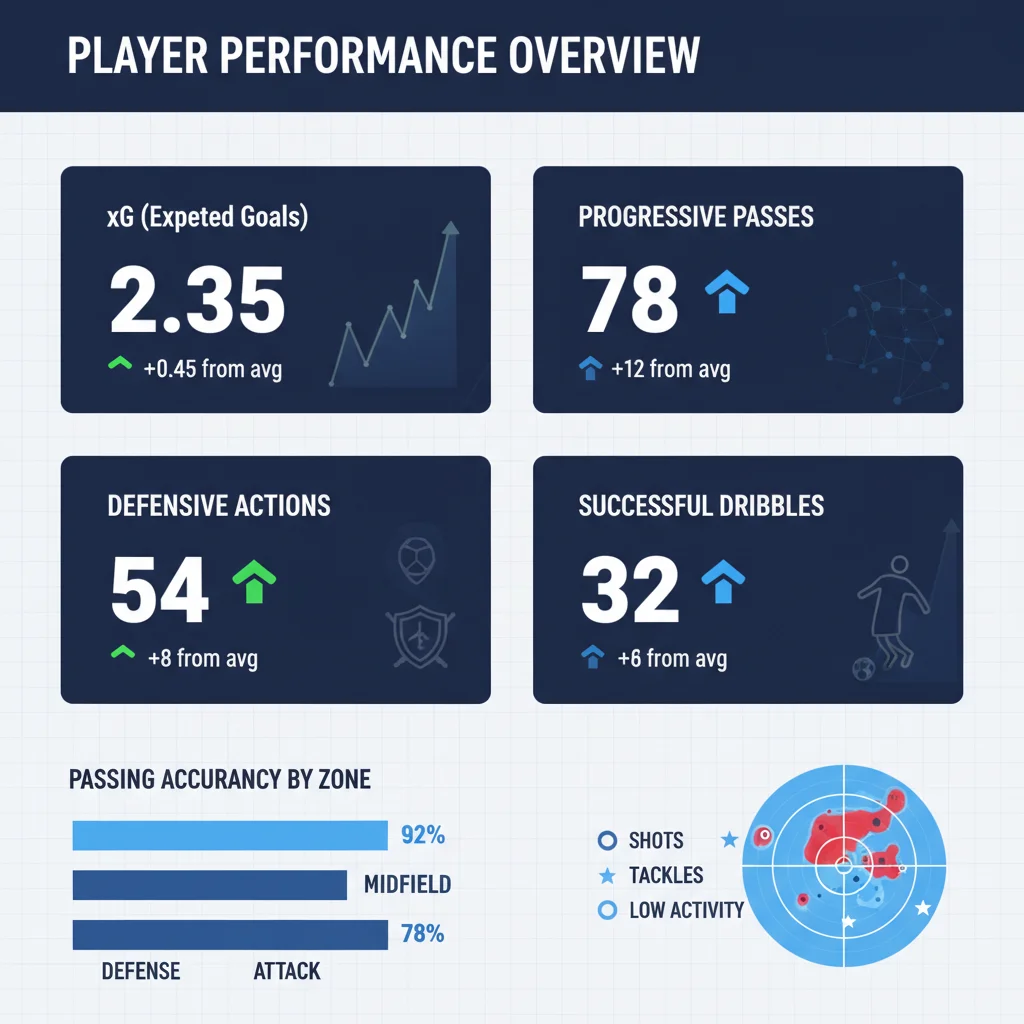
When discussing MLS data scouting, it’s crucial to understand that we’re not just talking about goals and assists. While these traditional statistics remain important, advanced metrics delve much deeper into a player’s contribution. Here are some of the key categories and specific metrics that MLS teams are now prioritizing:
Anúncios
Attacking Metrics: Precision in Goal Creation
- Expected Goals (xG) and Expected Assists (xA): These metrics quantify the quality of chances created and received, providing a more accurate picture of a player’s attacking output than just goals and assists alone. A player with high xG but low actual goals might be due for a scoring surge, indicating potential value.
- Progressive Passes and Carries: These measure how often a player moves the ball towards the opponent’s goal, indicating their ability to break lines and advance play. High numbers here suggest a player who is constantly looking to create dangerous situations.
- Dribbles Completed % and Successful Dribbles into the Final Third: Essential for wingers and attacking midfielders, these metrics highlight players who can beat defenders and penetrate dangerous areas.
- Shot-Creating Actions (SCA) and Goal-Creating Actions (GCA): These track the two actions directly leading to a shot or a goal, offering insight into a player’s involvement in dangerous attacking sequences.
Defensive Metrics: The Art of Disruption and Control
- Pressures and Successful Pressures %: Crucial for teams employing high-pressing tactics, these metrics show a player’s work rate off the ball and their effectiveness in winning possession back.
- Tackles Won % and Interceptions: Traditional but still vital, these indicate a player’s defensive solidity and ability to read the game.
- Blocks (Shots, Passes, Crosses): Important for defenders and defensive midfielders who consistently put their bodies on the line to prevent dangerous plays.
- Aerial Duels Won %: Particularly important for center-backs and defensive midfielders, this measures dominance in the air, crucial for set pieces and long balls.
Possession and Build-Up Metrics: Orchestrating Play
- Pass Completion % (overall and by zone): While a high overall percentage is good, understanding where passes are completed (e.g., in the final third) provides more context.
- Touches and Carries into the Box: For attacking players, this shows their ability to get into prime scoring positions.
- Key Passes: Passes that directly lead to a shot, demonstrating a player’s vision and ability to unlock defenses.
These metrics, when analyzed collectively and in context, paint a far more detailed picture of a player’s strengths, weaknesses, and overall suitability for a specific role or tactical system. The beauty of MLS data scouting lies in its ability to uncover hidden gems whose contributions might not always be reflected in the scoreboard but are vital to team success.
Case Studies: 5 MLS Teams Revolutionizing Scouting for 2026
While specific methodologies are often closely guarded secrets, we can infer and highlight how certain MLS teams are leading the charge in data-driven player scouting. The following examples illustrate the diverse approaches being taken:
1. Seattle Sounders FC: Blending Experience with Analytics
The Seattle Sounders have long been a model of consistency and success in MLS, partly due to their progressive approach to scouting. For 2026, they are reportedly enhancing their existing data infrastructure to focus on identifying players who excel in transitional play – a key characteristic of modern soccer. They utilize a proprietary algorithm that not only tracks traditional metrics but also evaluates a player’s decision-making under pressure, their ability to recover possession quickly, and their effectiveness in launching counter-attacks. Their focus extends to South American leagues, where they seek young talents with high ceilings who can adapt quickly to the physical demands of MLS. The Sounders’ approach to MLS data scouting is about finding players who fit their high-intensity, fluid tactical system, using data to validate their traditional scouting observations and reduce the margin of error in recruitment.
2. Atlanta United FC: Global Reach Through Data
Atlanta United, known for their ambitious recruitment strategy, is further expanding their global scouting network with a heavy reliance on data. They are reportedly employing AI-powered video analysis platforms that can automatically tag and categorize player actions across various leagues worldwide. This allows their lean scouting department to efficiently sift through thousands of players, identifying those who meet specific statistical thresholds for their desired playing style. Their focus for 2026 is on acquiring technically gifted players with strong offensive output metrics from smaller European leagues and South America, aiming to develop them into high-value assets. Atlanta’s commitment to MLS data scouting enables them to cast a wider net and identify talent that might be overlooked by bigger European clubs, securing players before their market value skyrockets.
3. Los Angeles FC (LAFC): Tactical Fit First
LAFC has built a reputation for assembling dynamic, exciting teams, and their scouting for 2026 is no different. Their data science team works hand-in-hand with the coaching staff to define precise player profiles based on their tactical system. They use advanced metrics to identify players who not only perform well individually but also demonstrate a strong statistical compatibility with existing squad members. For instance, they might look for full-backs with high progressive carry numbers to complement their attacking wingers, or defensive midfielders with exceptional ball recovery rates to shield their backline. LAFC’s MLS data scouting emphasizes finding players who are a perfect tactical fit, using data to predict how a player will integrate into their specific system and contribute to team chemistry, rather than just raw individual talent.
4. New York City FC (NYCFC): Leveraging City Group’s Expertise
As part of the City Football Group (CFG), NYCFC benefits from a vast global scouting network and advanced analytical tools. For the 2026 season, they are reportedly deepening their use of CFG’s centralized data platform, which aggregates performance data from leagues around the world. This allows them to benchmark players against a global talent pool and identify those who align with CFG’s overarching football philosophy. NYCFC focuses on younger players with high potential, using data to track their development trajectories and identify key milestones. Their MLS data scouting strategy is about leveraging a global ecosystem of data and expertise to find players who can thrive in a possession-based, attacking system and potentially move up the CFG ladder.
5. Philadelphia Union: The Academy and Data Synergy
The Philadelphia Union has carved out a niche as one of MLS’s premier development academies. For 2026, their data-driven scouting extends beyond external recruitment to optimizing their internal academy pipeline. They use advanced analytics to monitor the progress of their youth players, identify areas for improvement, and predict which prospects are most likely to succeed at the professional level. This involves tracking metrics like athletic development, technical proficiency, and tactical understanding from a young age. When they do look externally, their MLS data scouting focuses on finding complementary pieces that can integrate seamlessly with their academy graduates, often prioritizing players with strong defensive work rates and tactical discipline. Their strategy is a testament to how data can enhance both external recruitment and internal player development, creating a sustainable model for success.
The Synergy of Data and Human Insight in MLS Data Scouting
It’s crucial to emphasize that data-driven scouting is not about replacing human scouts; it’s about empowering them. The most successful MLS teams for 2026 will be those that effectively combine the objective insights of data with the invaluable subjective judgment of experienced scouts. Data can highlight a player’s statistical strengths and weaknesses, but a scout’s eye can assess intangibles like leadership, personality, adaptability, and mental fortitude – qualities that are difficult, if not impossible, to quantify. A harmonious collaboration between data scientists and traditional scouts leads to a more holistic and robust evaluation process. Data provides the ‘what,’ while human insight provides the ‘why’ and the ‘how.’
Challenges and Opportunities in Advanced Metrics
While the benefits of MLS data scouting are clear, challenges remain. Data quality can vary across different leagues, and interpreting metrics without proper context can be misleading. For instance, a high tackle count might indicate a good defender, or it might suggest a player who is frequently out of position. Moreover, the dynamic nature of soccer means that new metrics and analytical approaches are constantly emerging, requiring clubs to continuously adapt and innovate. The opportunity, however, lies in the ability to uncover truly unique talent and build a competitive advantage that goes beyond financial might. As the 2026 World Cup looms, the pressure to identify and nurture talent is higher than ever, making advanced metrics an indispensable tool.
Future Trends in MLS Data Scouting for 2026 and Beyond
The evolution of MLS data scouting is far from over. We can anticipate several key trends shaping the future of talent identification:
- Predictive Analytics for Injury Risk: Beyond performance, data will increasingly be used to predict a player’s susceptibility to injury, allowing clubs to make more informed decisions about recruitment and workload management.
- Psychological and Cognitive Metrics: While challenging to quantify, efforts will be made to integrate data on a player’s decision-making speed, spatial awareness, and resilience into scouting reports.
- Virtual Reality (VR) Scouting: Imagine scouts ‘attending’ games virtually, with VR headsets providing real-time data overlays and multiple camera angles, reducing travel costs and increasing efficiency.
- Hyper-Personalized Development Plans: Data will enable clubs to create highly individualized training programs for each player, maximizing their potential based on their unique statistical profile and areas for improvement.
- Ethical Considerations and Data Privacy: As more data is collected, clubs will need to navigate the ethical implications and ensure player data privacy is rigorously protected.
These trends highlight a future where MLS data scouting becomes even more sophisticated, offering unparalleled insights into every facet of a player’s game and potential. The race to leverage these advancements will undoubtedly intensify as 2026 draws nearer, with clubs striving to build rosters that are not only skilled but also intelligently constructed for long-term success.

The Impact of 2026 World Cup on MLS Player Acquisition
The upcoming 2026 World Cup represents a monumental opportunity for MLS. The increased global attention, potential revenue streams, and heightened interest in soccer across North America will undoubtedly impact player acquisition strategies. MLS teams are not just scouting for the next season; they are building for a legacy. The World Cup will accelerate the adoption of advanced MLS data scouting techniques, as clubs vie to attract and develop players who can perform on a global stage. The desire to have homegrown talent or newly acquired stars represent their clubs in the World Cup will be a significant driving force, pushing teams to invest more heavily in data infrastructure and analytical expertise.
Furthermore, the World Cup will likely lead to an increase in the overall quality of play in MLS as more talented players are drawn to the league. This heightened competition will, in turn, necessitate even more precise and efficient scouting. Teams that master the art of data-driven talent identification will be best positioned to thrive in this evolving landscape. The ability to find value in overlooked markets, to predict a player’s adaptability to a new league, and to assess their potential against a backdrop of rising standards will be paramount. The 2026 World Cup is not just a tournament; it’s a catalyst for innovation in MLS data scouting and player development.
Conclusion: The Data-Driven Future of MLS Talent
The shift towards data-driven player scouting is a testament to MLS’s commitment to innovation and its ambition to compete with the world’s top leagues. As we look towards 2026, the five teams highlighted – Seattle Sounders, Atlanta United, LAFC, NYCFC, and Philadelphia Union – exemplify the varied yet equally effective ways advanced metrics are being integrated into talent identification. From proprietary algorithms and AI-powered video analysis to tactical fit prioritization and academy synergy, these clubs are setting the standard for modern recruitment.
The future of MLS data scouting is bright, promising a more efficient, objective, and ultimately more successful approach to building winning teams. The blend of human intuition and sophisticated analytics is not just a trend; it’s the new paradigm. As the league continues to grow in stature and global appeal, the ability to effectively harness the power of data will be the ultimate differentiator, ensuring that MLS teams are not just spectators but active participants in shaping the future of international soccer. The road to 2026 is paved with data, and those who master its interpretation will undoubtedly reap the rewards.