Master Footvolley Communication: 4-Week Synergy Drills for On-Court Domination
Anúncios
Footvolley, a captivating blend of beach volleyball and soccer, demands more than just exceptional athletic prowess. While dazzling acrobatic kicks and precise headers are thrilling to witness, the true backbone of a championship-winning footvolley team lies in its seamless communication. Without it, even the most talented individuals can falter. This article delves deep into the critical role of communication in footvolley and introduces a comprehensive 4-week program packed with footvolley communication drills designed to forge an unbreakable bond between partners and elevate your game to unprecedented heights.
Imagine a scenario: the ball is served, arcing towards your side of the court. You and your partner both instinctively move towards it, resulting in a collision or, worse, letting the ball drop between you. This common mishap is a direct consequence of poor communication. In a sport as fast-paced and dynamic as footvolley, split-second decisions are the norm. Effective communication acts as a vital nervous system, ensuring both players are always on the same page, anticipating each other’s moves, and executing strategies with surgical precision.
Anúncios
Our 4-week program, focusing on dedicated footvolley communication drills, is meticulously crafted to address every facet of on-court interaction. From basic verbal cues to advanced non-verbal signals, we’ll equip you with the tools to transform your partnership into a cohesive, formidable unit. Get ready to strengthen your on-court synergy and dominate the sand!
The Unsung Hero: Why Communication is Paramount in Footvolley
Many footvolley players focus solely on technical skills – perfecting the ‘shark attack,’ mastering the chest pass, or developing a devastating serve. While these are undoubtedly crucial, neglecting communication is akin to building a house without a strong foundation. Here’s why communication is the unsung hero of footvolley success:
Anúncios
- Eliminates Confusion and Hesitation: In a game where the ball moves at lightning speed, any moment of doubt can be exploited by opponents. Clear communication eliminates ‘whose ball is it?’ moments, allowing for decisive action.
- Facilitates Strategic Play: Footvolley isn’t just about reacting; it’s about anticipating and planning. Effective communication allows partners to call out plays, identify weaknesses in the opponent’s defense, and adjust tactics on the fly.
- Enhances Court Coverage: With only two players covering a significant area, efficient court coverage is vital. Verbal and non-verbal cues ensure both players understand their responsibilities for each ball, minimizing gaps.
- Builds Trust and Confidence: Knowing your partner will call out the ball, cover your back, or alert you to an open court instills immense confidence. This trust is the bedrock of a strong partnership.
- Boosts Morale and Reduces Frustration: Misunderstandings and unforced errors due to poor communication can quickly lead to frustration. Conversely, a well-communicating team enjoys better morale and a more positive playing experience.
- Adapts to Opponents: Opponents often change their strategy. A communicative team can quickly discuss and implement counter-strategies, adapting to any challenge.
Understanding these benefits underscores the importance of integrating footvolley communication drills into your regular training regimen. It’s not just an add-on; it’s an essential component for competitive play.
Week 1: Establishing the Foundation – Basic Verbal Cues and Court Awareness
The first week of our program focuses on building a solid foundation of verbal communication and enhancing court awareness. These footvolley communication drills are designed to make basic calls instinctive.
Drill 1.1: The “Mine/Yours/Out” Call
- Objective: To establish clear ownership of the ball and identify out-of-bounds plays.
- Setup: Two players, one ball, on a footvolley court.
- Execution: One player serves the ball. As the ball approaches, both players must verbally call out:
- “Mine!” if they intend to play the ball.
- “Yours!” if they want their partner to play it.
- “Out!” if they believe the ball will land outside the court.
- Progression: Start with slow, predictable serves. Gradually increase speed and vary the serve placement. Introduce a third player to act as a server, keeping the two partners guessing.
- Key Takeaway: Emphasize loud, clear calls. Hesitation is the enemy.
Drill 1.2: Directional Calls – “Left!” / “Right!” / “Middle!”
- Objective: To guide the partner on where to direct their shot or pass.
- Setup: Same as Drill 1.1.
- Execution: After receiving the ball, the player who will set it up for their partner should call out a direction for the partner’s attack. For example, if the partner is in a good position to attack the left side of the opponent’s court, the setter calls “Left!”.
- Progression: Introduce targets (cones, bags) on the opponent’s side of the court. Players must hit the called target.
- Key Takeaway: Calls should be made *before* the partner makes contact with the ball, giving them time to adjust.
Drill 1.3: Court Coverage Awareness – “Cover!” / “Stay!”
- Objective: To ensure optimal court coverage during defensive and offensive transitions.
- Setup: Two players, one server/coach.
- Execution: The server sends a ball to one player. As that player moves to receive, the partner calls out either “Cover!” (indicating they will position themselves to cover the open court behind the receiver) or “Stay!” (indicating the receiver should handle the ball and the partner will hold their current position to prepare for the next play).
- Progression: Increase the speed and variety of serves, forcing quicker decisions and calls. Introduce a simulated opponent to pressure the players.
- Key Takeaway: This drill builds trust that your partner will be in the right place.
Week 2: Advanced Verbal Cues and Strategic Communication
Having mastered the basics, Week 2 introduces more nuanced verbal cues and focuses on integrating strategic thinking into your communication. These footvolley communication drills will help you anticipate and plan.
Drill 2.1: Opponent Awareness – “Deep!” / “Short!” / “Block!”
- Objective: To alert your partner to the opponent’s positioning and potential attacks.
- Setup: Two players, one server, one simulated opponent (can be a stationary object or another player).
- Execution: As the opponent prepares to attack, the non-receiving partner calls out their observation. “Deep!” if the opponent is setting up for a deep shot. “Short!” if they anticipate a drop. “Block!” if the opponent is trying to block your attack.
- Progression: Vary the opponent’s simulated actions. The server can also call out what the ‘opponent’ is doing to test the partners’ observational skills.
- Key Takeaway: Constant observation of opponents is crucial. These calls provide vital intel.
Drill 2.2: Play Calling – “Attack!” / “Set!” / “Defense!”
- Objective: To quickly establish the team’s intended action for the current play.
- Setup: Two players, one server.
- Execution: After the first touch, the player in the best position to assess the situation calls out the next intended action. “Attack!” if a clear attacking opportunity arises. “Set!” if the ball needs to be set up for a partner’s attack. “Defense!” if the primary focus is to return the ball safely.
- Progression: Introduce scenarios where the initial call might need to change due to opponent’s actions, forcing quick re-communication.
- Key Takeaway: These calls simplify complex decisions under pressure.
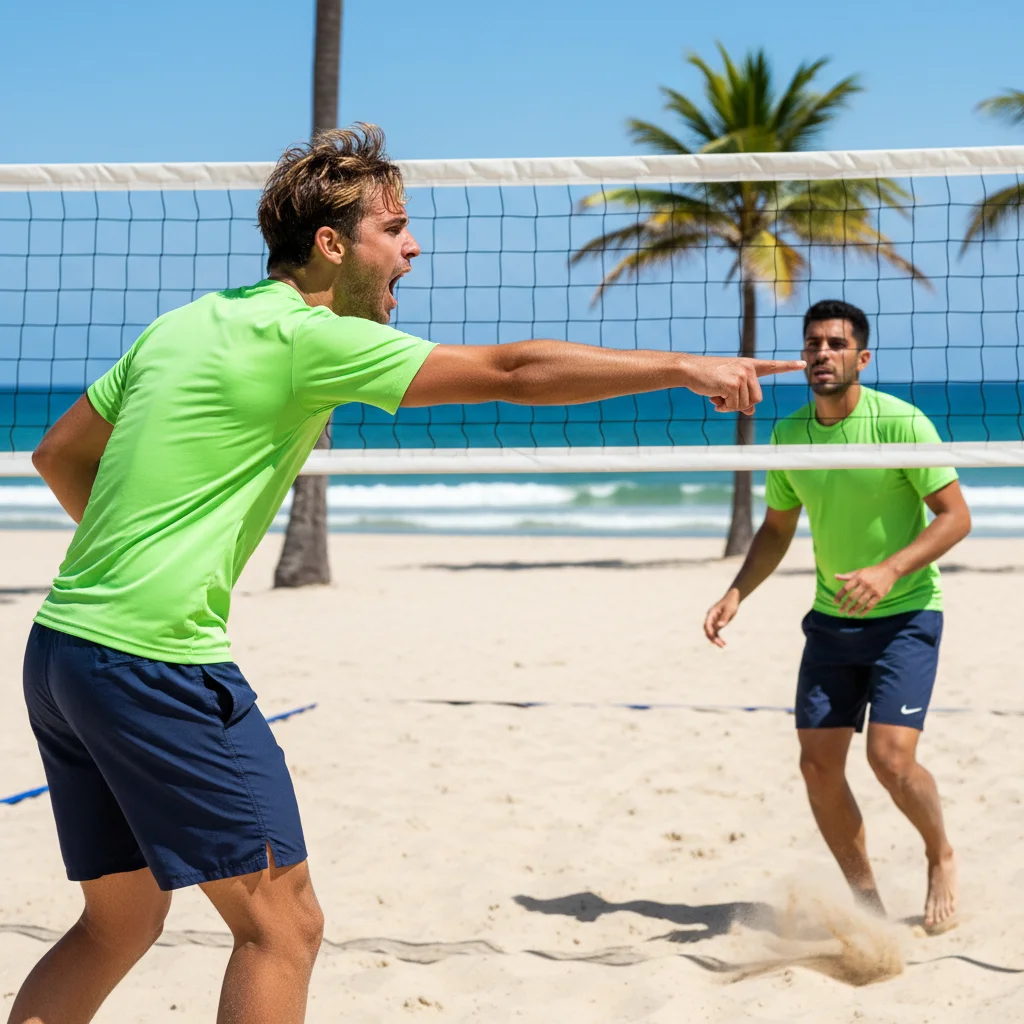
Drill 2.3: Pressure Communication – “Help!” / “Got It!”
- Objective: To manage situations where one partner is under extreme pressure or needs assistance.
- Setup: Two players, server, and a coach.
- Execution: The server delivers a difficult ball, forcing one player into a compromised position. That player can call “Help!” if they need their partner to adjust quickly or take over. The partner responds with “Got It!” if they can assist, or a quick verbal confirmation of their action.
- Progression: Increase the difficulty of serves and the pressure on players. The coach can introduce unexpected elements to simulate game chaos.
- Key Takeaway: This drill builds resilience and trust in challenging situations.
Week 3: Non-Verbal Communication and Anticipation
While verbal cues are foundational, non-verbal communication is equally powerful, especially in loud environments or when split-second decisions are needed. This week’s footvolley communication drills focus on developing a symbiotic understanding.
Drill 3.1: Eye Contact and Head Nods
- Objective: To confirm intentions and acknowledge information without speaking.
- Setup: Two players, one ball.
- Execution: One player serves. As the ball approaches, the player who intends to play it makes eye contact with their partner and gives a clear head nod. The partner acknowledges with a nod back, confirming they understand who is taking the ball.
- Progression: Incorporate this into other drills, ensuring eye contact and nods become a natural part of every play.
- Key Takeaway: Non-verbal cues are fast and effective, especially when verbal communication is difficult.
Drill 3.2: Hand Signals for Set Location
- Objective: To indicate the desired set location for an attack.
- Setup: Two players, one server.
- Execution: As the first player receives the ball and prepares to set, the attacking partner uses a pre-arranged hand signal (e.g., one finger for a short set, two for a deep set, a fist for a high set).
- Progression: Introduce multiple hand signals for different types of sets or attacks. Practice these signals during live play scenarios.
- Key Takeaway: Hand signals add a layer of subtlety and speed to strategic communication.
Drill 3.3: Positional Communication – Reading Body Language
- Objective: To understand your partner’s intentions and movements based on their body language.
- Setup: Two players, one server, and a coach observing.
- Execution: The server sends a ball. Players focus on reading their partner’s initial movement, body orientation, and even eye gaze to anticipate their next action. The coach provides feedback on whether the read was accurate.
- Progression: Gradually remove verbal communication from certain drills, forcing players to rely solely on body language.
- Key Takeaway: Developing this intuition allows for seamless, almost telepathic, teamwork.
Week 4: Integrating All Communication Methods and Game Simulation
The final week brings everything together. These advanced footvolley communication drills simulate game conditions, forcing you to utilize all learned communication techniques under pressure.
Drill 4.1: Full-Court Scrimmage with Communication Focus
- Objective: To apply all verbal and non-verbal communication in a live game setting.
- Setup: Two teams of two, playing a full game.
- Execution: Play a normal footvolley game, but with a strict emphasis on communication. Players must actively make calls, use hand signals, and maintain eye contact. The coach can pause play to highlight good or missed communication opportunities.
- Progression: Introduce penalties for missed calls or miscommunication (e.g., loss of point, extra conditioning).
- Key Takeaway: This is where theory meets practice. Consistent application is key.
Drill 4.2: “Silent Game” Segments
- Objective: To test reliance on non-verbal cues and intuition in high-pressure situations.
- Setup: Two teams of two.
- Execution: Play short segments of a game (e.g., 5 points) where no verbal communication is allowed. Players must rely entirely on eye contact, body language, and pre-arranged signals.
- Progression: Gradually increase the duration of silent segments.
- Key Takeaway: This drill highlights the power of non-verbal cues and strengthens intuitive understanding.
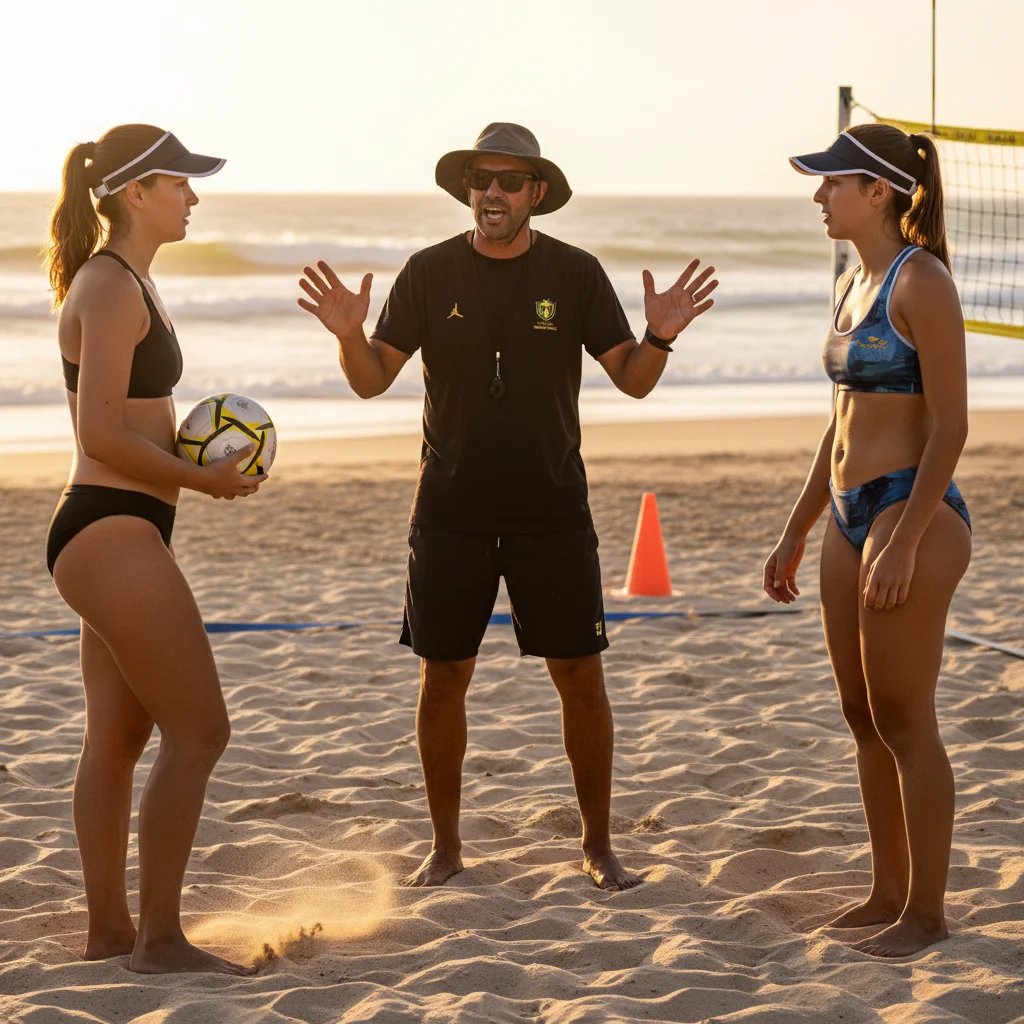
Drill 4.3: Post-Game Communication Debrief
- Objective: To reflect on communication effectiveness and identify areas for improvement.
- Setup: After any scrimmage or drill, partners sit together.
- Execution: Both players discuss their communication during the game. What worked well? Where were the breakdowns? Were calls clear and timely? Did non-verbal cues align?
- Progression: Keep a communication journal, noting improvements and recurring issues.
- Key Takeaway: Self-assessment and open dialogue are crucial for continuous improvement in footvolley communication drills.
Tips for Maximizing Your Communication Drills
Beyond the drills themselves, several factors can significantly impact the effectiveness of your footvolley communication drills:
- Be Consistent: Practice these drills regularly. Communication, like any skill, requires consistent reinforcement.
- Be Loud and Clear: Especially for verbal cues, ensure your voice carries across the court. Mumbling leads to confusion.
- Be Specific: Instead of a vague “Go!” try “Yours, deep left!” The more information, the better.
- Anticipate, Don’t Just React: Good communication is proactive. Call out what you see happening or what you intend to do *before* the critical moment.
- Trust Your Partner: Believe that your partner will make the call and follow through. This trust is built through consistent practice of footvolley communication drills.
- Provide Constructive Feedback: After drills or games, discuss communication openly and honestly with your partner. Focus on solutions, not blame.
- Observe Professional Players: Watch how elite footvolley pairs communicate. Notice their subtle cues, their timing, and their synergy.
- Stay Positive: Even when errors occur, maintain a positive and encouraging tone. Frustration hinders effective communication.
- Adapt to Conditions: Wind, crowd noise, or even the sun can impact communication. Practice adapting your calls and signals to different environments.
- Warm-up with Communication: Start your training sessions with a few minutes of basic communication drills to get into the right mindset.
Common Communication Breakdowns and How to Fix Them
Even with dedicated practice of footvolley communication drills, breakdowns can occur. Recognizing these common issues and knowing how to address them is vital:
-
The “Silent Partner”: One player consistently fails to make calls.
- Fix: Implement drills where *only* the silent partner is allowed to make calls for a set period. Encourage them to narrate their thoughts aloud during play.
-
Overlapping Calls: Both players call for the same ball simultaneously.
- Fix: Revisit “Mine/Yours” drills with a focus on immediate, decisive calls. Establish a primary caller for certain areas of the court (e.g., the player closer to the net calls short balls, the deeper player calls deep balls).
-
Hesitation: Calls are made too late, causing confusion.
- Fix: Practice drills at a slower pace initially, emphasizing early calls. Gradually increase speed. Use a coach to prompt “Call!” if hesitation is observed.
-
Vague Calls: Calls like “Ball!” or “Go!” without specific direction.
- Fix: Reinforce specific directional and strategic calls. Have partners repeat back the specific instruction they heard to ensure clarity.
-
Lack of Follow-Through: A call is made, but the player doesn’t commit to the action.
- Fix: This often stems from a lack of trust. Rebuild trust through consistent, successful execution in basic drills. Emphasize commitment once a call is made.
-
Ignoring Non-Verbal Cues: Players miss important signals from their partner.
- Fix: Incorporate more “Silent Game” segments. Have partners actively look for and acknowledge non-verbal cues during drills.
-
Emotional Communication: Calls become aggressive or frustrated.
- Fix: Emphasize maintaining composure. Practice communication in stressful game-like scenarios but with a rule of positive and neutral language.
Conclusion: The Path to Unbreakable Synergy
Mastering footvolley is a journey that extends far beyond individual skill. It’s about forging an unbreakable partnership, a synergy that allows two players to move and think as one. Our 4-week program of footvolley communication drills provides a structured, progressive path to achieving this synergy. By dedicating yourselves to these drills, you’ll not only eliminate common errors but also unlock new levels of strategic play, trust, and ultimately, success on the court.
Remember, communication is an ongoing process. Even after completing this program, continue to integrate these principles into every practice and game. Observe, adapt, and refine your calls and signals. The pairs that communicate most effectively are often the ones celebrating victory. So, grab your partner, hit the sand, and start building that championship-level connection today. Your opponents won’t know what hit them!