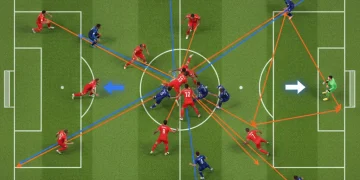
Mastering the Pressing Game: Top 7 US Soccer Defensive Strategies
Anúncios
Mastering the Pressing Game: Top 7 US Soccer Defensive Strategies Adopted by Top Teams
In the fast-evolving landscape of modern soccer, defensive strategies have become as crucial as offensive prowess. The ability to win the ball back quickly and efficiently, often high up the pitch, dictates the tempo of the game and can be the difference between victory and defeat. Over the last six months, US soccer teams, both in Major League Soccer (MLS) and the National Women’s Soccer League (NWSL), have increasingly embraced sophisticated pressing schemes, adapting global trends to their unique player pools and tactical philosophies. This shift reflects a growing maturity in American soccer, moving beyond purely reactive defending to proactive, aggressive, and highly coordinated pressing systems. Understanding these strategies is key to appreciating the tactical depth of the modern American game.
The concept of pressing, while not new, has undergone significant evolution. It’s no longer just about chasing the ball; it’s about creating traps, forcing errors, and dictating where and when the opponent can play. This intricate dance requires immense physical conditioning, tactical intelligence, and seamless communication among players. US soccer teams are investing heavily in these areas, and the results are evident in improved league performances and competitive international showings. From the high-octane ‘gegenpressing’ to the more calculated ‘mid-block’ press, American coaches are deploying a diverse arsenal of defensive tactics to gain an edge. This article delves into seven prominent defensive pressing strategies that have been widely adopted and perfected by top US soccer teams in recent times, offering insights into their mechanics, advantages, and the teams that have masterfully implemented them.
Anúncios
1. The High Press: Disrupting Build-Up from the Source
The high press, also known as the ‘high block’ or ‘forecheck,’ is perhaps the most aggressive form of pressing. It involves committing multiple players into the opponent’s defensive third as soon as possession is lost, aiming to win the ball back close to their goal. The primary objective is to disrupt the opponent’s build-up play, force long, inaccurate passes, or create immediate goal-scoring opportunities from turnovers in dangerous areas. This strategy demands exceptional fitness levels, as players must sprint intensely and repeatedly, as well as a high degree of coordination to cut off passing lanes and trap opponents.
Many top MLS teams, such as the Seattle Sounders and LAFC, have successfully implemented variations of the high press. They often use their attacking midfielders and forwards to initiate the press, funneling the opponent towards the sidelines or into central traps. The full-backs are crucial in pushing high to support the press and prevent easy escapes. One of the key advantages of the high press is its psychological impact; it can intimidate opponents, forcing them into hasty decisions and reducing their confidence in playing out from the back. However, it carries significant risks. If the initial press is bypassed, the defending team can be left exposed with large spaces behind their advanced players, vulnerable to quick counter-attacks. Successful execution requires a well-drilled unit that understands when to press, whom to press, and how to recover if the press is broken. The emphasis is on collective action rather than individual brilliance, with every player knowing their role in the intricate pressing scheme. Teams often switch between man-oriented and ball-oriented pressing depending on the opponent and game state.
2. The Mid-Block Press: Controlled Aggression and Compactness
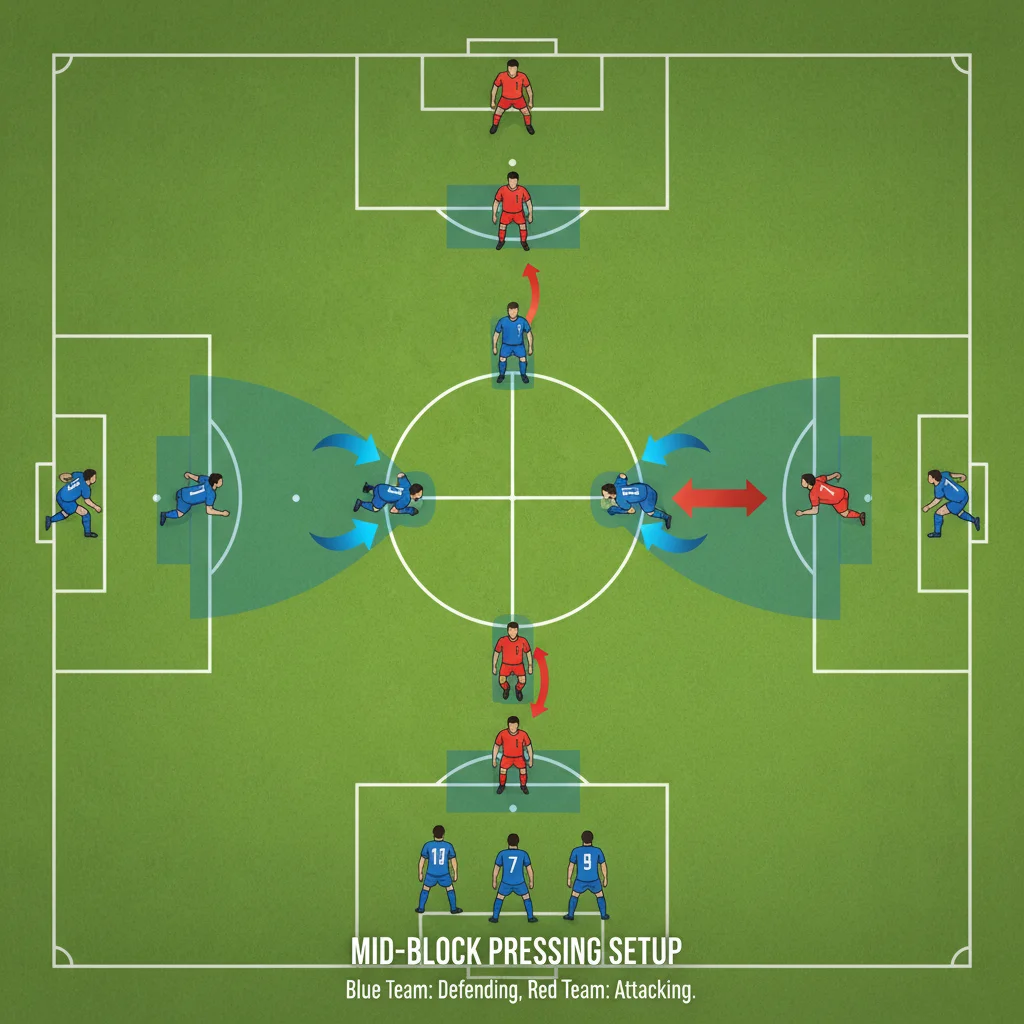
While the high press seeks to win the ball immediately, the mid-block press adopts a more measured approach. In this strategy, the defending team drops back into their own half, forming a compact defensive shape around the halfway line. The press is then triggered when the opponent enters this ‘middle block’ zone, typically around the center circle. The aim is not to win the ball back instantly at the opponent’s goal, but to deny them space in central areas, force them wide, and then apply pressure once they cross into the mid-block. This setup is less physically demanding than a high press but still requires excellent organization and discipline.
Anúncios
NWSL teams, known for their tactical sophistication, frequently employ the mid-block press to great effect. Teams like the Portland Thorns and North Carolina Courage often utilize this strategy to control the midfield battle. They maintain a narrow and compact shape, cutting off passing lanes through the center and forcing opponents to play wide. Once the ball moves to the wings, the full-back and winger on that side will aggressively press, supported by a central midfielder, to create an overload and win possession. The mid-block press is particularly effective against teams that rely on intricate passing combinations in central areas. It reduces the risk of being exposed at the back while still providing opportunities to launch quick counter-attacks upon winning the ball. The beauty of the mid-block lies in its balance: it’s aggressive enough to disrupt but conservative enough to maintain defensive solidity. It’s a strategy that prioritizes patience and tactical awareness, waiting for the opportune moment to spring the trap rather than chasing every ball.
3. The Man-Oriented Press: Marking and Denying Options
The man-oriented press involves defenders closely marking individual opponents, following them across the pitch, and applying immediate pressure as soon as they receive the ball. This strategy aims to deny the opponent time and space to think, forcing them into quick, often erroneous, decisions. It’s a highly demanding system that requires players to be excellent one-on-one defenders, possess high levels of stamina, and have a deep understanding of their direct opponent’s movements and tendencies.
While a pure man-oriented press can be risky, many US soccer teams incorporate elements of it within their broader pressing schemes. For instance, a defensive midfielder might be tasked with man-marking the opponent’s creative playmaker, disrupting their ability to dictate play. Forwards might be instructed to closely mark the opponent’s center-backs during goal kicks or build-up phases. The advantage of this approach is that it directly addresses the opponent’s individual threats, nullifying their key players. However, it can create gaps and expose defensive vulnerabilities if players are dragged out of position. The challenge lies in balancing individual marking responsibilities with maintaining a cohesive team shape. Coaches often use a hybrid approach, combining man-oriented pressure in specific zones or on key players with a more zonal defensive structure elsewhere on the pitch. This allows teams to be aggressive in disrupting key opposition players without entirely abandoning their defensive shape. The art of the man-oriented press lies in intelligent tracking and timely engagements, knowing when to commit and when to hold position.
4. Zonal Pressing: Protecting Space and Funneling Opponents
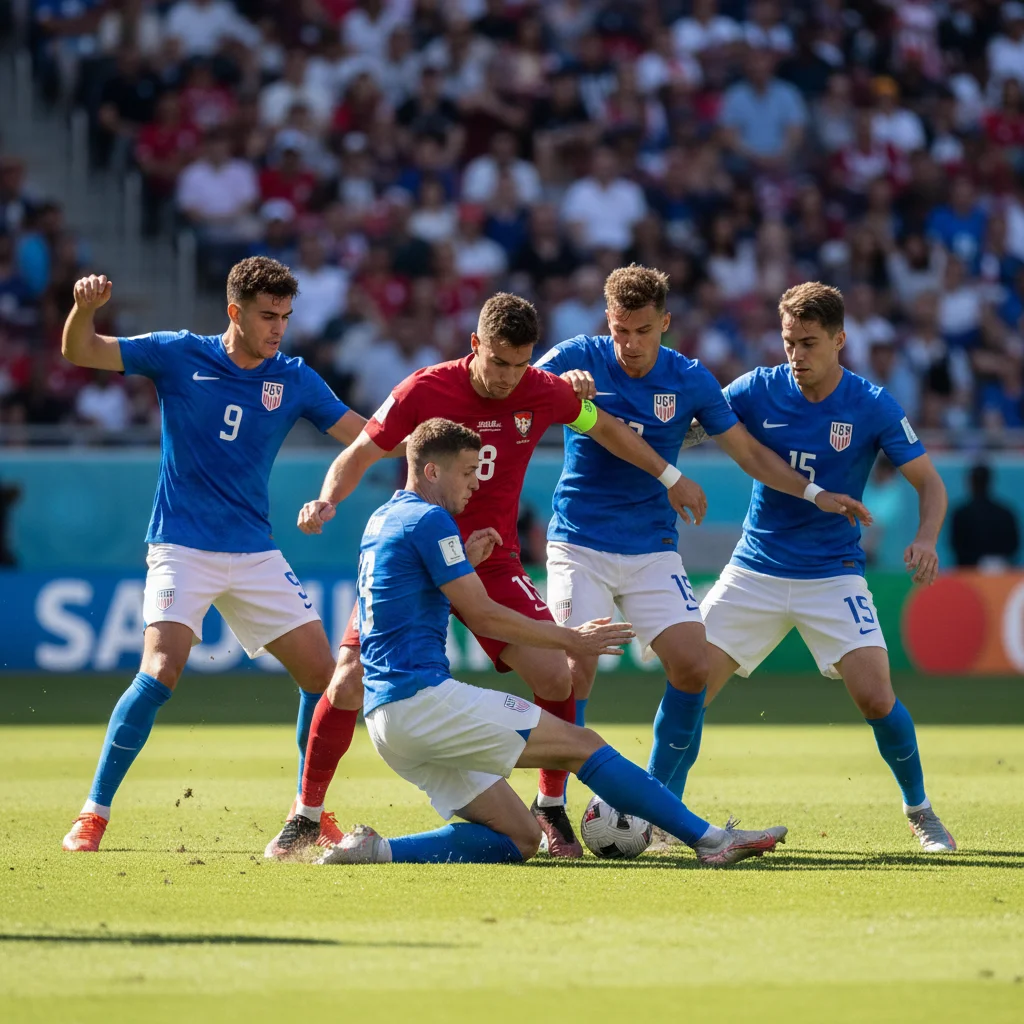
In contrast to the man-oriented press, zonal pressing emphasizes defending specific areas of the pitch rather than individual players. When the ball enters a player’s designated zone, that player becomes responsible for pressing the opponent in possession. Other players adjust their positions to cover passing lanes and maintain a compact shape, effectively creating a ‘cage’ around the ball carrier. This strategy prioritizes maintaining defensive shape and compactness, making it difficult for opponents to play through the lines.
Many successful US soccer teams, particularly those with a strong emphasis on defensive organization, heavily rely on zonal pressing principles. They train their players to understand their zones of responsibility and to react collectively to the movement of the ball. The strength of zonal pressing lies in its defensive solidity; it reduces the risk of players being dragged out of position and creating large gaps. It also encourages collective effort and communication, as players must constantly adjust their positions relative to the ball, their teammates, and their opponents. The challenge is ensuring players are aggressive enough to close down opponents quickly once they enter their zone, preventing them from having too much time on the ball. Effective zonal pressing requires constant communication and a deep understanding of spatial relationships on the field. Teams like Orlando Pride in the NWSL and Nashville SC in MLS have shown proficiency in setting up well-drilled zonal pressing systems, making them incredibly difficult to break down and often leading to frustration for their opponents.
5. Counter-Pressing (Gegenpressing): Immediate Reaction to Loss of Possession
Counter-pressing, famously popularized by German coaches, is the immediate and aggressive press applied by a team as soon as they lose possession of the ball. Instead of retreating into a defensive shape, players swarm the opponent who has just won the ball, aiming to regain possession within a few seconds. The philosophy behind counter-pressing is that the opponent is most vulnerable immediately after winning the ball, as their shape is often disorganized and their focus is on transitioning from defense to attack.
This high-intensity strategy has been increasingly adopted by attacking-minded US soccer teams who want to dominate possession and maintain constant pressure on their opponents. Teams that excel at counter-pressing often have highly technical and intelligent players who can anticipate turnovers and react quickly. The benefits are significant: it can lead to quick turnovers in dangerous areas, create numerical advantages, and prevent the opponent from launching effective counter-attacks. However, it is extremely physically demanding and requires immense discipline. If the counter-press fails, the team can be left exposed and vulnerable to a rapid counter-attack. Successful counter-pressing relies on a collective mindset where every player is immediately engaged in winning the ball back, regardless of their position on the field. It’s a testament to the modern game’s demand for relentless intensity and quick transitions. Teams like NYCFC and Gotham FC have shown glimpses of effective counter-pressing, turning defensive transitions into offensive opportunities.
6. Pressing Traps: Guiding Opponents into Predetermined Areas
Pressing traps are sophisticated defensive maneuvers designed to funnel opponents into specific areas of the pitch, typically the sidelines or corners, where they can be outnumbered and dispossessed. This strategy requires meticulous planning and synchronized movement from multiple players. Instead of pressing indiscriminately, players consciously leave certain passing lanes open, enticing the opponent to play into a ‘trap’ zone. Once the ball enters this zone, the trap is sprung: multiple defenders converge, closing down all escape routes and isolating the ball carrier.
Many top US soccer teams use pressing traps to control the flow of the game and force opponents into predictable patterns. For example, a common trap involves allowing a pass to an opponent’s full-back near the sideline. As the ball travels, a winger, central midfielder, and full-back will converge on the opponent, using the touchline as an extra defender. This creates a 3v1 or 4v2 situation, making it extremely difficult for the opponent to retain possession. The success of pressing traps depends on excellent communication, anticipation, and the ability to read the opponent’s intentions. It’s a highly tactical approach that requires patience and discipline to execute effectively. Teams often vary their traps based on the opponent’s strengths and weaknesses, making it a dynamic and adaptable defensive weapon. The tactical intelligence required to set and execute a pressing trap is a hallmark of truly organized defensive units. These traps are a prime example of how US soccer pressing tactics are evolving beyond simple aggression to intelligent manipulation of opponent’s play.
7. Positional Pressing: Leveraging Spatial Advantage
Positional pressing, often associated with possession-based teams, integrates defensive pressing with offensive structure. The idea is that by maintaining good positional awareness and a compact shape even when in possession, the team is already in a strong defensive position upon losing the ball. Players are strategically positioned across the pitch to create passing options when attacking, but also to be immediately ready to press and win the ball back if possession is lost.
This strategy is less about a sudden burst of aggression and more about continuous spatial control. When possession is lost, the nearest players immediately apply pressure, while others quickly adjust their positions to cut off passing lanes and support the press. The goal is to restrict the opponent’s immediate options and force them into uncomfortable situations. Teams that excel at positional pressing often have a strong understanding of collective movement and a high work rate across all positions. The advantage is that it often leads to quicker ball recovery and allows the team to maintain offensive momentum without significant defensive re-organization. It blurrs the lines between attack and defense, making the transition seamless. While less overtly aggressive than a high press, its constant pressure and intelligent positioning can be equally stifling. Teams like Atlanta United, known for their emphasis on possession and fluid play, often demonstrate elements of positional pressing, using their offensive structure to aid their defensive transitions and ensure the US soccer pressing game remains dynamic and interconnected.
The Evolving Landscape of US Soccer Pressing
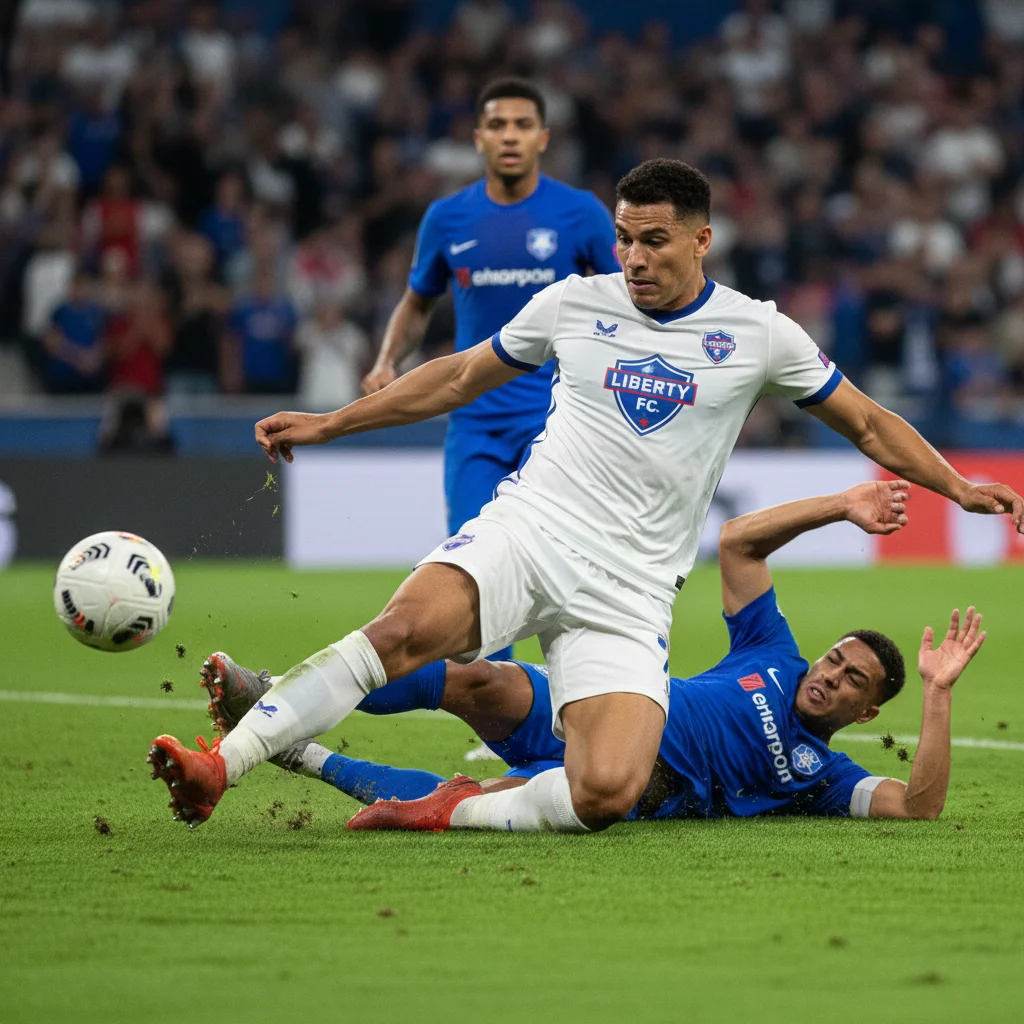
The adoption and refinement of these seven defensive pressing strategies highlight a significant trend in US soccer. Gone are the days of purely reactive defending; modern teams are proactive, aggressive, and tactically astute. Coaches are increasingly implementing complex systems that demand high levels of fitness, tactical intelligence, and seamless communication from their players. This evolution is not just about winning games; it’s about raising the overall standard of play, making US leagues more competitive, and preparing players for the demands of international soccer.
The interplay between these pressing strategies is also crucial. A team might employ a high press in the early stages of a game, switch to a mid-block as players tire, and utilize pressing traps in specific situations. The ability to adapt and transition between different pressing schemes is a hallmark of elite teams. Furthermore, the success of any pressing strategy relies heavily on the individual qualities of the players. Their ability to read the game, make quick decisions, and execute defensive actions with precision is paramount. US soccer academies and development programs are increasingly focusing on these aspects, nurturing a new generation of players who are not only technically proficient but also tactically intelligent and defensively disciplined.
Conclusion: A New Era of Defensive Sophistication
The last six months have showcased a fascinating period of tactical growth within US soccer. The widespread adoption of diverse and sophisticated pressing strategies, from the relentless high press to the calculated mid-block and the intelligent use of pressing traps, signifies a new era of defensive sophistication. These tactics are not merely defensive maneuvers; they are integral components of a team’s overall identity, influencing their offensive transitions and dictating the rhythm of the game. As US soccer continues to mature, we can expect to see further innovation and refinement in these pressing schemes, pushing the tactical boundaries and making American soccer an even more exciting and strategically rich spectacle to behold. The commitment to mastering the US soccer pressing game is a clear indicator of the ambition and progress within the sport, promising a future where American teams can compete at the highest global levels with tactical prowess and defensive solidity.