Mastering Footvolley: 6 Dynamic Footwork Drills for Court Coverage
Anúncios
Mastering Footvolley: 6 Dynamic Footwork Drills for Enhanced Court Coverage
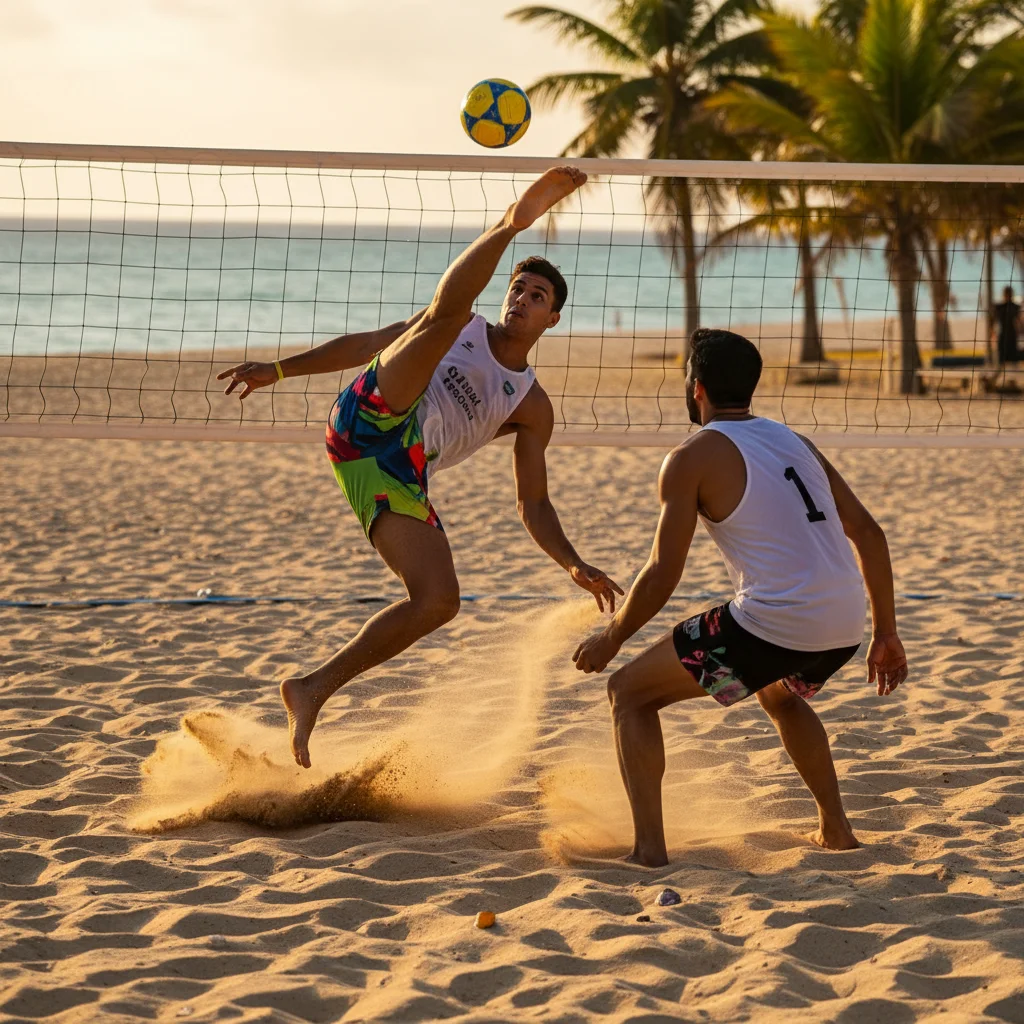
Footvolley, a thrilling fusion of volleyball and soccer, demands exceptional athleticism, precise ball control, and, crucially, superior footwork. Unlike traditional volleyball where hands are primary, footvolley players rely solely on their feet, chest, and head to keep the ball in play and execute powerful attacks. This unique requirement elevates the importance of agile, quick, and efficient movement across the sand court. Without optimal footwork, even the most skilled ball handlers will struggle to reach shots, transition effectively, or set up offensive plays.
The sandy surface itself presents a significant challenge, requiring more energy and specialized movement patterns compared to a hard court. Therefore, dedicated footvolley footwork drills are not just beneficial; they are absolutely essential for any player looking to excel. These drills are designed to improve your reaction time, lateral quickness, directional changes, and overall court coverage, transforming you into a more dominant and reliable presence on the sand.
In this comprehensive guide, we’ll delve into six dynamic footvolley footwork drills that will significantly enhance your court coverage and elevate your game. Each drill is meticulously explained, offering clear instructions, benefits, and tips for effective implementation. Whether you’re a seasoned player aiming to refine your technique or a newcomer eager to build a strong foundation, incorporating these drills into your training regimen will undoubtedly lead to noticeable improvements.
Anúncios
The Importance of Footwork in Footvolley
Before we dive into the drills, let’s briefly underscore why footwork is the cornerstone of footvolley success. Imagine a scenario where a powerful spike comes flying towards your side of the court. Without quick feet, you won’t be able to position yourself correctly to make the save, regardless of how good your chest pass or foot save technique might be. Similarly, transitioning from defense to offense, setting up a perfect header for your partner, or executing a devastating bicycle kick all depend on being in the right place at the right time – a feat achievable only through excellent footwork.
Key aspects of footwork in footvolley include:
Anúncios
- Agility: The ability to change direction quickly and efficiently.
- Speed: The rapid movement from one point to another.
- Balance: Maintaining stability on an uneven, shifting surface.
- Coordination: The harmonious interplay of different body parts to execute movements smoothly.
- Reaction Time: The speed at which a player responds to a stimulus (e.g., the opponent’s shot).
By consistently practicing footvolley footwork drills, you’ll develop these crucial attributes, leading to better court coverage, fewer unforced errors, and more opportunities to score.
Drill 1: Lateral Shuffles with Directional Changes
The lateral shuffle is fundamental to almost all court sports, and footvolley is no exception. This drill focuses on improving your side-to-side movement, which is critical for covering the width of the court and reacting to shots that land near the sidelines.
How to Perform:
- Set up two cones or markers approximately 5-7 yards apart.
- Start at one cone in an athletic stance, knees slightly bent, ready to move.
- Shuffle sideways to the other cone, keeping your body low and facing forward. Avoid crossing your feet; maintain a wide base.
- Upon reaching the second cone, immediately change direction and shuffle back to the starting cone.
- Repeat this motion for a set number of repetitions or a timed interval.
- Progression: Introduce a third cone in the middle, requiring a quick stop-and-go or a change of direction in the center.
Benefits:
- Enhances lateral quickness and agility.
- Strengthens the muscles responsible for side-to-side movement.
- Improves reaction time for wide shots.
Tips for Success:
- Stay low throughout the drill; imagine there’s a ceiling just above your head.
- Use small, quick steps rather than long, slow strides.
- Keep your eyes on an imaginary ball or opponent to simulate game conditions.
Drill 2: The "T" Drill for Multi-Directional Speed
The "T" drill is a classic agility drill that tests and improves your ability to move forward, backward, and laterally. It’s an excellent way to simulate the varied movements required in a footvolley match.
How to Perform:
- Place one cone (A) at your starting point.
- Measure 10 yards forward and place another cone (B).
- From cone B, measure 5 yards to the left and place cone C.
- From cone B, measure 5 yards to the right and place cone D. You should now have a ‘T’ shape.
- Start at cone A, sprint forward to cone B.
- At cone B, shuffle left to cone C, touch the cone with your hand.
- Shuffle right past cone B to cone D, touch the cone with your hand.
- Shuffle back to cone B.
- Backpedal from cone B to cone A.
- Repeat for several sets.
Benefits:
- Develops forward, backward, and lateral speed.
- Improves hip mobility and change-of-direction skills.
- Enhances overall court coverage by practicing diverse movement patterns.
Tips for Success:
- Focus on quick transitions between movements.
- Maintain a low center of gravity, especially during shuffles.
- Explode out of each change of direction.
Drill 3: Defensive Drop Step and Turn
Often in footvolley, you’ll need to retreat quickly to defend a deep shot or cover a partner’s block. The defensive drop step allows you to turn your hips and sprint backward efficiently, while the turn ensures you can face the play quickly.
How to Perform:
- Stand facing forward, as if at the net ready to attack.
- Have a partner call out "deep" or point behind you.
- Execute a drop step: Step back with one foot, opening your hips towards the direction you need to move.
- Immediately sprint backward for 5-10 yards.
- As you reach the end of your backward sprint, quickly turn your body to face forward again, as if preparing to play the ball.
- Return to the starting position and repeat, alternating the lead foot for the drop step.
- Progression: Integrate a simulated defensive touch (e.g., a chest pass or foot save) at the end of the sprint.
Benefits:
- Improves backward movement speed and efficiency.
- Develops quick hip rotation and body control.
- Essential for defending deep shots and covering the back of the court.
Tips for Success:
- Keep your eyes on the "ball" (or where it would be) as you drop step and sprint.
- Practice turning both ways to ensure balance.
- Explode into the backward sprint, don’t just jog.
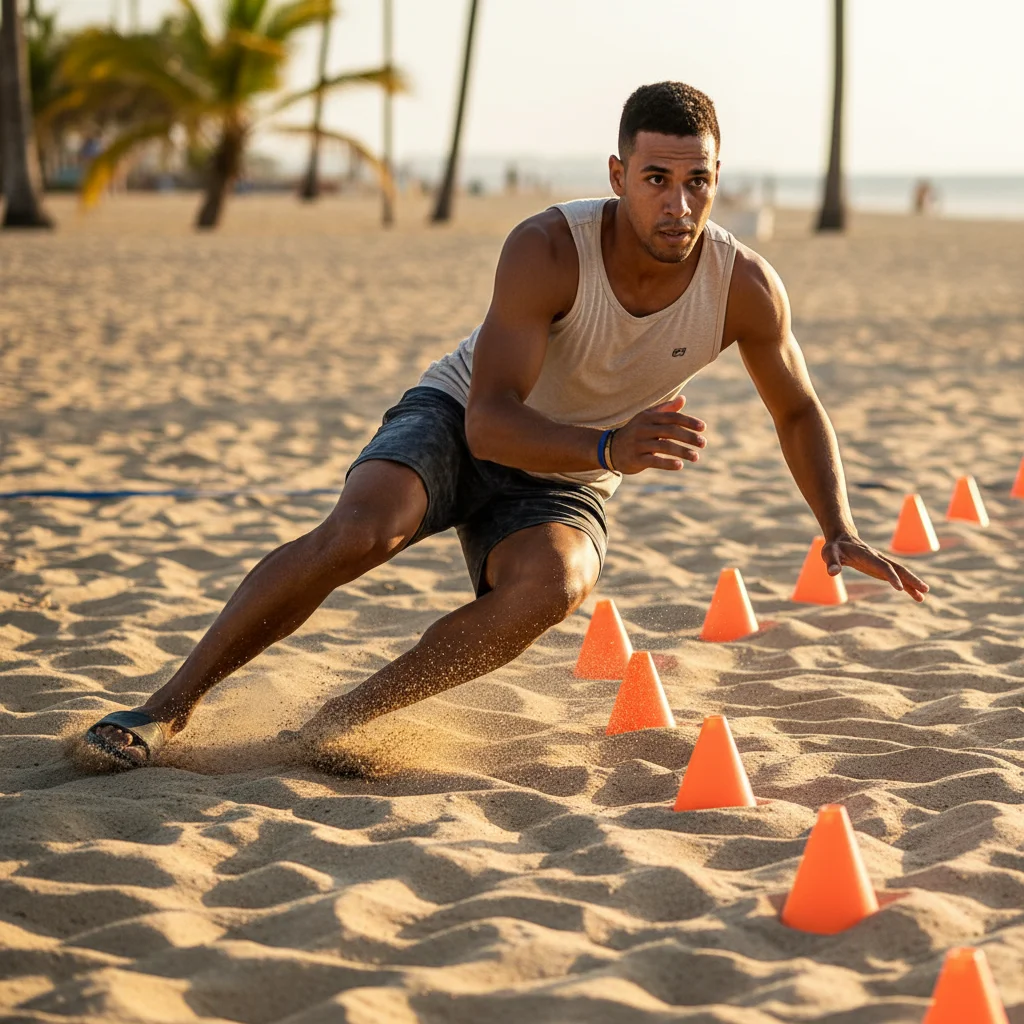
Drill 4: Cone Weaving/Serpentine Drill
This drill helps improve your ability to weave through tight spaces and make continuous, fluid changes of direction, which is vital when navigating the court and avoiding collisions with your partner.
How to Perform:
- Set up 5-7 cones in a straight line, spaced 2-3 yards apart.
- Start at one end and weave through the cones, moving in a serpentine pattern.
- Focus on quick, short steps and maintaining balance as you change direction around each cone.
- Once you reach the last cone, sprint back to the start or weave back through the cones in reverse.
- Progression: Introduce a ball, dribbling it with your feet through the cones, simulating ball control during movement.
Benefits:
- Enhances agility and coordination.
- Improves foot speed and control during continuous directional changes.
- Develops spatial awareness on the court.
Tips for Success:
- Keep your head up to scan the "court."
- Use your arms for balance and momentum.
- Focus on smooth transitions rather than abrupt stops and starts.
Drill 5: "X" Drill for Diagonal Movement and Recovery
The "X" drill is excellent for developing diagonal movement, which is frequently used when recovering from a shot or moving to cover a corner of the court. It combines forward, backward, and lateral movements efficiently.
How to Perform:
- Place four cones to form a square, approximately 5-7 yards per side. Label them 1, 2, 3, 4 (e.g., top-left, top-right, bottom-left, bottom-right).
- Start at cone 1.
- Sprint diagonally to cone 4.
- Shuffle laterally from cone 4 to cone 3.
- Backpedal diagonally from cone 3 to cone 2.
- Sprint laterally from cone 2 to cone 1.
- Repeat, alternating the starting cone and direction to work all movement patterns.
Benefits:
- Improves diagonal speed and agility.
- Enhances recovery speed and ability to cover corners.
- Develops dynamic balance and coordination.
Tips for Success:
- Explode into each sprint and shuffle.
- Focus on quick, controlled stops and changes of direction.
- Keep your eyes up and anticipate the next move.
Drill 6: Reaction Ball Drills
Footvolley is a game of quick reactions. These drills focus on improving your response time to unpredictable stimuli, mimicking real game situations where you don’t know where the ball will go next.
How to Perform:
- Partner-Called Directions: Stand in the center of a small square (e.g., 3×3 yards). A partner stands outside the square and calls out "front," "back," "left," or "right." Upon hearing the call, sprint to that boundary of the square, touch it, and immediately return to the center. Repeat rapidly.
- Ball Drop Reaction: Have a partner stand a few yards in front of you with a footvolley ball. The partner will hold the ball at chest height and then drop it without warning. Your goal is to react as quickly as possible and save the ball before it bounces twice (or once, for advanced players) using an appropriate footvolley technique (e.g., instep, chest).
- Shadow Footvolley: With a partner, simulate a game without a ball. One partner acts as the "server" or "attacker," making movements and gestures. The other partner (you) reacts as if playing the ball, moving to cover, set, or attack. This builds muscle memory for game-like situations.
Benefits:
- Significantly improves reaction time and decision-making.
- Develops explosive power for quick bursts of speed.
- Enhances game-specific movement patterns under pressure.
Tips for Success:
- Stay in an athletic ready stance, slightly crouched, weight on the balls of your feet.
- Anticipate, but don’t guess. React to the actual stimulus.
- Focus on speed and efficiency in your movements.
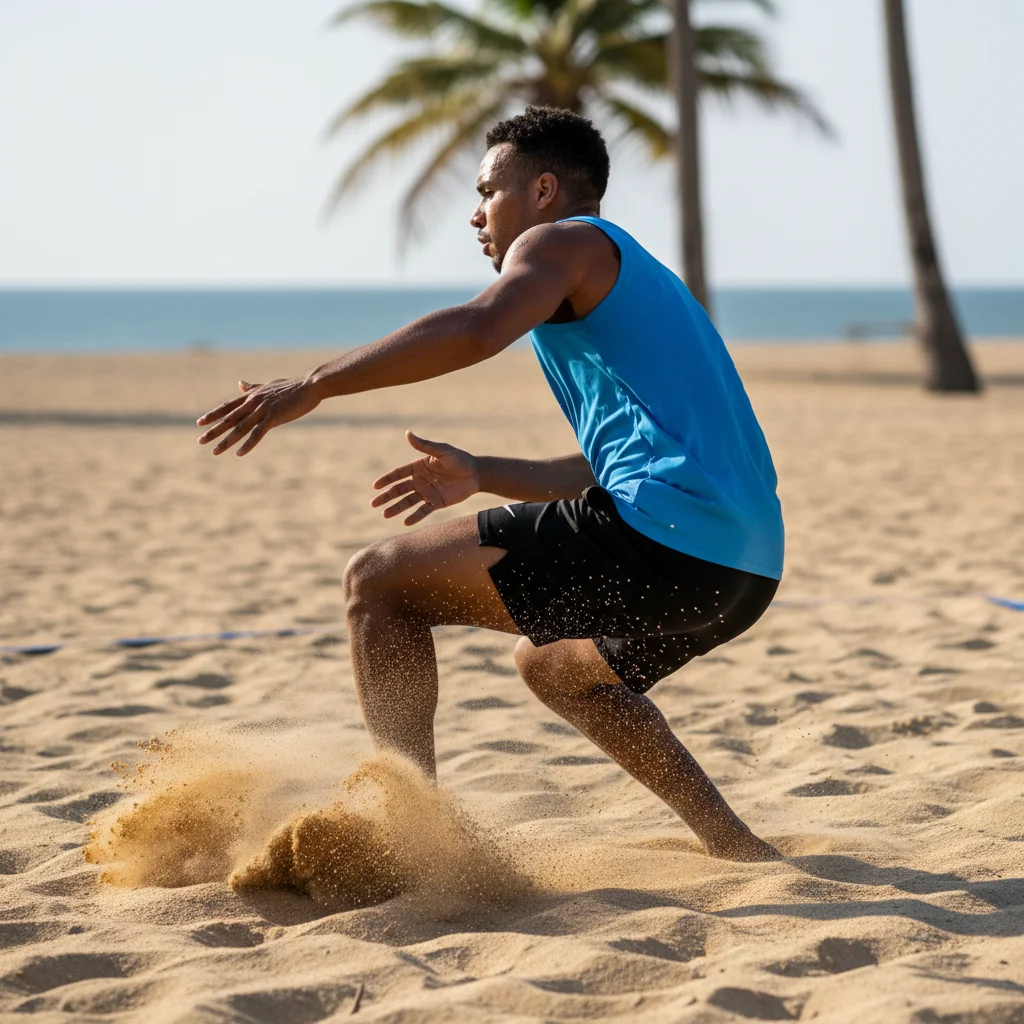
Integrating Footwork Drills into Your Training Regimen
Consistency is key when it comes to improving your footwork. Don’t just do these drills once; make them a regular part of your training routine. Here’s how you can effectively integrate them:
- Warm-up First: Always begin with a dynamic warm-up to prepare your muscles and joints for intense movement. This can include light jogging, leg swings, and dynamic stretches.
- Start with Basics: If you’re new to footvolley or these drills, start slowly and focus on proper form. Speed will come with practice.
- Vary Your Drills: Don’t stick to just one or two drills. Rotate through all six to develop a well-rounded set of footwork skills.
- Interval Training: Perform each drill in short, intense bursts (e.g., 20-30 seconds) followed by a brief rest (e.g., 30-60 seconds). Repeat for 3-5 sets.
- Combine with Ball Work: Once you’re comfortable with the pure footwork, try to integrate a ball into some of the drills. For instance, after completing a shuffle, immediately receive a pass or execute a shot.
- Cool-down and Stretch: Always finish your session with a cool-down and static stretching to aid recovery and prevent injury.
Remember, the goal of these footvolley footwork drills is not just to move quickly, but to move quickly and efficiently with purpose. Every step should contribute to putting you in the best position to play the ball effectively.
Advanced Considerations for Footvolley Footwork
As you progress, consider these additional factors to further refine your footwork:
- Footwear: While footvolley is often played barefoot, if you use sand socks or specialized footvolley shoes, ensure they provide good grip and flexibility without hindering your natural movement.
- Surface Awareness: The sand’s depth and consistency can vary. Learn to adapt your footwork to different sand conditions – softer sand requires more powerful pushes, while firmer sand allows for quicker, shorter steps.
- Partner Communication: Effective footwork isn’t just individual; it’s also about anticipating your partner’s moves and communicating to ensure optimal court coverage. Drills where you react to a partner’s call can help with this.
- Game Simulation: Try to make your drills as game-like as possible. Imagine an opponent, a ball, and the objective of the play. This mental engagement enhances the effectiveness of the physical training.
- Recovery Footwork: After making a play, how quickly do you get back into a ready position? Practice rapid recovery steps and shuffles to be ready for the next action.
Conclusion
Footvolley is a sport that rewards dedication and meticulous preparation. While spectacular bicycle kicks and pinpoint headers often grab the spotlight, it’s the tireless, precise footwork that truly underpins a player’s ability to consistently perform at a high level. By committing to these six dynamic footvolley footwork drills, you’re not just improving your physical attributes; you’re building the foundation for a more strategic, agile, and ultimately, more successful game.
Regular practice of lateral shuffles, the "T" drill, defensive drop steps, cone weaving, the "X" drill, and reaction drills will transform your court coverage, allowing you to reach more balls, set up better attacks, and become an indispensable asset to your team. So, step onto the sand, embrace the challenge, and let your feet do the talking. Your footvolley game will thank you for it!