The Evolution of Goalkeeper Analytics: New Metrics for 2026 Performance Evaluation (INSIDER KNOWLEDGE, RECENT UPDATES)
The role of a goalkeeper in modern football has transcended the traditional shot-stopper. Today, goalkeepers are the first attackers, the last defenders, and often the primary orchestrators of build-up play. As the game evolves, so too must the methods by which we evaluate these crucial players. With the 2026 World Cup on the horizon, the focus on data-driven performance analysis is intensifying, particularly for the position that can single-handedly win or lose a match. This article delves deep into the fascinating evolution of goalkeeper analytics, exploring the new metrics, advanced technologies, and insider knowledge that are redefining performance evaluation for 2026 and beyond. We’ll uncover how clubs and national teams are leveraging cutting-edge data to gain a competitive edge, identify emerging talent, and optimize player development.
Anúncios
Beyond Saves: The Shifting Paradigm of Goalkeeper Evaluation
For decades, goalkeeper performance was primarily measured by simple metrics like saves made, clean sheets, and goals conceded. While these remain fundamental, they offer only a superficial glance at a goalkeeper’s true impact. The modern game demands a more nuanced understanding, one that accounts for a goalkeeper’s contribution across all phases of play. The evolution of goalkeeper analytics is a direct response to this demand, pushing the boundaries of what’s measurable and providing coaches and scouts with unprecedented insights. This shift isn’t just about collecting more data; it’s about asking better questions and developing sophisticated models to answer them.
The traditional metrics often failed to differentiate between a truly world-class save and a routine stop, or to quantify the value of a goalkeeper’s proactive positioning. They didn’t account for the complexity of distribution under pressure, or the psychological impact of a commanding presence in the box. Now, with advanced tracking technologies and machine learning algorithms, we can dissect every action, every decision, and every movement, painting a far more comprehensive picture of a goalkeeper’s capabilities. This granular approach is vital for teams looking to optimize their squad and for goalkeepers striving for peak performance.
Key Pillars of Modern Goalkeeper Analytics for 2026
The next generation of goalkeeper analytics is built upon several interconnected pillars, each offering unique insights into different facets of performance. These pillars move beyond the reactive nature of traditional metrics, focusing instead on proactive contributions and overall game influence. Understanding these areas is crucial for anyone involved in high-level football, from coaches and analysts to players and agents.
Anúncios
1. Shot-Stopping Excellence: The New Frontier of Expected Goals Prevented (xGP)
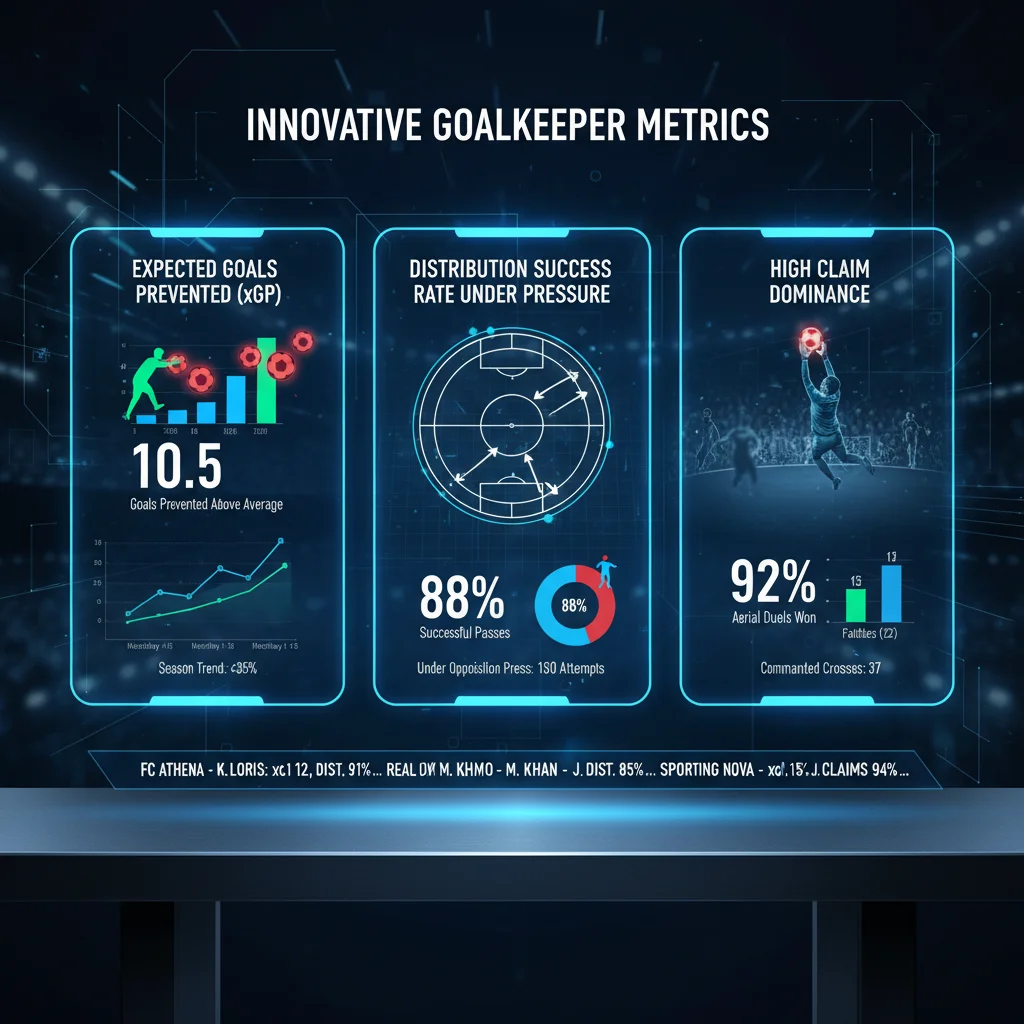
While saves remain critical, their quality and difficulty are now paramount. The advent of ‘Expected Goals Prevented’ (xGP) has revolutionized how we assess shot-stopping. Instead of simply counting saves, xGP quantifies the number of goals a goalkeeper is expected to concede based on the quality and location of shots faced, and then measures how many goals they actually prevented beyond that expectation. A high xGP indicates a goalkeeper who consistently makes difficult saves, turning high-probability shots into non-goals.
- How it works: Advanced models analyze factors like shot distance, angle, body part, assist type, and defensive pressure to assign an ‘Expected Goal’ (xG) value to every shot. xGP then compares the sum of xG faced to the actual goals conceded.
- Beyond the Numbers: Analysts are now breaking down xGP by shot zone, shot type, and even by the phase of play leading to the shot, providing granular detail on a goalkeeper’s strengths and weaknesses against specific attacking scenarios.
- Impact for 2026: Teams will increasingly use xGP to identify goalkeepers who consistently outperform their xG faced, a clear indicator of elite shot-stopping ability under pressure.
2. Distribution and Ball-Playing Prowess: The First Attacker
The modern goalkeeper is an integral part of the team’s build-up play. Their ability to distribute the ball accurately and effectively under pressure can dictate the tempo and direction of an attack. New metrics in this area are focusing on decision-making, accuracy, and impact.
- Distribution Success Rate (DSR) under Pressure: This metric goes beyond simple pass completion. It measures the accuracy of passes while accounting for the proximity and intensity of opposing players. A high DSR under pressure indicates composure and technical skill when initiating attacks from the back.
- Progressive Passes and Long Ball Accuracy: Tracking the number of passes that significantly advance the ball upfield, whether short or long, and their success rate, helps quantify a goalkeeper’s contribution to offensive transitions.
- Pass Network Influence: Analyzing how a goalkeeper’s passes connect with teammates and contribute to creating passing lanes and breaking opposition lines. This involves complex network analysis to map their influence on the team’s possession structure.
3. Command of the Area: Aerial Dominance and Sweeper-Keeper Actions
A goalkeeper’s ability to command their penalty area, both aerially and as a sweeper, is critical for defensive stability. These proactive actions prevent shots from even occurring.
- High Claim Dominance (HCD): This metric evaluates a goalkeeper’s success rate in claiming crosses and high balls within their penalty area, specifically differentiating between routine claims and those contested by opposition players. It also considers the distance from goal and the number of opponents nearby.
- Sweeper-Keeper Actions (SKA): Quantifying instances where a goalkeeper leaves their line to intercept through balls, clear danger outside the box, or engage in defensive duels. This includes metrics like ‘Exits per 90’, ‘Successful Sweeping Actions’, and ‘Distance of Sweeping Actions from Goal’.
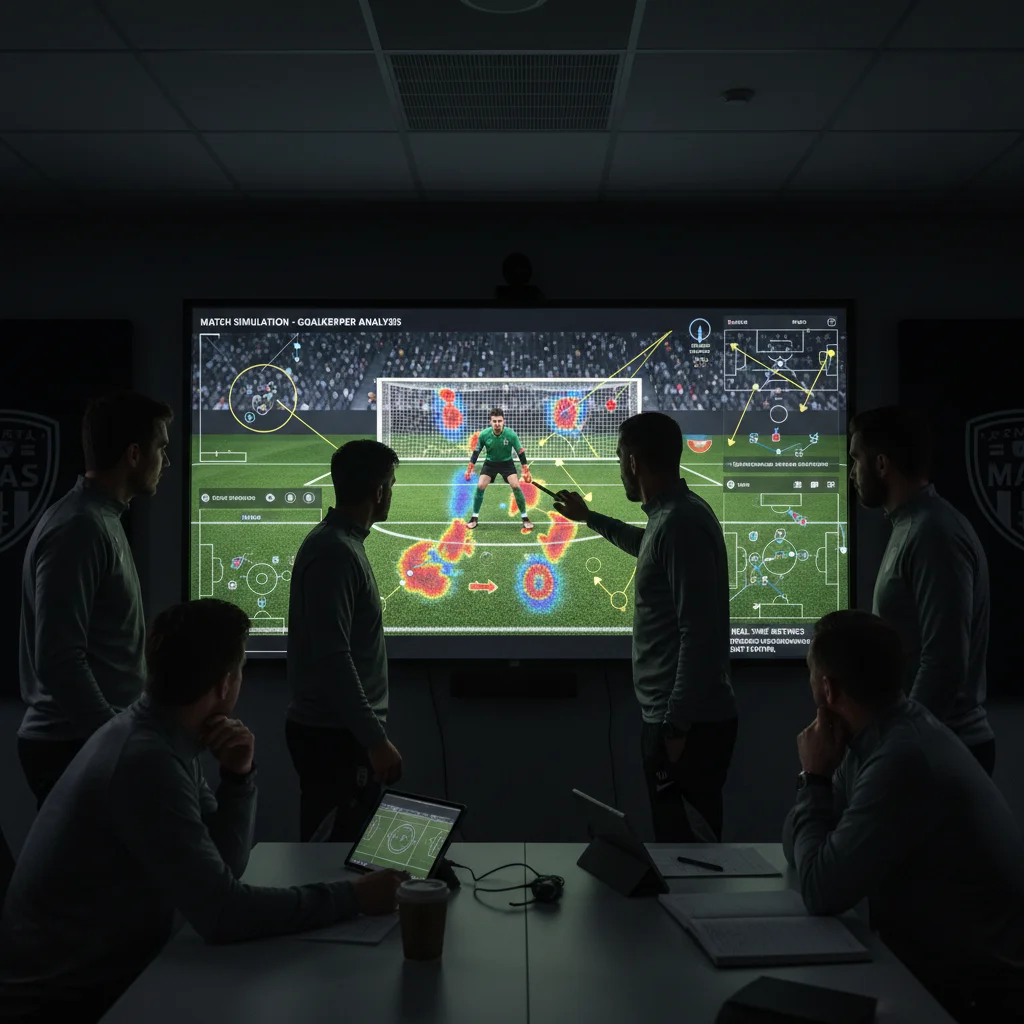
- Territorial Control: Using heatmaps and zone analysis to show where a goalkeeper operates most frequently and effectively, highlighting their spatial awareness and ability to cut out threats proactively.
4. Decision-Making Under Duress: The Cognitive Aspect
Beyond physical attributes, a goalkeeper’s cognitive processes – their ability to read the game, anticipate threats, and make split-second decisions – are increasingly being analyzed. This is where the evolution of goalkeeper analytics truly shines, moving into more qualitative yet quantifiable areas.
- Anticipation Score: This complex metric uses machine learning to predict a goalkeeper’s likelihood of making a save or intercepting a pass based on pre-shot/pre-pass movements, body orientation, and reaction time relative to the ball’s trajectory.
- Shot-Stopping Decision Quality (SSDQ): Evaluating whether a goalkeeper made the optimal decision (e.g., parry to safety, catch, hold) given the shot’s characteristics and the surrounding game state.
- Communication Effectiveness: While harder to quantify purely with numbers, advancements in audio analysis and spatial data are beginning to correlate verbal commands with defensive organization and overall team performance.
The Technology Driving Goalkeeper Analytics for 2026
The sophisticated metrics discussed above wouldn’t be possible without significant technological advancements. The synergy between data science, artificial intelligence, and cutting-edge sensor technology is propelling goalkeeper analytics into a new era.
- Optical Tracking Systems: High-resolution cameras strategically placed around stadiums capture every movement of players and the ball, generating vast datasets for spatial and temporal analysis.
- Wearable Technology: Although still subject to regulations during official matches, training sessions increasingly utilize GPS trackers, heart rate monitors, and even eye-tracking devices to gather physiological and cognitive data.
- Machine Learning and AI: These are the engines that process the raw data, identify patterns, build predictive models, and generate the nuanced metrics we’re now seeing. AI can learn from millions of game scenarios to assess optimal outcomes and player performance against those benchmarks.
- Computer Vision: AI-powered computer vision can automatically tag and categorize events, identify player actions, and even assess body posture, providing highly accurate and scalable data collection.
Insider Knowledge: How Elite Clubs are Using These Metrics
For top-tier clubs and national teams, these advanced analytics are no longer a luxury but a necessity. Insider knowledge reveals several key applications:
- Recruitment: Scouts are moving beyond highlight reels. They are demanding detailed analytical reports on prospective goalkeepers, focusing on xGP, DSR under pressure, and HCD to identify talent that fits specific tactical philosophies. Teams are building extensive databases of goalkeepers worldwide, ranked by these advanced metrics.
- Tactical Adjustments: Coaches use these insights to tailor training sessions, address weaknesses, and refine game plans. For example, if a goalkeeper consistently struggles with shots from a particular zone, targeted drills can be implemented. If their distribution under pressure is low, specific passing patterns can be practiced.
- Player Development: Young goalkeepers are now being evaluated and developed using these metrics from an early age. This provides a clear roadmap for improvement, allowing coaches to identify areas for growth and track progress objectively.
- Performance Optimization: Data helps goalkeepers understand their own performance in unprecedented detail. They can review specific actions, compare their metrics against benchmarks, and work with coaches to fine-tune their technique and decision-making. This self-awareness is crucial for continuous improvement.
- Opposition Analysis: Analyzing opposing goalkeepers’ tendencies through these metrics allows attacking teams to identify weaknesses in their shot-stopping, distribution, or aerial command, informing their offensive strategies.
Recent Updates and Future Trends for 2026
The field of goalkeeper analytics is dynamic, with new developments constantly emerging. As we approach 2026, several trends are gaining significant traction:
- Integrated Performance Platforms: Expect to see more holistic platforms that integrate physical, technical, tactical, and even psychological data into a single, comprehensive dashboard for each player. This provides a 360-degree view of a goalkeeper’s performance and well-being.
- Predictive Analytics: Beyond evaluating past performance, the focus is shifting towards predicting future outcomes. Can we predict injury risk based on workload data? Can we forecast a goalkeeper’s likely performance in a given match scenario based on historical data and opposition analysis?
- Virtual Reality (VR) and Augmented Reality (AR) Training: VR simulations are becoming more sophisticated, allowing goalkeepers to train in realistic match scenarios without physical exertion, while AR can overlay real-time data onto training pitches, providing immediate feedback.
- Ethical Data Use and Player Privacy: As more data is collected, discussions around data ownership, privacy, and ethical use will intensify. Ensuring player consent and data security will be paramount.
- Real-time Coaching Insights: The goal is to provide actionable insights to coaches and goalkeepers in real-time during matches, allowing for immediate tactical adjustments and performance corrections.
Challenges and Considerations
While the evolution of goalkeeper analytics offers immense potential, it’s not without its challenges:
- Data Overload: The sheer volume of data can be overwhelming. The challenge lies in extracting meaningful, actionable insights rather than drowning in numbers.
- Context is King: Raw data without context can be misleading. A goalkeeper’s performance must always be evaluated within the context of their team’s tactical system, the quality of their defense, and the opposition.
- Human Element: Analytics should complement, not replace, human observation and intuition. The best coaches combine data insights with their experience and understanding of player psychology.
- Standardization: There’s still a need for greater standardization of metrics and methodologies across different data providers to allow for more consistent comparisons.
- Cost and Accessibility: Advanced analytics platforms can be expensive, limiting access for smaller clubs. Bridging this gap will be crucial for broader adoption.
Conclusion: The Data-Driven Goalkeeper of Tomorrow
The evolution of goalkeeper analytics is fundamentally transforming how we understand, evaluate, and develop goalkeepers. As we look towards 2026, the emphasis will continue to shift from purely reactive statistics to proactive, comprehensive metrics that capture every facet of a goalkeeper’s contribution. From Expected Goals Prevented to intricate distribution patterns and command of the aerial game, data is providing an unprecedented lens through which to view this specialized position.
For players, this means a clearer path to improvement and a more objective measure of their value. For coaches and scouts, it offers a powerful tool for recruitment, tactical planning, and talent development. The future of goalkeeping is inextricably linked to the intelligent application of data. Those who embrace and master these new analytical approaches will undoubtedly gain a significant competitive advantage, shaping the next generation of world-class goalkeepers and influencing the outcomes of major tournaments like the 2026 World Cup.
The data-driven goalkeeper is not just a concept; it’s a reality that is already impacting the beautiful game. As technology continues to advance, we can expect even more sophisticated insights, further refining our understanding of what it takes to be an elite goalkeeper in the modern era.