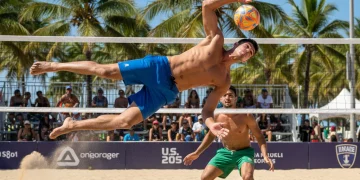
Master Footvolley: 5 Advanced Footwork Drills for 30% Better Court Coverage
Anúncios
Footvolley is a dynamic and exhilarating sport that demands an exceptional blend of skill, agility, and strategic thinking. While powerful serves and precise touches are crucial, the true backbone of any successful footvolley player lies in their footwork. Superior footwork not only enables you to reach seemingly impossible balls but also dictates your positioning, allowing for more effective attacks and impenetrable defense. This comprehensive guide will delve into five advanced footvolley footwork drills designed to dramatically improve your court coverage, potentially boosting your effectiveness by up to 30%.
The difference between a good footvolley player and a great one often comes down to their ability to move efficiently and react instantaneously. Court coverage isn’t just about speed; it’s about anticipation, lateral movement, quick directional changes, and maintaining balance on an unforgiving sandy surface. By integrating these specialized footvolley footwork drills into your training regimen, you’ll develop the muscle memory and reactive speed necessary to dominate the court.
Anúncios
Understanding the Importance of Advanced Footwork in Footvolley
Before we dive into the drills, let’s solidify why advanced footwork is non-negotiable in footvolley. Unlike indoor sports, footvolley is played on sand, which adds an extra layer of challenge. The unstable surface requires more energy for movement and demands precise foot placement to avoid losing balance or sinking. Effective footwork allows you to:
- Cover More Ground: Reach shots that would otherwise be out of play.
- Improve Reaction Time: Respond quicker to opponent’s attacks and unpredictable ball trajectories.
- Maintain Balance: Execute powerful shots and defensive plays without falling.
- Enhance Positioning: Always be in the optimal spot for offensive and defensive plays.
- Reduce Fatigue: Efficient movement conserves energy, allowing you to play at a high level for longer.
Many players focus solely on ball skills, neglecting the foundational element of movement. However, even the most exquisite touch is useless if you can’t get to the ball in time or are off-balance when you do. These footvolley footwork drills are designed to bridge that gap, transforming your movement from reactive to proactive.
Anúncios
Drill 1: The Sand Ladder Sprint – Explosive Acceleration and Deceleration
Objective:
To develop explosive acceleration, rapid deceleration, and quick changes in direction, crucial for covering the court effectively in footvolley.
Setup:
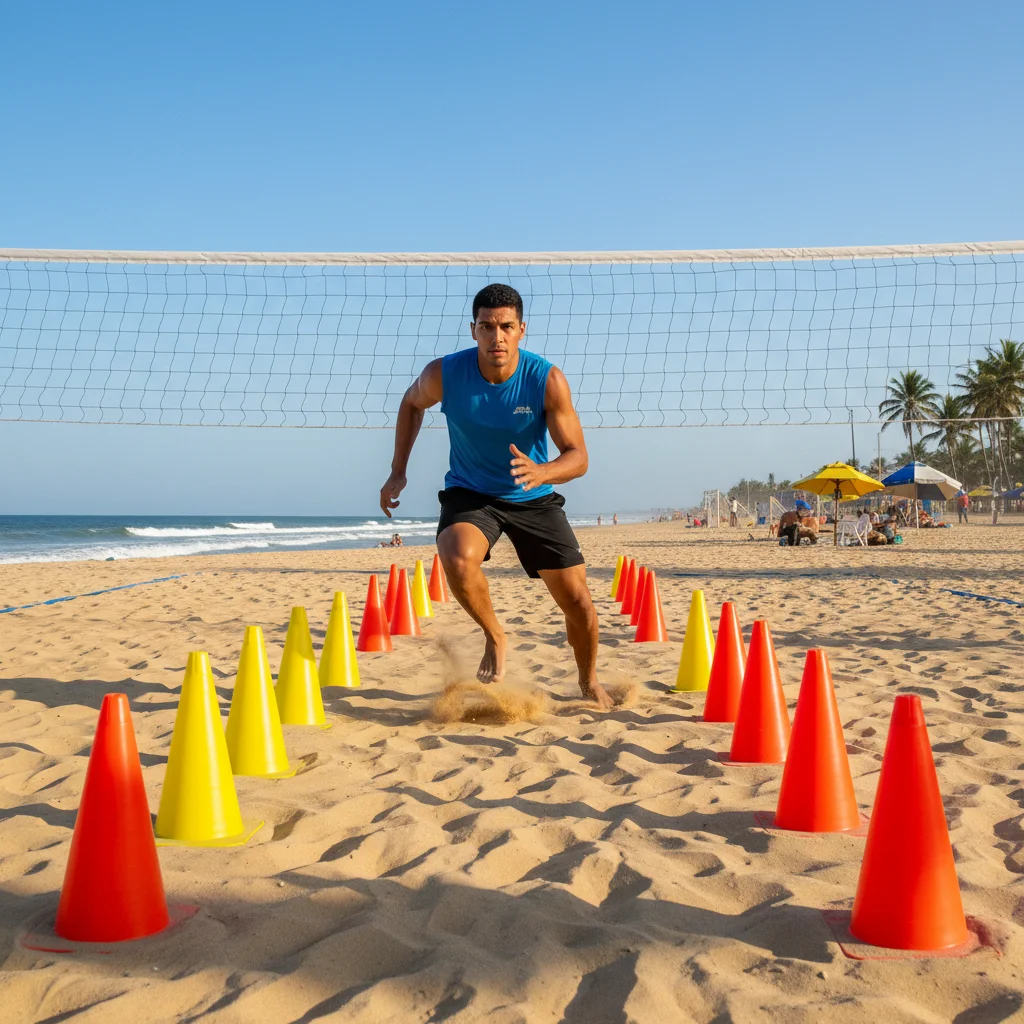
Set up a series of cones or markers in a straight line, approximately 3-4 feet apart, creating a ‘ladder’ on the sand. The length of the ladder can vary, but aim for 5-7 segments initially.
Execution:
- Forward Sprints: Start at one end of the ladder. Sprint forward through each segment, taking quick, short steps. Focus on high knee drive and arm pump.
- Lateral Shuffles: Move laterally through the ladder, facing one direction. Shuffle quickly through each segment, ensuring your feet never cross.
- Backward Runs: Carefully jog backward through the ladder, maintaining awareness of your footing.
- Zig-Zag Sprints: Sprint diagonally through the ladder, touching the outside of each cone before changing direction to the next.
- Stop-and-Go: Sprint through a segment, stop abruptly, change direction, and sprint back. Repeat through the entire ladder.
Repetitions & Sets:
Perform each variation 3-5 times, with a short rest between repetitions. Complete 3-4 sets for each drill. Focus on quality over quantity – speed and precision are key. These footvolley footwork drills are intense, so proper rest is essential.
Why it Works:
The sand ladder forces your muscles to work harder due to the unstable surface, building strength and power in your legs and core. The varied movements mimic the unpredictable nature of a footvolley match, training your body to react quickly to different demands. This drill directly translates to improved court coverage by enhancing your ability to explode off the mark and decelerate rapidly to change direction.
Drill 2: The Brazilian Box – Agility and Spatial Awareness
Objective:
To improve agility, quick foot placement, and spatial awareness within a confined area, simulating tight defensive and offensive situations.
Setup:
Create a square box using four cones, approximately 5×5 feet on the sand.
Execution:
- Figure-Eight Shuffle: Start at one corner. Shuffle in a figure-eight pattern around the two front cones, then the two back cones, maintaining a low center of gravity.
- Diagonal Sprint & Retreat: Sprint from one corner diagonally to the opposite corner, touch the cone, and then retreat backward to your starting corner. Repeat for all diagonals.
- Box Sprint with Pivot: Sprint from a corner to the opposite side’s midpoint, pivot 180 degrees, and sprint to the adjacent midpoint. Continue around the box, always pivoting at the midpoints.
- Touch and Go: Stand in the center of the box. A partner calls out a cone number (1-4). Sprint to touch that cone, then immediately return to the center. Repeat rapidly.
Repetitions & Sets:
Perform each variation for 30-45 seconds, followed by a 15-second rest. Complete 4-5 sets. These advanced footvolley footwork drills demand constant focus.
Why it Works:
The Brazilian Box drill hones your ability to make quick, precise movements within a small space, which is critical for defending tight angles or positioning yourself for a perfect setup. The constant changes in direction and rapid acceleration/deceleration improve your reactive agility and proprioception on the sand. This directly enhances your court coverage by making your movements more efficient and less wasted.
Drill 3: The Defensive Shuffle & Dive – Lateral Mobility and Recovery
Objective:
To enhance lateral mobility, quick recovery from defensive positions, and the ability to cover wide areas of the court.
Setup:
Place two cones approximately 10-12 feet apart, simulating the width of half the footvolley court. A partner with a ball is ideal for this drill.
Execution:
- Lateral Shuffle with Touch: Start at one cone. Shuffle laterally to the other cone, touching it with your hand, then immediately shuffle back. Maintain a low, athletic stance throughout.
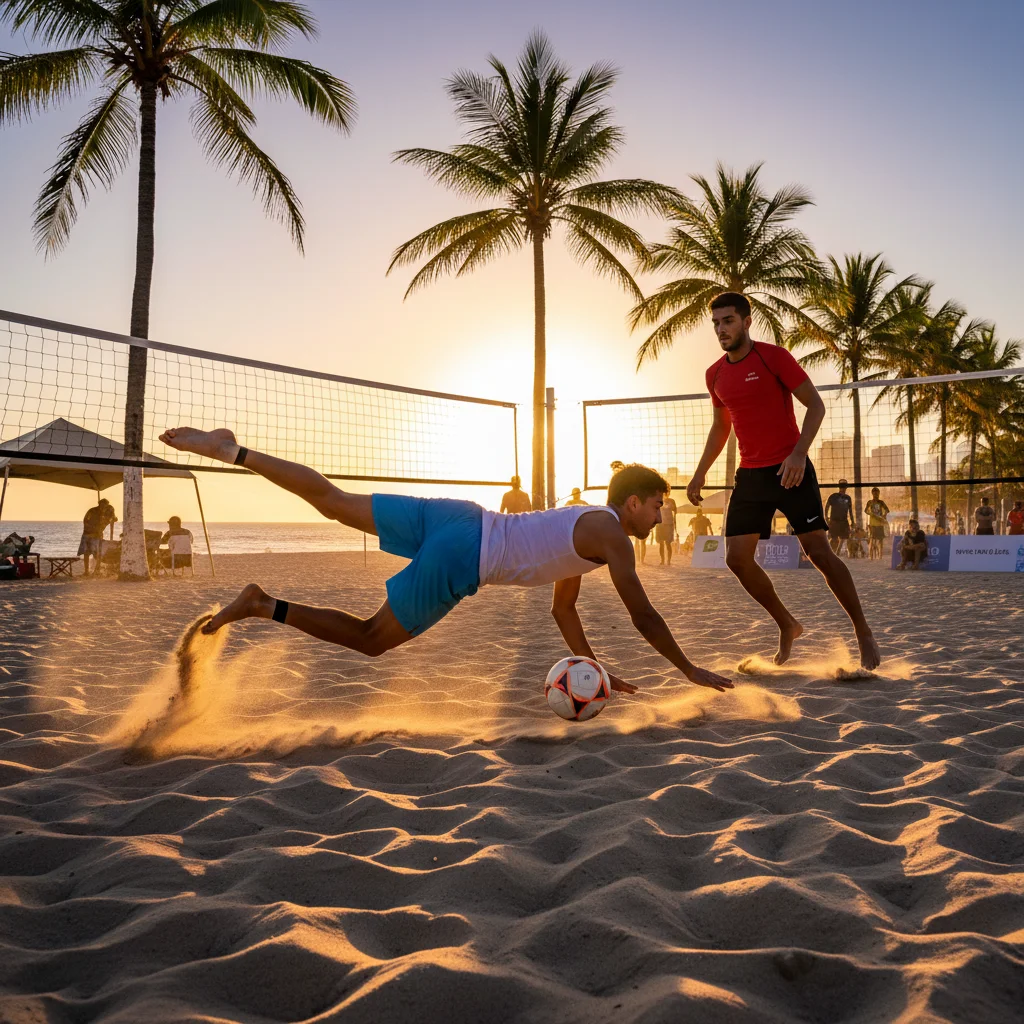
- Shuffle to Dive: Start in the middle of the two cones. A partner calls out a direction (left/right) or hits a soft ball to one side. Shuffle quickly to that side and execute a controlled defensive dive (without necessarily touching the ball initially). Immediately recover to a ready stance in the middle.
- Full Court Defensive Coverage (with partner): Stand on one side of the court. Your partner hits various soft shots (short, deep, wide). Your goal is to reach every ball using efficient shuffling and, if necessary, a controlled dive. Focus on getting behind the ball.
Repetitions & Sets:
Perform the lateral shuffle for 1 minute, rest 30 seconds, repeat 3 times. For shuffle to dive, perform 8-10 dives per set, 3-4 sets. For full court coverage, perform for 2-3 minutes, 2-3 sets. These footvolley footwork drills are crucial for defensive prowess.
Why it Works:
Lateral movement is paramount in footvolley, especially in defense. This drill specifically targets the muscles responsible for side-to-side agility and explosive power needed for dives. By practicing recovery immediately after a dive, you train your body to quickly reset for the next play. This directly translates to better court coverage by allowing you to defend wider angles and recover faster from challenging plays.
Drill 4: The Spider Web – Multi-Directional Speed and Endurance
Objective:
To improve multi-directional speed, agility, and anaerobic endurance, simulating the continuous movement required during long rallies.
Setup:
Place a central cone. Then, place 4-6 additional cones in a circle or semi-circle around the central cone, approximately 8-10 feet away from the center, forming a ‘spider web’ pattern.
Execution:
- Sprint to Cone & Return: Start at the central cone. Sprint to one of the outer cones, touch it, and sprint back to the center. Repeat for all outer cones in sequence.
- Random Sprint: A partner calls out a cone number. Sprint to that cone, touch it, and return to the center. The sequence should be unpredictable.
- Spider Web with Ball: A partner lobs soft balls to different outer cones. Sprint to the cone, control the ball with a touch, and return it to your partner or a designated target near the center.
- Continuous Movement: Continuously move from the center to an outer cone and back, but instead of returning to the center, move directly to the next outer cone. Vary the movement (sprint, shuffle, backpedal) between cones.
Repetitions & Sets:
Perform each variation for 45-60 seconds, followed by 30 seconds of rest. Complete 3-5 sets. The goal is continuous high-intensity effort. These footvolley footwork drills build stamina.
Why it Works:
The Spider Web drill is excellent for developing the multi-directional speed and agility required to cover the entire court. The constant changes in direction and varied distances build anaerobic endurance, allowing you to maintain high intensity throughout a match. Incorporating a ball adds a realistic element, training you to move efficiently while also focusing on ball control. This significantly boosts your court coverage by making you faster and more resilient across all areas of the court.
Drill 5: The Dynamic Footwork Integration – Game Simulation
Objective:
To integrate all learned footwork patterns into a dynamic, game-like scenario, improving decision-making and reactive speed under pressure.
Setup:
Requires at least one partner and a footvolley court. This is less about cones and more about live play scenarios.
Execution:
- Serve Receive & Attack Simulation: Your partner serves the ball. Focus on using efficient footwork to get into position for the receive, then transition immediately into offensive footwork for the attack (setup and spike/placement).
- Defensive Scramble: Your partner hits various challenging shots (drops, lobs, hard spikes). Your goal is to retrieve every ball, focusing on your footwork to get to the ball and recover. Emphasize lateral shuffles, sprints, and controlled dives.
- 2-on-1 Keep Away: Two players (attackers) try to keep the ball away from one defender. The defender must use all their footwork skills to intercept the ball. This forces constant movement and quick reactions.
- Controlled Game Play (Focus on Footwork): Play a half-court or full-court game, but with a specific focus on footwork. Deliberately try to apply the techniques learned in the previous drills. For instance, after every touch, consciously reset your feet.
Repetitions & Sets:
Perform each simulation for 5-10 minutes, with short breaks. Aim for 3-4 rounds of each. This drill is about sustained effort and applying learned skills. These are the ultimate footvolley footwork drills for game day.
Why it Works:
This drill is the ultimate test and application of your footwork training. By simulating game situations, you learn to make split-second decisions while executing optimal footwork patterns. It bridges the gap between isolated drills and actual match play, improving your reactive speed, agility, and overall court coverage under pressure. The goal is to make these advanced footwork movements second nature, allowing you to focus on the ball and your opponent.
Complementary Training for Enhanced Footwork
While these footvolley footwork drills are highly effective, incorporating complementary training will further amplify your results:
- Plyometrics: Jump training (box jumps, broad jumps) improves explosive power, crucial for quick bursts of speed and jumps.
- Strength Training: Focus on leg and core strength (squats, lunges, planks) to build a strong foundation for agile movements.
- Balance & Stability: Exercises on unstable surfaces (Bosu ball, wobble board) can improve ankle stability and overall balance on sand.
- Cardiovascular Endurance: Long-distance running or interval training will improve your stamina, allowing you to maintain high-intensity footwork throughout a match.
- Flexibility and Mobility: Regular stretching and mobility exercises prevent injuries and allow for a greater range of motion, enhancing your ability to reach for difficult balls.
Tips for Maximizing Your Footwork Training
- Consistency is Key: Regular practice of these footvolley footwork drills is essential. Aim for 2-3 dedicated footwork sessions per week.
- Proper Footwear: While playing footvolley barefoot is common, for drills, consider sand socks or appropriate footwear to prevent blisters and offer some support.
- Listen to Your Body: Sand training can be taxing. Ensure adequate rest and recovery to prevent overtraining and injuries.
- Visualize Success: Before each drill, visualize yourself executing the movements perfectly and covering the court with ease.
- Record Yourself: Use a phone or camera to record your drills. Watching yourself can help identify areas for improvement in technique and efficiency.
- Focus on Quality: Don’t just go through the motions. Concentrate on precise foot placement, quick reactions, and maintaining proper form.
- Stay Hydrated: Training on sand, especially in the sun, can lead to rapid dehydration. Drink plenty of water before, during, and after your sessions.
Conclusion: Transform Your Footvolley Game
Mastering your footwork is the gateway to unlocking your full potential in footvolley. By consistently integrating these five advanced footvolley footwork drills into your training, you will not only improve your court coverage by a significant margin – potentially 30% or more – but also enhance your overall agility, speed, and reactive capabilities. Remember, the sand is your training ground, and every step, shuffle, and sprint contributes to a more dominant and effective presence on the court.
Don’t underestimate the power of dedicated footwork training. It’s the silent hero behind every spectacular save, every perfectly placed setup, and every game-winning spike. Start implementing these drills today, and prepare to witness a remarkable transformation in your footvolley performance. Your opponents won’t know what hit them – or rather, how you got to that ball so quickly!